Download Mendeley
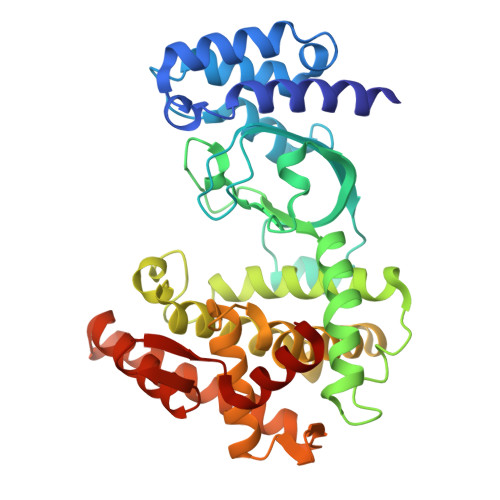
A two-metalloenzyme cascade constructs the azetidine-containing pharmacophore.
Gong, R., Qu, Y., Liu, J., Zhang, X., Zhou, L., Tian, Z., Zeng, X., Jin, B., Li, Z., Yu, L., Chen, R., Zhou, Y., Liao, L., Yang, L., Song, X., Cai, Y.S., Shen, K., Deng, Z., Zhang, Z., Wang, B., Chen, W.(2026) Nat Chem 18: 482-491
- PubMed: 41028918 Search on PubMedSearch on PubMed Central
- DOI: https://doi.org/10.1038/s41557-025-01949-y
- Primary Citation Related Structures:
9J27, 9J28, 9J29, 9J2A, 9J2B, 9J2C, 9J2E, 9J2M, 9J2P, 9J2R, 9J30, 9J33, 9J3G, 9J3V - PubMed Abstract:
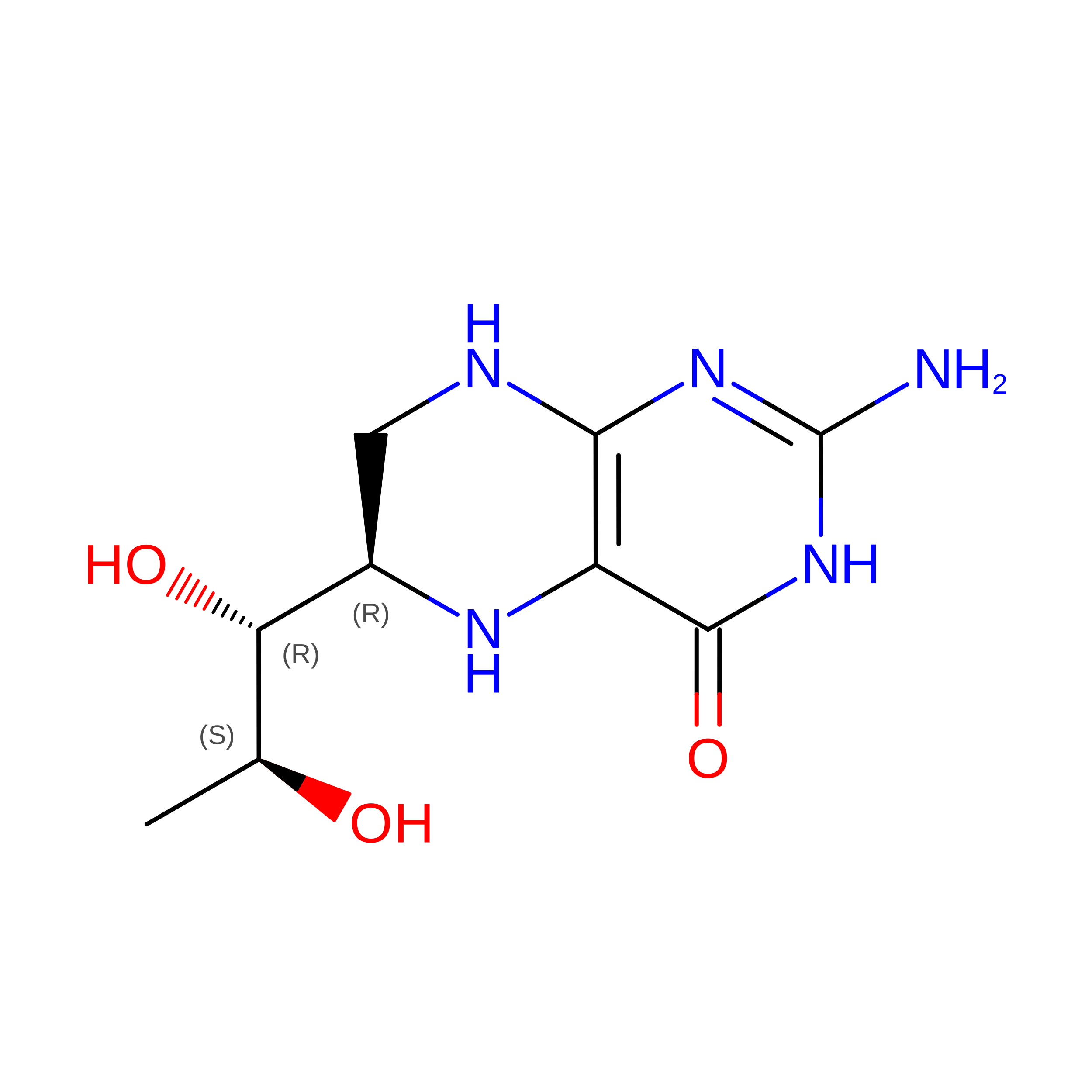
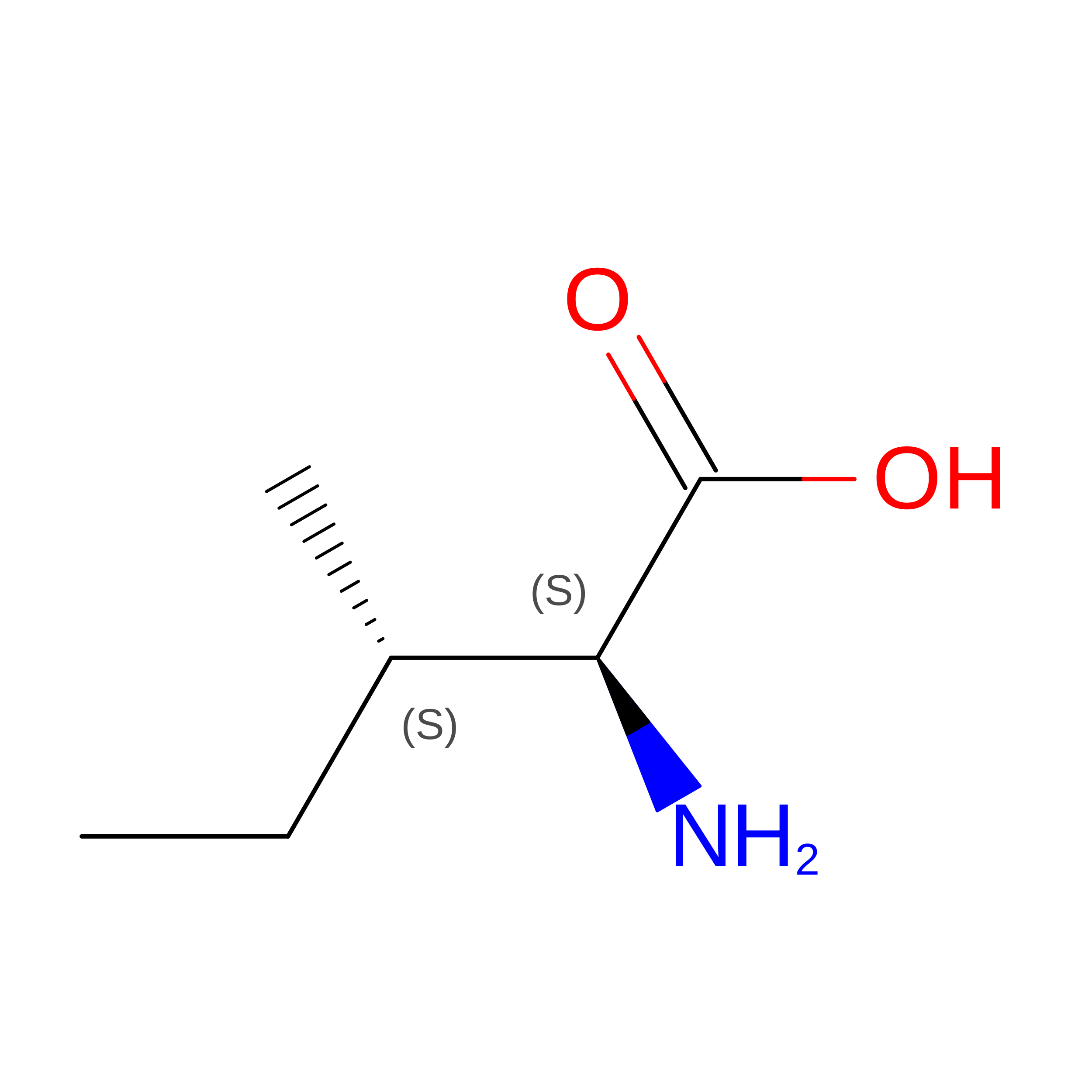
Azetidine is a prominent pharmacophore present in dozens of drug-related molecules of both natural and synthetic origins. But how nature builds this moiety has long remained enigmatic. Here we address the full deciphering of a two-metalloenzyme cascade leading to polyoximic acid, an azetidine-containing moiety of the fungicide polyoxin. We demonstrate that the PolE enzyme functions as an Fe 2+ /pterin-dependent L-isoleucine desaturase. Moreover we illustrate that PolF is a new member of the emerging haem-oxygenase-like diiron oxidases, converting the desaturated L-isoleucine to polyoximic acid via an intramolecular C-N cyclization. Remarkably, we also establish that PolF exhibits dual functionality, orchestrating the sequential desaturation and cyclization with L-isoleucine as the initial substrate. Finally, our combined structural and quantum-mechanics/molecular-mechanics studies show that the PolF enzyme employs an extraordinary mechanism for the construction of the azetidine-containing moiety. These findings expand our knowledge on the catalysis of metalloenzymes and open the way for rational access of more azetidine-related molecules.
- Department of Anesthesiology, Zhongnan Hospital of Wuhan University, TaiKang Center for Life and Medical Sciences, School of Pharmaceutical Sciences, Wuhan University, Wuhan, China.
Organizational Affiliation: