Download Mendeley
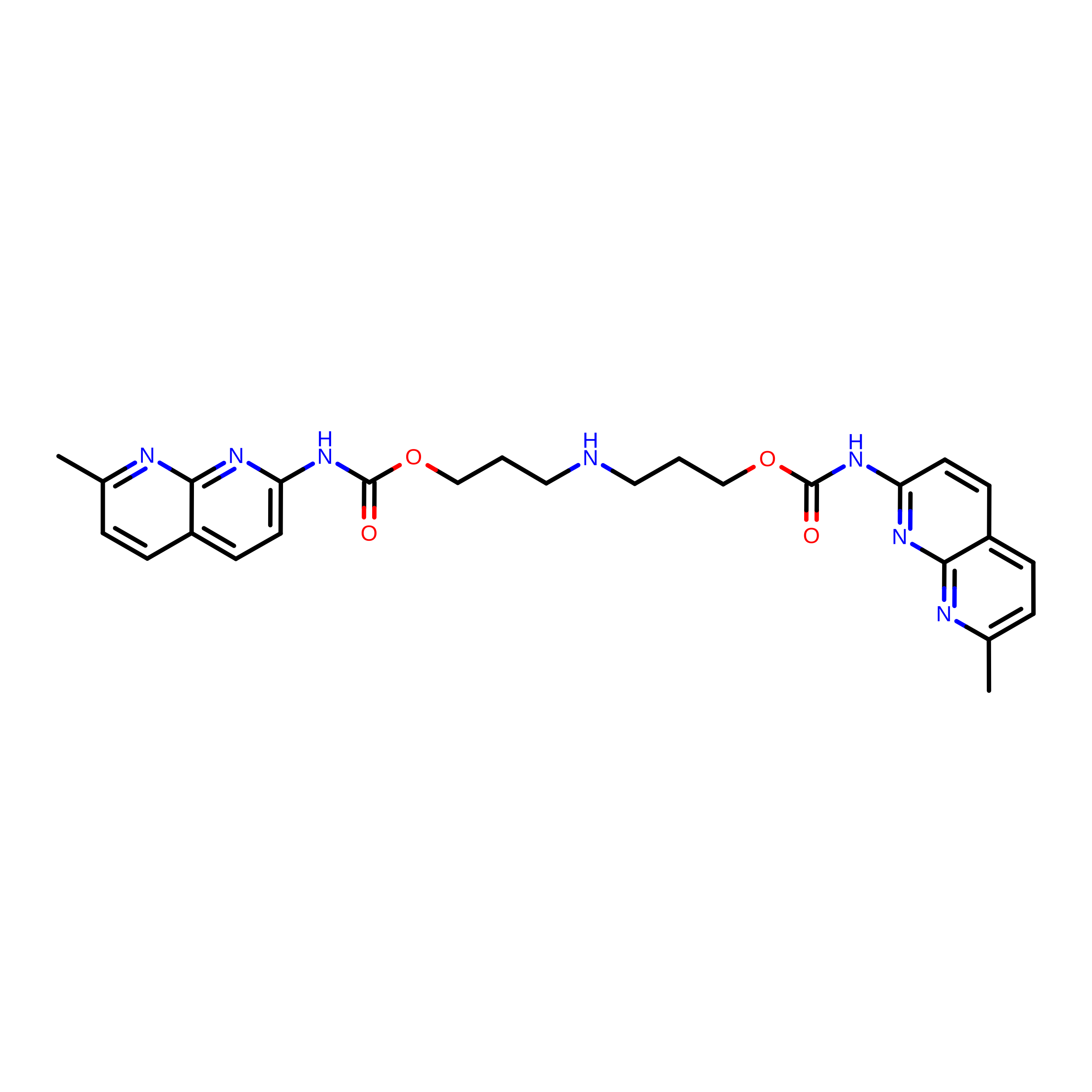
Naphthyridine carbamate dimer ligand induces formation of Z-RNA-like fold of disease-related RNA and exhibits a molecular glue characteristics in crystal lattice formation.
Mateja-Pluta, M., Blaszczyk, L., Bejger, M., Nakatani, K., Kiliszek, A.(2025) Nucleic Acids Res 53
- PubMed: 40966516 Search on PubMedSearch on PubMed Central
- DOI: https://doi.org/10.1093/nar/gkaf924
- Primary Citation Related Structures:
9I9W, 9IF0, 9IF1 - PubMed Abstract:
The naphthyridine carbamate dimer (NCD) is a small molecule that recognizes disease-related RNA containing UGGAA repeats associated with spinocerebellar ataxia type 31 (SCA 31) and alleviates the disease phenotype in vitro and in vivo. In this study, we use X-ray crystallography to elucidate the mode of NCD binding in detail. We determine the crystal structures of the RNA-NCD complex and a structure of unliganded RNA. The NCD interacts differently than in previously reported nuclear magnetic resonance structure, forming pseudo-canonical base pairs with guanosine residues located on the same RNA strand. Furthermore, in one of the complexes, the ligand is located between symmetry-related RNA molecules, exhibiting a molecular glue characteristics in crystal lattice formation. The comparison of RNA-NCD and ligand-free models allows the identification of structural changes in RNA upon ligand binding from A-form to Z-RNA-like form. These observations extend our understanding of the interactions between RNA and small compounds and can be useful as a reference model in the development of bioinformatics tools for RNA-ligand structure predictions.
- Institute of Bioorganic Chemistry, Polish Academy of Sciences, Z. Noskowskiego 12/14, 61-704, Poland.
Organizational Affiliation: