Download Mendeley
Structural basis for activation and potentiation in a human alpha 5 beta 3 GABA A receptor.
Cowgill, J., Fan, C., Steyaert, J., Howard, R.J., Lindahl, E.(2026) Nat Commun 17
- PubMed: 42297817 Search on PubMedSearch on PubMed Central
- DOI: https://doi.org/10.1038/s41467-026-74279-3
- Primary Citation Related Structures:
9HAA, 9HNQ, 9HNS, 9HNT, 9HUM, 9RL5, 9RPB - PubMed Abstract:
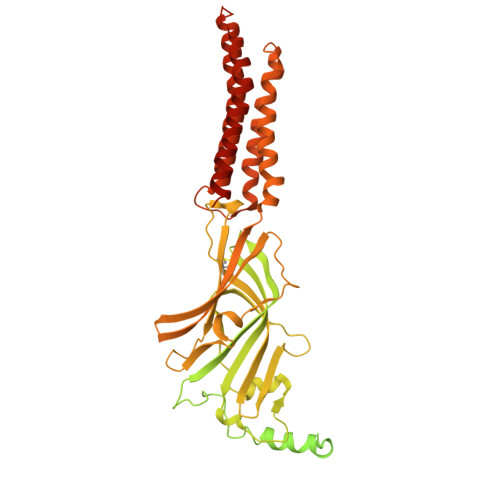
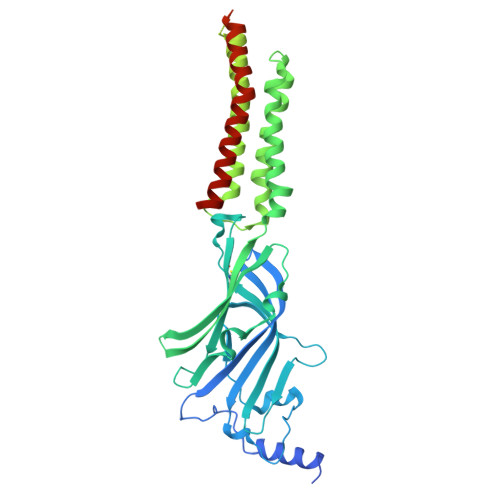
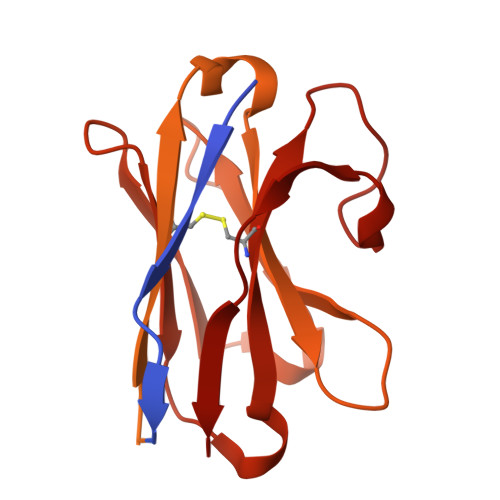
Anesthetics and anticonvulsants act, in part, through diverse populations of type-A ɣ-aminobutyric acid receptors (GABA A Rs) formed from a pool of 19 subunits. In the hippocampus, α5 subunits primarily coassemble with β3 and, in some cases, γ2, generating numerous subtypes with differential functional and pharmacological properties critical in learning and memory. The stoichiometry, structure, and gating of these subpopulations are poorly understood. Here we show using cryogenic electron microscopy and electrophysiology that the human α5β3 GABA A R predominantly assembles with 2α:3β stoichiometry, though a minority population of 1α:4β indicates multiple assemblies are possible. In a resting-like state, a conserved activation gate and Zn 2+ -coordination at histidines on β3 block ion conduction. Upon GABA binding, global rearrangements release Zn 2+ and open the activation gate in nearly all receptors. The activated receptor is unaffected upon binding the anesthetic etomidate or anticonvulsant topiramate, supporting a conformational selection mechanism of action. This work thus reveals the assembly, activation, and modulation of a GABA A R subtype critical to cognition, providing templates for structure-based drug discovery.
- Department of Biochemistry and Biophysics, SciLifeLab, Stockholm University, Solna, Sweden. john.cowgill@scilifelab.se.
Organizational Affiliation: