Download Mendeley
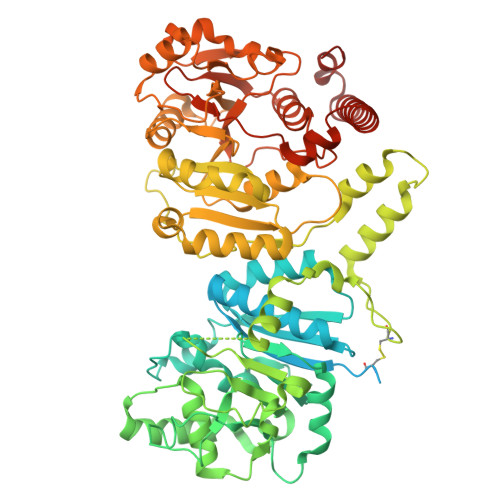
LARGE1 processively polymerizes length-controlled matriglycan on prodystroglycan.
Joseph, S., Schnicker, N.J., Spellmon, N., Xu, Z., Yan, R., Yu, Z., Davulcu, O., Yang, T., Hopkins, J., Anderson, M.E., Venzke, D., Campbell, K.P.(2025) Nat Commun 16: 9028-9028
- PubMed: 41073435 Search on PubMedSearch on PubMed Central
- DOI: https://doi.org/10.1038/s41467-025-64080-z
- Primary Citation Related Structures:
9E1T - PubMed Abstract:
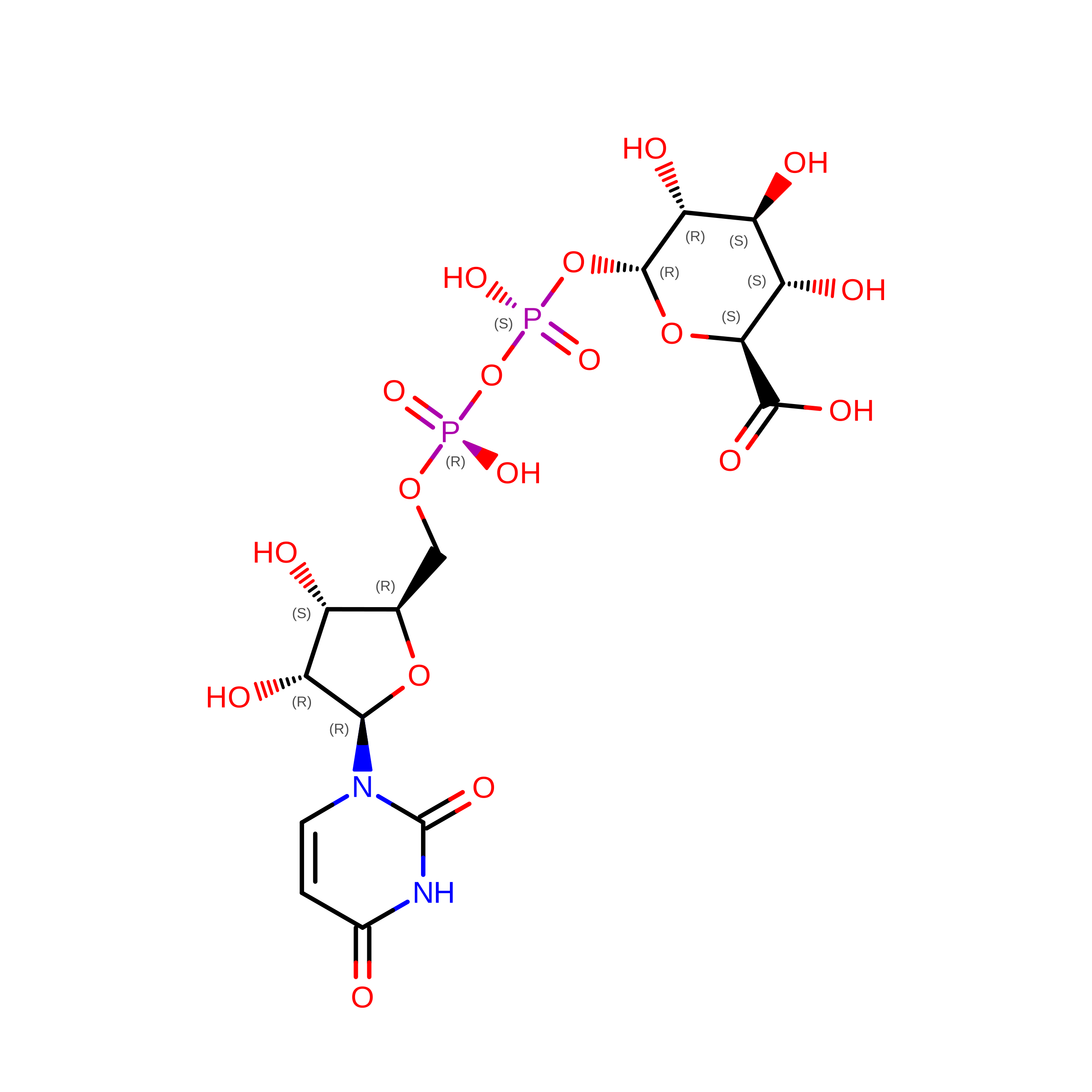
Matriglycan is a linear glycan (xylose-β1,3-glucuronate) n , which binds proteins in the extracellular matrix that contain laminin-globular domains and Lassa Fever Virus. It is indispensable for neuromuscular function. Matriglycan of insufficient length can cause muscular dystrophy with abnormal brain and eye development. LARGE1 (Like-acetylglucosaminyltransferase-1) uniquely synthesizes matriglycan on dystroglycan. The mechanism of matriglycan synthesis is not obvious from cryo-EM reconstructions of LARGE1. However, by reconstituting activity in vitro on recombinant prodystroglycan we show that the presence of the dystroglycan N-terminal domain (DGN), phosphorylated core M3, and a xylose-glucuronate primer are necessary for matriglycan polymerization by LARGE1. By introducing active site mutations, we demonstrate that LARGE1 processively polymerizes matriglycan on prodystroglycan, with its length regulated by the dystroglycan prodomain, DGN. Our enzymatic analysis of LARGE1 uncovers the mechanism of matriglycan synthesis on dystroglycan, which can form the basis for therapeutic strategies to treat matriglycan-deficient neuromuscular disorders and arenaviral infections.
- Senator Paul D. Wellstone Muscular Dystrophy Specialized Research Center, University of Iowa Roy J. and Lucille A. Carver College of Medicine, Iowa City, IA, USA.
Organizational Affiliation: