Download Mendeley
Computational design of serine hydrolases.
Lauko, A., Pellock, S.J., Sumida, K.H., Anishchenko, I., Juergens, D., Ahern, W., Jeung, J., Shida, A.F., Hunt, A., Kalvet, I., Norn, C., Humphreys, I.R., Jamieson, C., Krishna, R., Kipnis, Y., Kang, A., Brackenbrough, E., Bera, A.K., Sankaran, B., Houk, K.N., Baker, D.(2025) Science 388: eadu2454-eadu2454
- PubMed: 39946508 Search on PubMedSearch on PubMed Central
- DOI: https://doi.org/10.1126/science.adu2454
- Primary Citation Related Structures:
9DED, 9DEE, 9DEF, 9DEG, 9DEH, 9MRB - PubMed Abstract:
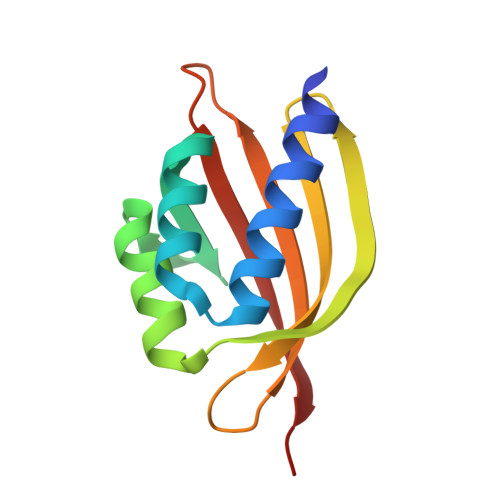
The design of enzymes with complex active sites that mediate multistep reactions remains an outstanding challenge. With serine hydrolases as a model system, we combined the generative capabilities of RFdiffusion with an ensemble generation method for assessing active site preorganization at each step in the reaction to design enzymes starting from minimal active site descriptions. Experimental characterization revealed catalytic efficiencies ( k cat / K m ) up to 2.2 × 10 5 M -1 s -1 and crystal structures that closely match the design models (Cα root mean square deviations <1 angstrom). Selection for structural compatibility across the reaction coordinate enabled identification of new catalysts remove with five different folds distinct from those of natural serine hydrolases. Our de novo approach provides insight into the geometric basis of catalysis and a roadmap for designing enzymes that catalyze multistep transformations.
- Department of Biochemistry, University of Washington, Seattle, WA, USA.
Organizational Affiliation: