Download Mendeley
Ion channel inhibition by targeted recruitment of NEDD4-2 with divalent nanobodies.
Darko-Boateng, A., Afriyie, E., Morgenstern, T.J., Shanmugam, S.K., Zou, X., Laloudakis, Y.D., Choudhury, P., Desai, M., Kass, R.S., Vallese, F., Clarke, O.B., Colecraft, H.M.(2025) Nat Commun 17: 378-378
- PubMed: 41353348 Search on PubMedSearch on PubMed Central
- DOI: https://doi.org/10.1038/s41467-025-67068-x
- Primary Citation Related Structures:
9Z5Q - PubMed Abstract:
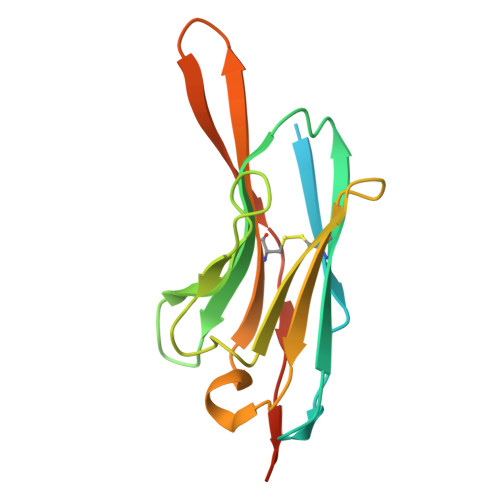
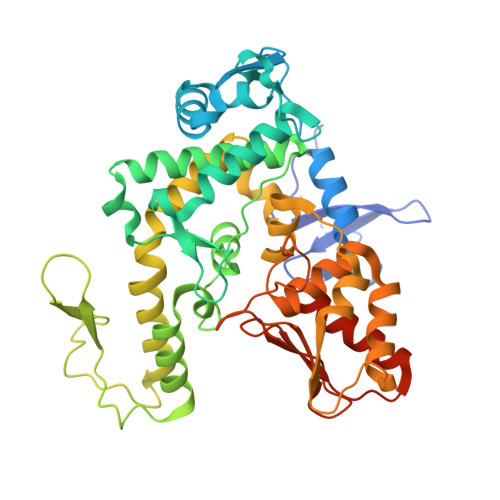
Targeted protein degradation/downregulation (TPD/TPDR) is a disruptive paradigm for developing therapeutics. <2% of ~600 E3 ligases have been exploited for this modality, and efficacy for multi-subunit ion channels has not been demonstrated. NEDD4-2 E3 ligase regulates myriad ion channels, but its utility for TPD/TPDR is uncertain due to complex regulatory mechanisms. Here, we identify a nanobody that binds NEDD4-2 HECT domain without disrupting catalysis sites as revealed by cryo-electron microscopy and in vitro ubiquitination assays. Recruiting NEDD4-2 to diverse ion channels (Ca V 2.2; KCNQ1; and epithelial Na + channel, ENaC, with a Liddle syndrome mutation) using divalent nanobodies (DiVas) strongly suppresses their surface density and function. Global proteomics indicates DiVa recruitment of endogenous NEDD4-2 to KCNQ1-YFP yields dramatically lower off-target effects compared to NEDD4-2 overexpression. The results establish utility of NEDD4-2 recruitment for TPD/TPDR, validate ion channels as susceptible to this modality, and introduce a general method to generate ion channel inhibitors.
- Department of Physiology and Cellular Biophysics, Columbia University Irving Medical Center, New York, NY, USA.
Organizational Affiliation: