Download Mendeley
Structural Characterization of Linker Shielding in ADC Site-Specific Conjugates.
Jaime-Garza, M., Waight, A., Hudlikar, M., Eddins, M.J., Rasti, E.S., Zaragoza, J.P.T., Fayadat-Dilman, L., Chrencik, J.E., Gabelli, S.B., Chen, Y.T., Noland, C.L.(2025) Pharmaceutics 17
- PubMed: 41471083 Search on PubMedSearch on PubMed Central
- DOI: https://doi.org/10.3390/pharmaceutics17121568
- Primary Citation Related Structures:
9YZZ, 9Z0F - PubMed Abstract:
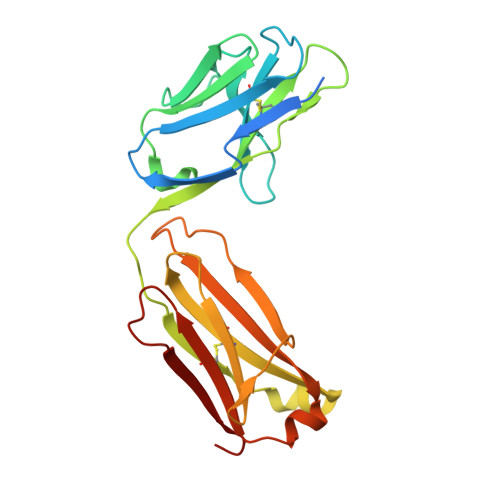
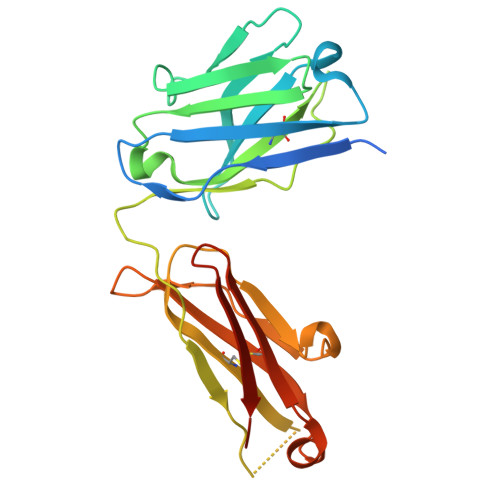
Background/Objectives : Antibody-Drug Conjugates (ADCs) have rapidly evolved from early, rudimentary conjugates to highly targeted and precisely engineered molecules. Despite notable clinical successes, ADCs continue to face significant challenges, including aggregation and high hydrophobicity driven by high drug-to-antibody ratios (DARs), premature payload release, dose-limiting toxicities, and suboptimal pharmacokinetics. While site-specific linker-payload conjugation has improved ADC homogeneity and stability, the structural basis of antibody-linker interactions at specific sites remains underexplored. Methods : In this work, we present the crystal structures of trastuzumab Fab and Fc domains site-specifically conjugated with a cleavable linker-payload. Results : Our findings suggest that pockets within both Fab and Fc regions may interact with and shield the linker portion of the conjugate. Conclusions : These insights highlight the previously underappreciated potential of structure-based design to drive the optimization of ADC linker chemistry and facilitate the co-design of bespoke linker-payloads tailored to individual antibody conjugation sites.
- Discovery Chemistry, Merck & Co., Inc., 213 East Grand Ave., South San Francisco, CA 94080, USA.
Organizational Affiliation: