9Y46 | pdb_00009y46

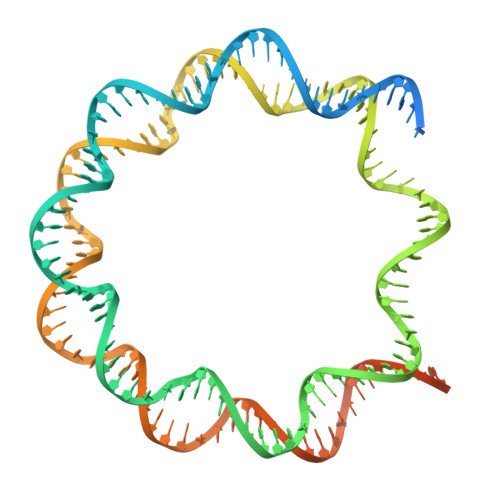
Human nucleosome structure on Nickel-NTA lipid affinity grid (C2 refinement)


Experimental Data Snapshot

  • Method: ELECTRON MICROSCOPY
  • Resolution: 2.59 Å
  • Aggregation State: PARTICLE 
  • Reconstruction Method: SINGLE PARTICLE 

Starting Model: experimental
View more details

wwPDB Validation   3D Report Full Report


This is version 1.1 of the entry. See complete history


Literature

Nickel-NTA lipid-monolayer affinity grids allow for high-resolution structure determination by cryo-EM.

Skrajna, A.Lenger, C.Robinson, E.Cannon, K.Sarsam, R.Ouellette, R.G.Abotsi, A.M.Brennwald, P.McGinty, R.K.Strauss, J.D.Baker, R.W.

(2025) J Struct Biol 217: 108253-108253

  • DOI: https://doi.org/10.1016/j.jsb.2025.108253
  • Primary Citation of Related Structures:  
    9Y45, 9Y46, 9Y47, 9Y48

  • PubMed Abstract: 

    Grid preparation is a rate-limiting step in determining high-resolution structures by single particle cryo-EM. Particle interaction with the air-water interface often leads to denaturation, aggregation, or a preferred orientation within the ice. Some samples yield insufficient quantities of particles when using traditional grid making techniques and require the use of solid supports that concentrate samples onto the grid. Recent advances in grid-preparation show that affinity grids are promising tools to selectively concentrate proteins while simultaneously protecting samples from the air-water interface. One such technique utilizes lipid monolayers containing a lipid species with an affinity handle. Some of the first affinity grids used a holey carbon layer coated with nickel nitrilotriacetic acid (Ni-NTA) lipid, which allowed for the binding of proteins bearing the commonly used poly-histidine affinity tag. These studies however used complicated protocols and were conducted before the "resolution revolution" of cryo-EM. Here, we provide a straightforward preparation method and systematic analysis of Ni-NTA lipid monolayers as a tool for high-resolution single particle cryo-EM. We found the lipid affinity grids concentrate particles away from the AWI in thin ice (∼30 nm). We determined three structures ranging from 2.4 to 3.0 Å resolution, showing this method is amenable to high-resolution. Furthermore, we determined a 3.1 Å structure of a sub-100 kDa protein without symmetry, demonstrating the utility for a range of biological macromolecules. Lipid monolayers are therefore an easily extendable tool for most systems and help alleviate common problems such as low yield, disruption by the air-water interface, and thicker ice.


  • Organizational Affiliation
    • Center for Integrative Chemical Biology and Drug Discovery, Division of Chemical Biology and Medicinal Chemistry, UNC Eshelman School of Pharmacy, Chapel Hill, NC, USA; UNC Lineberger Comprehensive Cancer Center, UNC Chapel Hill School of Medicine, Chapel Hill, NC, USA. Electronic address: askrajna@ucsc.edu.

Macromolecules

Find similar proteins by:  (by identity cutoff)  |  3D Structure
Entity ID: 1
MoleculeChains Sequence LengthOrganismDetailsImage
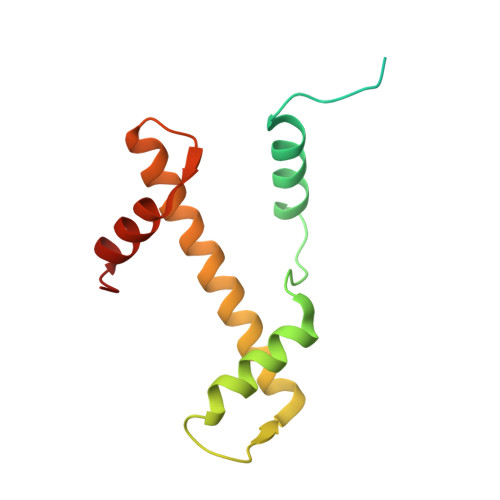
Histone H3.2
A, E
135Homo sapiensMutation(s): 0 
Gene Names: H3C15HIST2H3AH3C14H3F2H3FMHIST2H3CH3C13HIST2H3D
UniProt & NIH Common Fund Data Resources
Find proteins for Q71DI3 (Homo sapiens)
Explore Q71DI3 
Go to UniProtKB:  Q71DI3
PHAROS:  Q71DI3
Entity Groups  
Sequence Clusters30% Identity50% Identity70% Identity90% Identity95% Identity100% Identity
UniProt GroupQ71DI3
Sequence Annotations
Expand
  • Reference Sequence
Find similar proteins by:  (by identity cutoff)  |  3D Structure
Entity ID: 2
MoleculeChains Sequence LengthOrganismDetailsImage
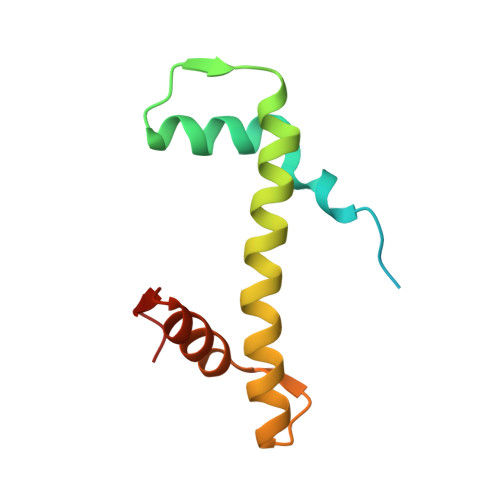
Histone H4
B, F
102Homo sapiensMutation(s): 0 
Gene Names: 
UniProt & NIH Common Fund Data Resources
Find proteins for P62805 (Homo sapiens)
Explore P62805 
Go to UniProtKB:  P62805
PHAROS:  P62805
Entity Groups  
Sequence Clusters30% Identity50% Identity70% Identity90% Identity95% Identity100% Identity
UniProt GroupP62805
Sequence Annotations
Expand
  • Reference Sequence
Find similar proteins by:  (by identity cutoff)  |  3D Structure
Entity ID: 3
MoleculeChains Sequence LengthOrganismDetailsImage
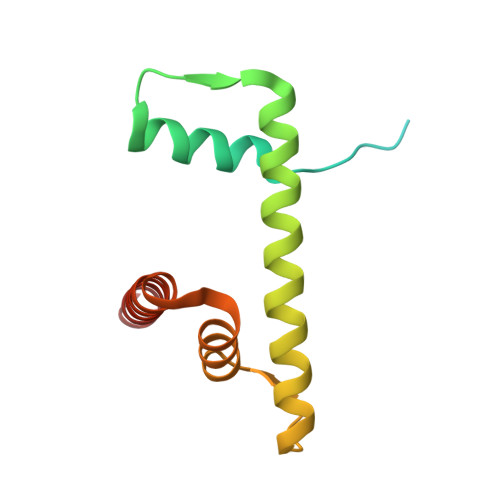
Histone H2A type 1
C, G
163Homo sapiensMutation(s): 0 
Gene Names: 
UniProt & NIH Common Fund Data Resources
Find proteins for P0C0S8 (Homo sapiens)
Explore P0C0S8 
Go to UniProtKB:  P0C0S8
PHAROS:  P0C0S8
Entity Groups  
Sequence Clusters30% Identity50% Identity70% Identity90% Identity95% Identity100% Identity
UniProt GroupP0C0S8
Sequence Annotations
Expand
  • Reference Sequence
Find similar proteins by:  (by identity cutoff)  |  3D Structure
Entity ID: 4
MoleculeChains Sequence LengthOrganismDetailsImage
Histone H2B type 1-C/E/F/G/I
D, H
125Homo sapiensMutation(s): 0 
Gene Names: 
UniProt & NIH Common Fund Data Resources
Find proteins for P62807 (Homo sapiens)
Explore P62807 
Go to UniProtKB:  P62807
PHAROS:  P62807
Entity Groups  
Sequence Clusters30% Identity50% Identity70% Identity90% Identity95% Identity100% Identity
UniProt GroupP62807
Sequence Annotations
Expand
  • Reference Sequence
Find similar nucleic acids by:  (by identity cutoff)  |  3D Structure
Entity ID: 5
MoleculeChains LengthOrganismImage
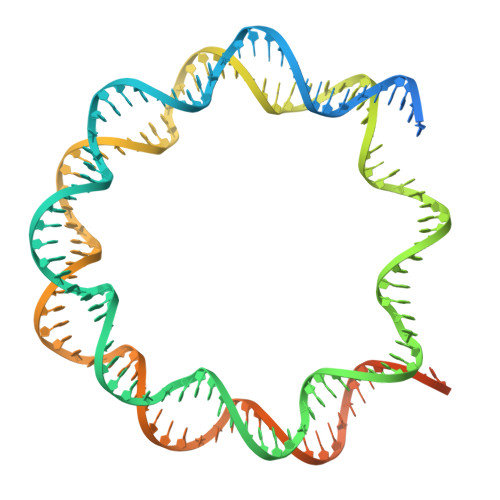
Nucleosomal DNA - 185 bp184Homo sapiens
Sequence Annotations
Expand
  • Reference Sequence
Find similar nucleic acids by:  (by identity cutoff)  |  3D Structure
Entity ID: 6
MoleculeChains LengthOrganismImage
Nucleosomal DNA - 185 bp184Homo sapiens
Sequence Annotations
Expand
  • Reference Sequence
Experimental Data & Validation

Experimental Data

  • Method: ELECTRON MICROSCOPY
  • Resolution: 2.59 Å
  • Aggregation State: PARTICLE 
  • Reconstruction Method: SINGLE PARTICLE 
EM Software:
TaskSoftware PackageVersion
MODEL REFINEMENTPHENIX
RECONSTRUCTIONRELION4

Structure Validation

View Full Validation Report


Entry History & Funding Information

Deposition Data


Funding OrganizationLocationGrant Number
National Institutes of Health/National Institute of General Medical Sciences (NIH/NIGMS)United StatesR35 GM150960
National Institutes of Health/National Institute of General Medical Sciences (NIH/NIGMS)United StatesR35 GM133498
National Institutes of Health/National Cancer Institute (NIH/NCI)United StatesP30CA016086

Revision History  (Full details and data files)

  • Version 1.0: 2025-10-29
    Type: Initial release
  • Version 1.1: 2025-11-19
    Changes: Data collection, Database references