9XY8 | pdb_00009xy8

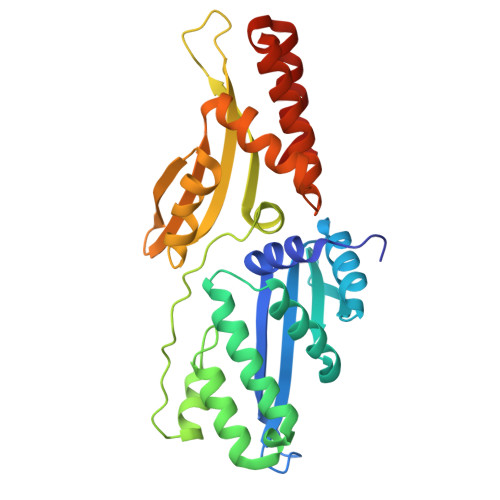
One of a series of engineered variants of I-OnuI meganuclease targeting altered DNA target sequence


Experimental Data Snapshot

  • Method: X-RAY DIFFRACTION
  • Resolution: 2.49 Å
  • R-Value Free: 
    0.249 (Depositor), 0.251 (DCC) 
  • R-Value Work: 
    0.193 (Depositor), 0.196 (DCC) 
  • R-Value Observed: 
    0.199 (Depositor) 

Starting Model: experimental
View more details

wwPDB Validation 3D Report Full Report

Validation slider image for 9XY8

This is version 1.1 of the entry. See complete history

Literature

Caveat emptor: predicting and modeling protein-DNA recognition and binding via machine-learning computational approaches.

Esler, M.A.Werther, R.Doyle, L.A.Ubilla-Rodriguez, N.C.Schwensen, J.S.Hallinan, J.P.Lambert, A.R.Young, J.C.Silverstein, M.Stoddard, B.L.

(2026) Nucleic Acids Res 54

  • DOI: https://doi.org/10.1093/nar/gkag608
  • Primary Citation Related Structures: 
    11QF, 9PZ7, 9PZH, 9Q0H, 9Q7V, 9Q7W, 9Q7Z, 9XY1, 9XY2, 9XY5, 9XY6, 9XY8, 9XY9, 9XYA

  • PubMed Abstract: 

    The recent development of AI-based predictive tools, such as AlphaFold3, for the prediction of the structures of biological molecules and their complexes has transformed modern molecular and cellular biology. While it displays exceptional accuracy in the modeling of folded protein domains and subunits, as well as larger protein-protein complexes and assemblages, AlphaFold3's performance in predicting the details of protein-DNA (or more broadly, protein-nucleic acid) contacts and complexes is less well established. Here we summarize the recent development and performance of tools intended to predict, model, and/or design protein:DNA recognition and contacts, and then demonstrate (using a well-defined system that offers a minimal "degree of difficulty") the issues that often surround the use of a resource such as AlphaFold3 for predicting protein:DNA interactions. Beyond providing a cautionary tale for casual users, we note that the incorporation of hybrid models of protein-DNA complexes (in which computationally predicted models are docked into low-resolution CryoEM density maps with little further refinement or quality control) into future training sets may lead to an ongoing and inappropriate learning cycle that further encourages such tools to generate new, equally inaccurate models of protein-DNA complexes.


  • Organizational Affiliation
    • Division of Basic Sciences, Fred Hutchinson Cancer Center, 1100 Fairview Ave. N., Seattle, WA 98109, United States.

Macromolecule Content 

  • Total Structure Weight: 50.69 kDa 
  • Atom Count: 3,516 
  • Modeled Residue Count: 348 
  • Deposited Residue Count: 352 
  • Unique protein chains: 1
  • Unique nucleic acid chains: 2

Macromolecules


Find similar proteins by:|  3D Structure
Entity ID: 1
MoleculeChains  Sequence LengthOrganismDetailsImage
eI-OnuI_P456_CCC300synthetic constructMutation(s): 0 
Find similar nucleic acids by:  (by identity cutoff) 
Entity ID: 2
MoleculeChains LengthOrganismImage
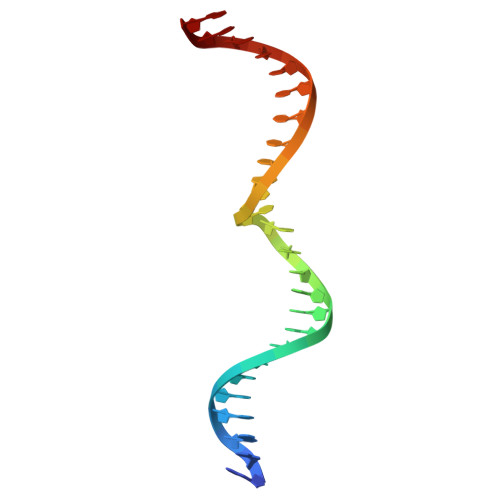
DNA (26-MER)26synthetic construct
Sequence Annotations
Expand
Reference Sequence
Find similar nucleic acids by:  (by identity cutoff) 
Entity ID: 3
MoleculeChains LengthOrganismImage
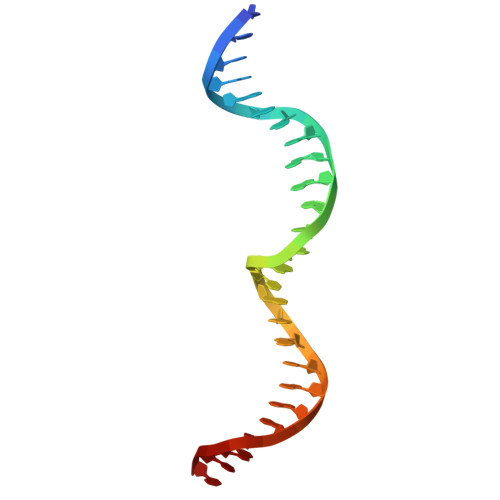
DNA (26-MER)26synthetic construct
Sequence Annotations
Expand
Reference Sequence

Experimental Data & Validation

Experimental Data

  • Method: X-RAY DIFFRACTION
  • Resolution: 2.49 Å
  • R-Value Free:  0.249 (Depositor), 0.251 (DCC) 
  • R-Value Work:  0.193 (Depositor), 0.196 (DCC) 
  • R-Value Observed: 0.199 (Depositor) 
Space Group: P 21 21 21
Unit Cell:
Length ( Å )Angle ( ˚ )
a = 39.222α = 90
b = 76.159β = 90
c = 167.753γ = 90
Software Package:
Software NamePurpose
HKL-2000data scaling
PHASERphasing
PHENIXrefinement
PDB_EXTRACTdata extraction
HKL-2000data reduction

Structure Validation

View Full Validation Report


Entry History 

& Funding Information

Deposition Data


Funding OrganizationLocationGrant Number
National Institutes of Health/National Institute of General Medical Sciences (NIH/NIGMS)United StatesR01 GM139752
National Institutes of Health/National Institute of General Medical Sciences (NIH/NIGMS)United StatesR01 GM105691
National Institutes of Health/National Institute of General Medical Sciences (NIH/NIGMS)United StatesR35 GM148166

Revision History  (Full details and data files)

  • Version 1.0: 2025-09-10
    Type: Initial release
  • Version 1.1: 2026-07-08
    Changes: Database references