9W9D | pdb_00009w9d

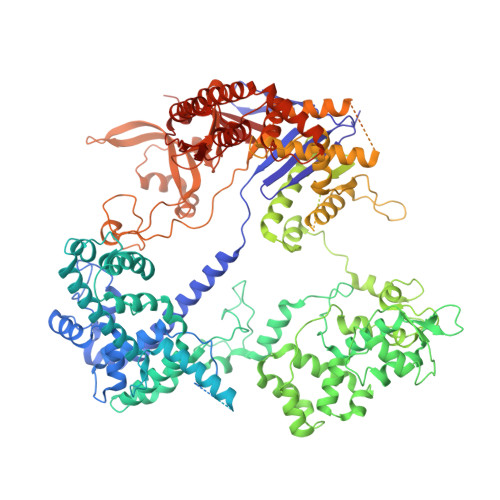
SuperFi Cas9 - 22nt sgRNA - DNA ternary complex


Experimental Data Snapshot

  • Method: ELECTRON MICROSCOPY
  • Resolution: 4.40 Å
  • Aggregation State: PARTICLE 
  • Reconstruction Method: SINGLE PARTICLE 

wwPDB Validation 3D Report Full Report

Validation slider image for 9W9D

This is version 1.3 of the entry. See complete history

Literature

Improving the efficiency of high-fidelity Cas9 by enhancing PAM-distal interactions.

Zheng, R.Lu, Z.Wei, R.Shin, Y.C.Du, J.Zhang, Q.Li, J.Wang, X.Wei, Y.Liu, B.Chen, Y.Ding, L.Zhang, H.Chen, H.Huang, J.Ma, L.

(2026) Nat Struct Mol Biol 33: 590-602

  • DOI: https://doi.org/10.1038/s41594-026-01753-3
  • Primary Citation Related Structures: 
    9K4C, 9K4D, 9K4E, 9K4F, 9K4H, 9W7Q, 9W7T, 9W7U, 9W7V, 9W9D, 9WA9, 9WAA, 9WAW

  • PubMed Abstract: 

    Engineering CRISPR enzymes for high fidelity often impairs cleavage activity. Meanwhile, a mechanistic understanding of why high-fidelity mutations reduce Cas9's cleavage activity remains unclear, presenting a challenge in balancing nuclease specificity and efficiency for clinical applications. In this study, we show that extending the spacer region to 21 or 22 nucleotides restores the impaired cleavage activity of SuperFi-Cas9, a high-fidelity Cas9 variant with 7 mutations in the RuvC domain at the protospacer adjacent motif (PAM)-distal region. Cryo-electron microscopy structures and mutational analyses reveal that the negatively charged mutations in a protruding loop of the RuvC domain create repulsive forces that destabilize the nuclease-single guide (sg)RNA-DNA complex. Spacer extension enhances interactions in the PAM-distal region, effectively restoring cleavage activity and balancing editing efficiency with specificity. In addition, we develop a deep learning model, AIdit-SuperFi, to predict optimal sgRNA length for high-fidelity genome editing. Our findings introduce a straightforward strategy to enhance CRISPR complex stability and provide mechanistic insights into the impaired cleavage activity of engineered high-fidelity Cas9, presenting a pathway toward precise and efficient genome editing and clinical translation of CRISPR technologies.


  • Organizational Affiliation
    • Westlake Laboratory, Hangzhou, China.

Macromolecule Content 

  • Total Structure Weight: 222.13 kDa 
  • Atom Count: 11,479 
  • Modeled Residue Count: 1,165 
  • Deposited Residue Count: 1,570 
  • Unique protein chains: 1
  • Unique nucleic acid chains: 3

Macromolecules


Find similar proteins by:|  3D Structure
Entity ID: 1
MoleculeChains  Sequence LengthOrganismDetailsImage
CRISPR-associated endonuclease Cas9/Csn11,368Streptococcus pyogenes serotype M1Mutation(s): 7 
Gene Names: cas9csn1SPy_1046
EC: 3.1
UniProt
Find proteins for Q99ZW2 (Streptococcus pyogenes serotype M1)
Explore Q99ZW2 
Go to UniProtKB:  Q99ZW2
Entity Groups
Sequence Clusters30% Identity50% Identity70% Identity90% Identity95% Identity100% Identity
UniProt GroupQ99ZW2
Sequence Annotations
Expand
Reference Sequence
Find similar nucleic acids by:  (by identity cutoff) 
Entity ID: 2
MoleculeChains LengthOrganismImage
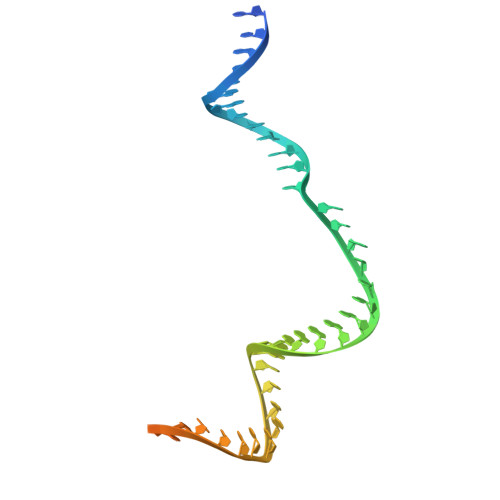
DNA (50-MER)50synthetic construct
Sequence Annotations
Expand
Reference Sequence
Find similar nucleic acids by:  (by identity cutoff) 
Entity ID: 3
MoleculeChains LengthOrganismImage
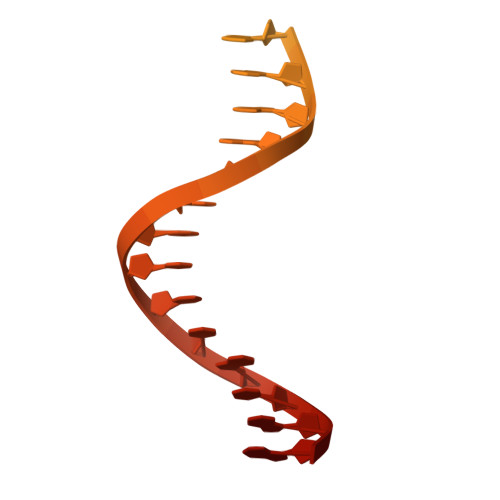
DNA (50-MER)50synthetic construct
Sequence Annotations
Expand
Reference Sequence
Find similar nucleic acids by:  (by identity cutoff) 
Entity ID: 4
MoleculeChains LengthOrganismImage
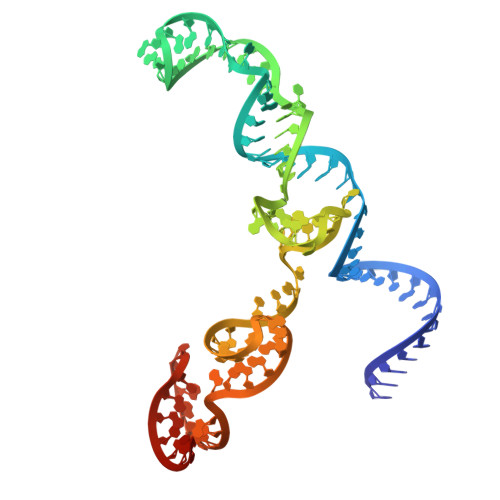
RNA (102-MER)102synthetic construct
Sequence Annotations
Expand
Reference Sequence

Experimental Data & Validation

Experimental Data

  • Method: ELECTRON MICROSCOPY
  • Resolution: 4.40 Å
  • Aggregation State: PARTICLE 
  • Reconstruction Method: SINGLE PARTICLE 
EM Software:
TaskSoftware PackageVersion
RECONSTRUCTIONcryoSPARC

Structure Validation

View Full Validation Report


Entry History 

& Funding Information

Deposition Data


Funding OrganizationLocationGrant Number
Not funded--

Revision History  (Full details and data files)

  • Version 1.0: 2025-12-31
    Type: Initial release
  • Version 1.1: 2026-03-25
    Changes: Data collection, Database references
  • Version 1.2: 2026-04-01
    Changes: Data collection, Database references
  • Version 1.3: 2026-05-06
    Changes: Data collection, Database references