Download Mendeley
Targeting mGlyR with nanobodies for depression.
Laboute, T., Zucca, S., Sial, O.K., Sharma, M., Brunori, G., Singh, S., Nageswar, K.V., Peng, H., Rader, C., Becker, J.A., Le Merrer, J., Singh, A.K., Martemyanov, K.A.(2026) Nat Commun 17: 831-831
- PubMed: 41588006 Search on PubMedSearch on PubMed Central
- DOI: https://doi.org/10.1038/s41467-026-68339-x
- Primary Citation Related Structures:
9VOR, 9VOS - PubMed Abstract:
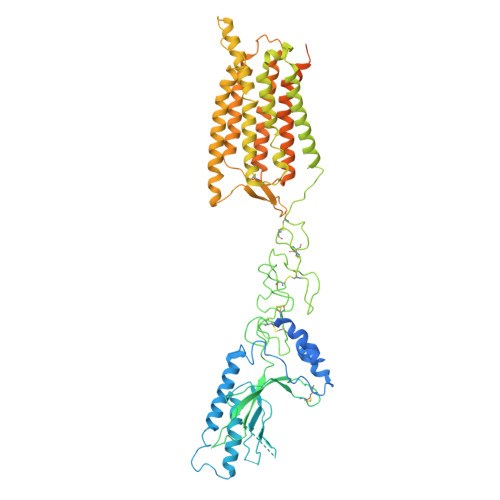
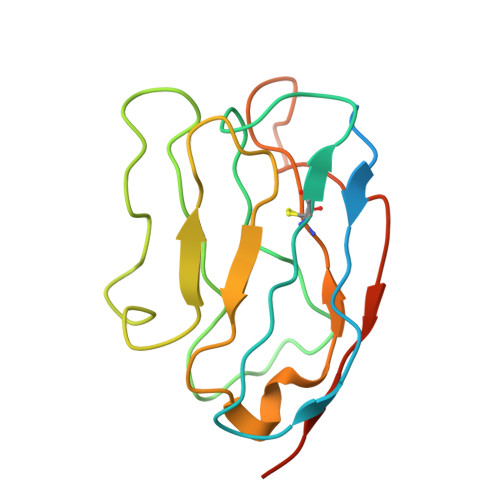
Development of therapies for neuropsychiatric conditions is one of the greatest challenges of modern medicine. Common limitations of traditional small molecule drugs include poor efficacy, off-target side effects and difficult druggability of many targets. In this study, we report a different approach deploying small engineered single domain antibodies, known as nanobodies, for the treatment of depression, a prevalent neuropsychiatric condition. We develop highly selective nanobodies for a recently discovered glycine receptor mGlyR crucially linked to pathophysiology of depression. Using a mouse model of stress-induced depression, we show that non-invasive intranasal delivery of nanobody produces rapid and lasting anti-depressant effect. We solve an atomic structure of mGlyR bound to nanobody and use a variety of cell-based approaches to reveal the mechanism of mGlyR modulation and its impact on neural circuitry. These findings support development of biologics for the treatment of intractable brain disorders.
- Université de Tours, INSERM, Imaging Brain & Neuropsychiatry iBraiN U1253, Tours, France.
Organizational Affiliation: