Download Mendeley
Harnessing Glutamine-117 Plasticity toward Structure-Based Identification of Triazole IL-17 Inhibitors.
Bauer, M.R., Velcicky, J., Goetz, A., Furet, P., Nimsgern, P., Tichkule, R., Schlapbach, A., Meyer, A., Vogtle, M., Rolando, C., Lehmann, H., Berst, F., Riek, S., Schmutz, P., Lehmann, S., Scheufler, C., Rondeau, J.M., Burkhart, C., Gommermann, N., Knoepfel, T.(2025) J Med Chem 68: 26494-26512
- PubMed: 41355177 Search on PubMed
- DOI: https://doi.org/10.1021/acs.jmedchem.5c02794
- Primary Citation Related Structures:
9SQI, 9SQX, 9SR8 - PubMed Abstract:
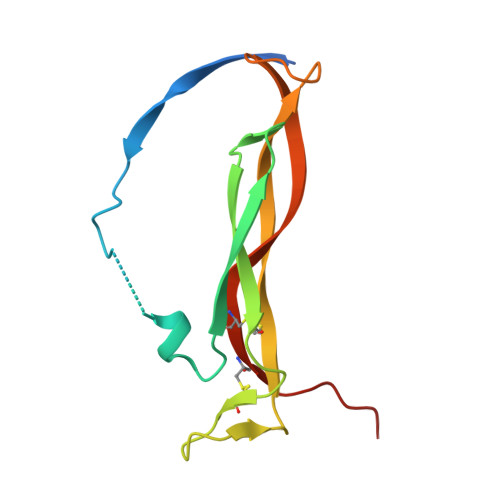
The proinflammatory cytokine IL-17 is crucial for host defense but has also been linked to various inflammatory and autoimmune diseases. Antibody-based IL-17 inhibitors like secukinumab (Cosentyx) have demonstrated clinical success in psoriasis, psoriatic arthritis, and ankylosing spondylitis, sparking efforts to develop orally bioavailable small molecule alternatives. However, most small molecule IL-17 inhibitors failed in preclinical and clinical stages due to safety concerns and other challenges. This work describes the discovery of a 1,2,4-triazole scaffold that acts as an amide bioisostere. Its unique vector toward the Trp90 pocket, a key cavity for ligand binding, required the development of novel motifs. A structure-based library approach, considering the high plasticity of the Gln117 side chain, yielded structurally diverse Trp90 pocket binding motifs. The X-ray structures of the most potent hits guided subsequent optimization, resulting in triazole-based IL-17 inhibitors with low nanomolar cellular activity, which are promising leads for further development.
- Novartis Biomedical Research, CH-4002 Basel, Switzerland.
Organizational Affiliation: