Download Mendeley
Chymotrypsin digestion analysis of glycyl radical and B12-dependent radical enzymes indicates common substrate-induced structural shifts.
Mitjkova, E., Tars, K., Kalnins, G.(2025) Sci Rep 15: 45789-45789
- PubMed: 41360885 Search on PubMed
- DOI: https://doi.org/10.1038/s41598-025-28641-y
- Primary Citation Related Structures:
9RCO, 9RCP, 9RCQ, 9RCR - PubMed Abstract:
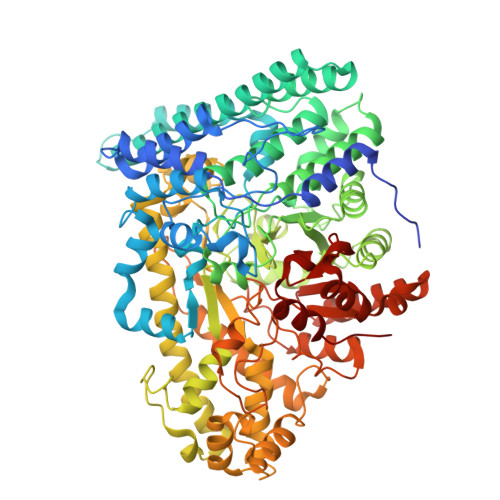
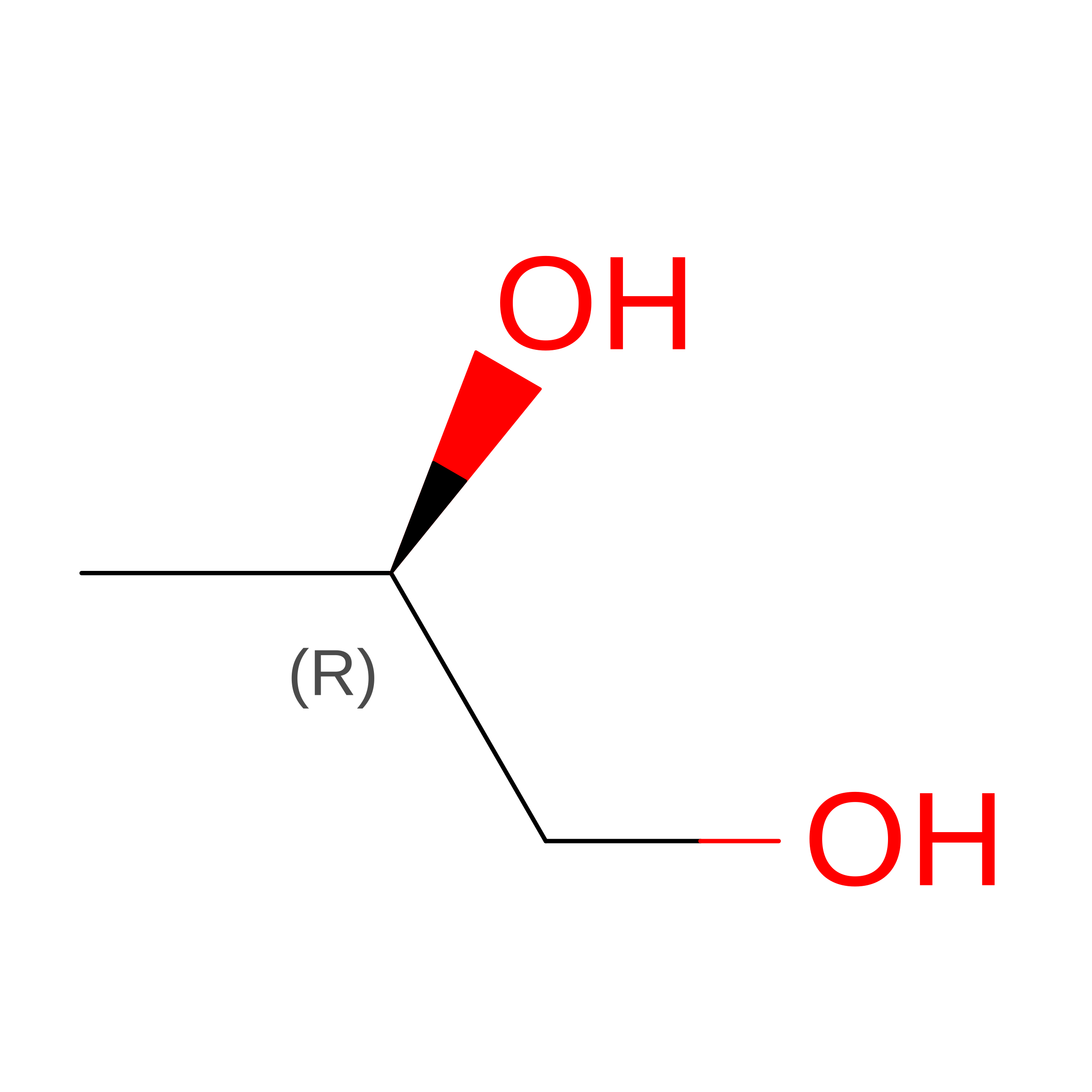
Radical enzymes, including glycyl radical enzymes (GREs) and B12-dependent enzymes, catalyze a wide range of biochemical transformations through radical-based mechanisms. An unusual property-conditional resistance to chymotrypsin digestion-has previously been reported for two GREs. However, whether this feature is broadly conserved among related radical enzymes and what factors trigger it has remained unclear. In this study, we investigated five radical enzymes: four GREs and one B12-dependent diol dehydratase. Proteolytic assays demonstrated that substrate binding significantly enhances resistance to chymotrypsin degradation, suggesting a conserved conformational shift from an open, protease-sensitive state to a closed, protease-resistant form. X-ray crystallographic analysis of a GRE-type 1,2-propanediol dehydratase from Raoultella planticola confirmed that active site occupancy correlates with increased protease resistance. Importantly, non-substrate analogs such as 1,3-propanediol and β-methylcholine failed to induce protection, underscoring the specificity of ligand-induced stabilization. These findings reveal a broadly conserved mechanism of substrate-induced conformational stabilization in GREs and B12-dependent radical enzymes and offer a scalable strategy for ligand identification with potential applications in enzyme engineering.
- Latvian Biomedical Research and Study Centre, Riga, Latvia.
Organizational Affiliation: