Download Mendeley
Inhibitors of GapN-dependent NADPH supply as potential lead compounds for novel therapeutics against Streptococcus pyogenes.
Schutt, I., Einwohlt, P., Wandinger, A.M., Teuffel, J., Wirsing, R., Hlawatschke, B.H., Fehlauer, H.L., Bothe, S., Bader, N., Monaci, E., Kreikemeyer, B., Schindelin, H., Wade, R.C., Fiedler, T.(2026) Virulence 17: 2609393-2609393
- PubMed: 41437515 Search on PubMedSearch on PubMed Central
- DOI: https://doi.org/10.1080/21505594.2025.2609393
- Primary Citation Related Structures:
8QHN, 9RAS, 9RAU, 9RAV, 9RAZ, 9RB1 - PubMed Abstract:
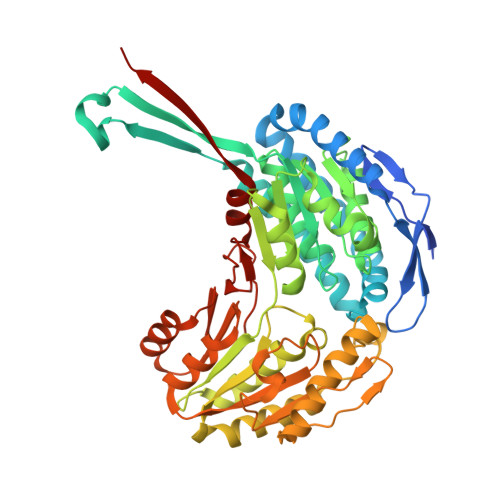
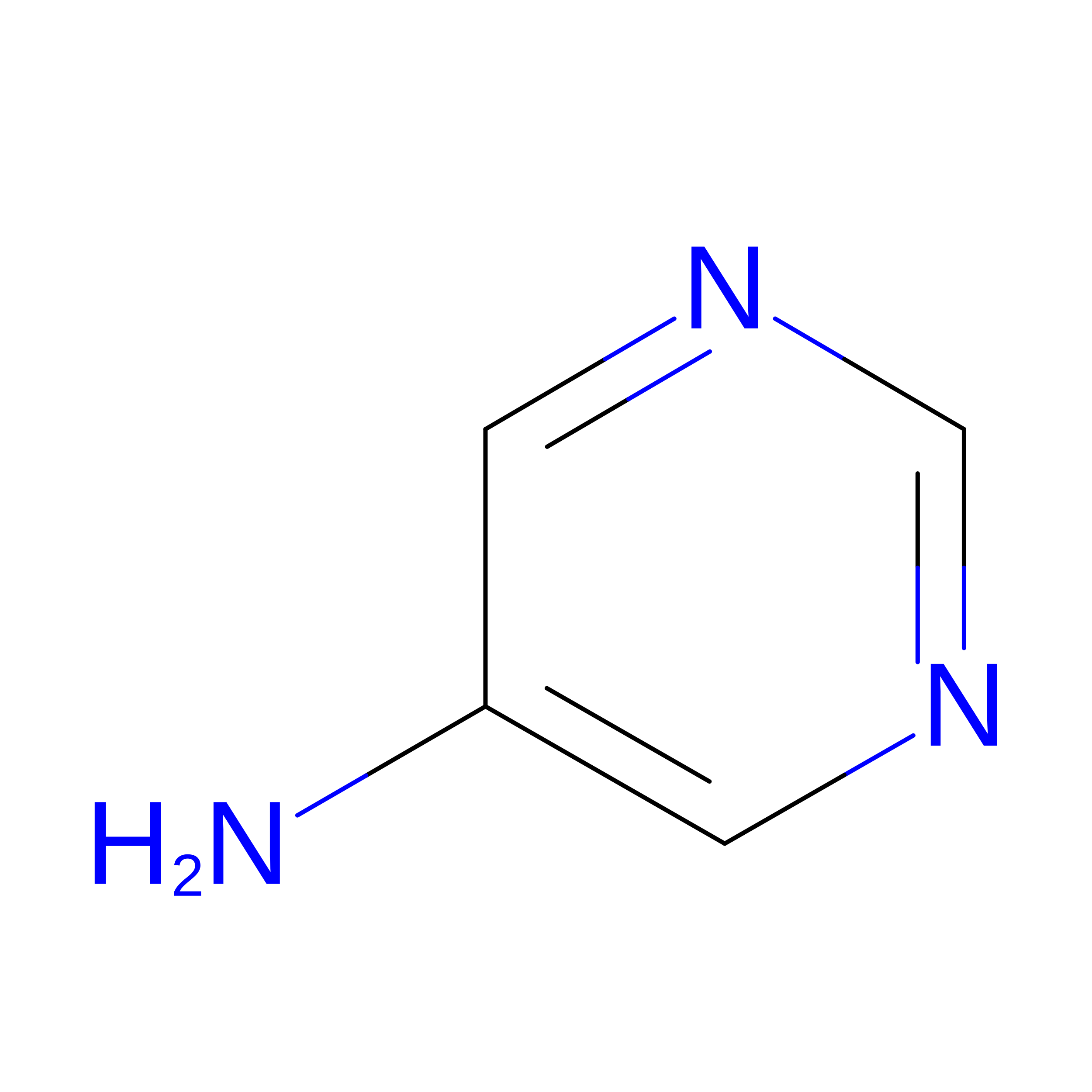
Infections with Streptococcus pyogenes are among the most important diseases caused by bacteria and are responsible for around 500,000 deaths every year. In 2024, macrolide-resistant S. pyogenes was added to the WHO's list of priority pathogens. The non-phosphorylating glyceraldehyde-3-phosphate dehydrogenase GapN has been identified as a potential drug target in S. pyogenes . SpyGapN is the major NADP-reducing enzyme in these bacteria as they lack the oxidative part of the pentose phosphate pathway. In this study, in silico docking of compound libraries to the glyceraldehyde 3-phosphate binding pocket of SpyGapN was used to screen for potential competitive inhibitors. Among the candidates identified with this approach, 1,2-dihydroxyethane-1,2-disulfonate (glyoxal bisulfite) showed the strongest inhibition of SpyGapN activity in vitro . In a complementary approach, crystallographic fragment screening was conducted, which identified the ultra-low-molecular-weight compounds pyrimidine-5-amine and 4-hydroxypyridazine targeting the cofactor-binding pocket of SpyGapN. Both low-molecular-weight compounds were experimentally confirmed to inhibit the activity of purified SpyGapN. Combinations of glyoxal bisulfite with either pyrimidine-5-amine or 4-hydroxypyridazine enhanced the inhibitory effect of SpyGapN. Glyoxal bisulfite was able to kill S. pyogenes . This effect was accelerated by combining glyoxal bisulfite with 4-hydroxypyridazine. While these findings suggest that inhibition of SpyGapN probably contributes to the observed antibacterial activity, the exact mechanism of action remains to be confirmed, as the compounds also affect other G3P-converting enzymes. Nevertheless, these compounds provide a promising starting point for the development of more specific SpyGapN inhibitors.
- Institute of Medical Microbiology, Virology, and Hygiene, Rostock University Medical Center, Rostock, Germany.
Organizational Affiliation: