Download Mendeley
The cotranslational cycle of the ribosome-bound Hsp70 homolog Ssb.
Zhang, Y., Grundmann, L., Vollmar, L., Schimpf, J., Hubscher, V., Areeb, M., Grishkovskaya, I., Moddemann, A., Werner, K., Hugel, T., Haselbach, D., Rospert, S.(2026) Nat Commun 17: 961-961
- PubMed: 41545346 Search on PubMedSearch on PubMed Central
- DOI: https://doi.org/10.1038/s41467-025-67685-6
- Primary Citation Related Structures:
9R9O, 9R9P - PubMed Abstract:
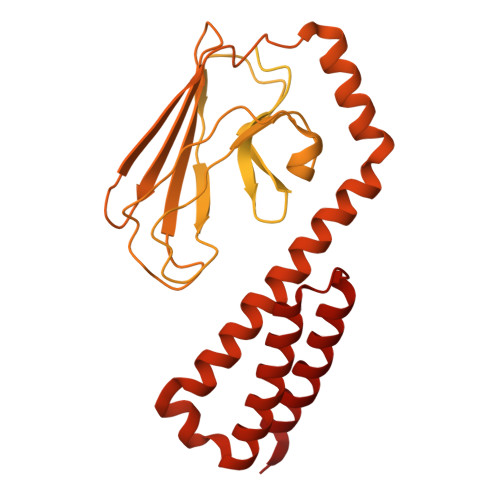
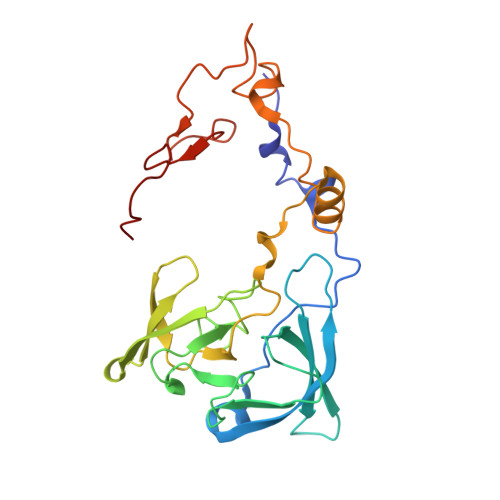
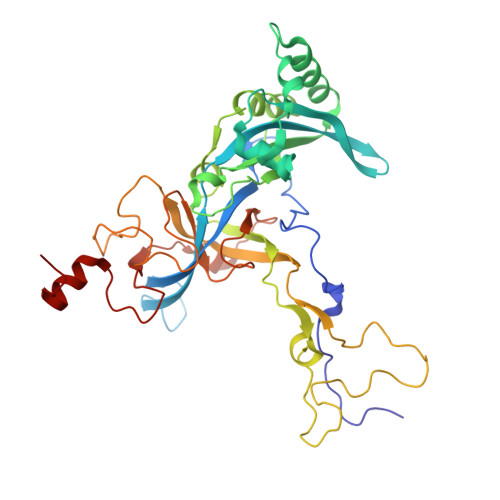
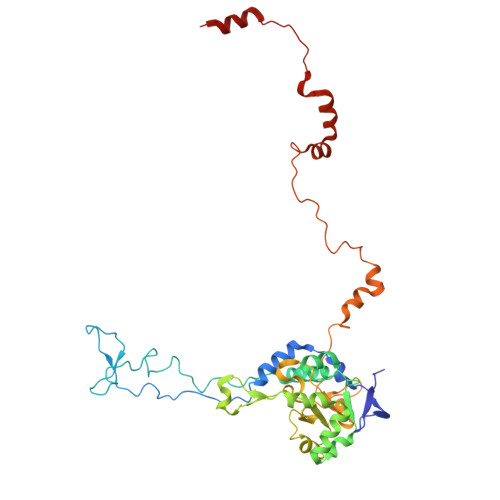
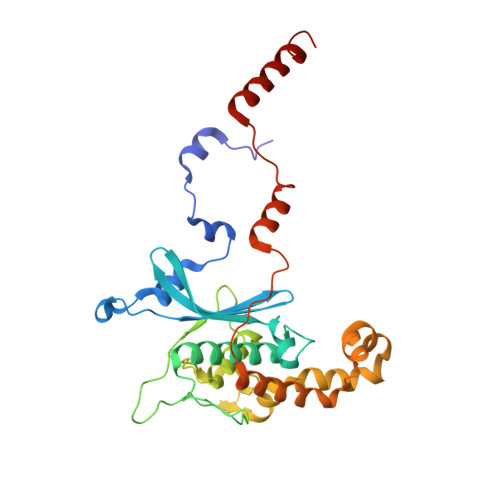
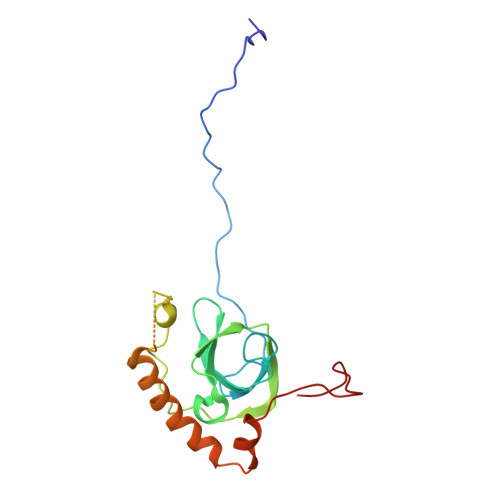
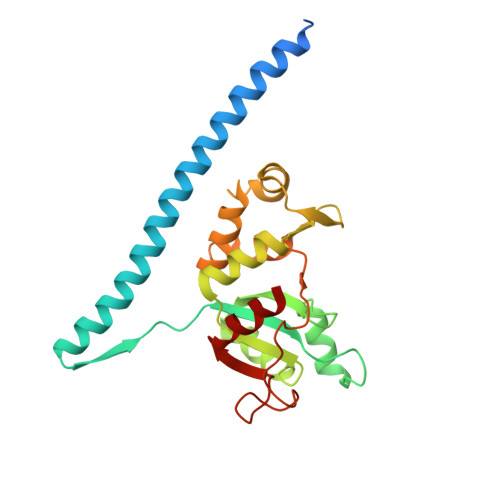
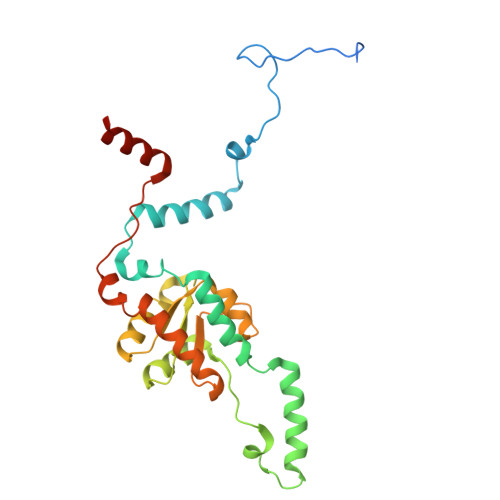
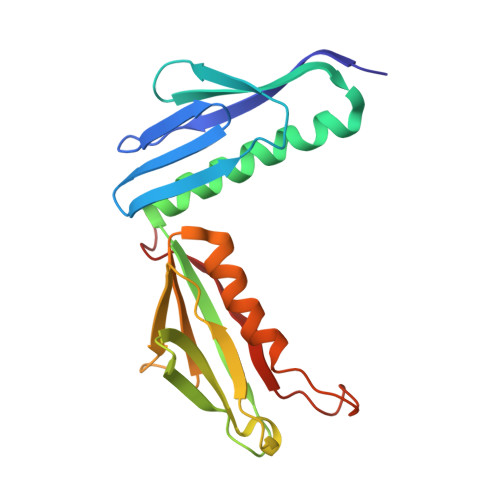
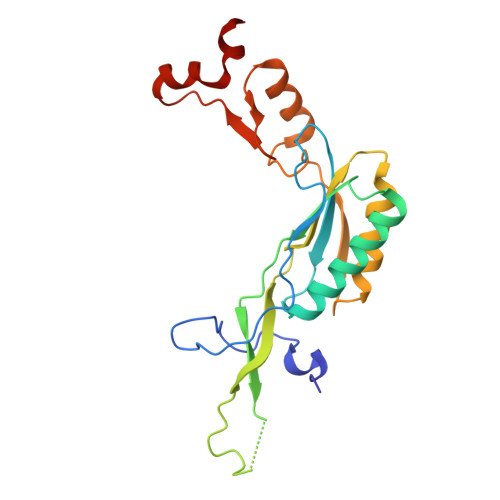
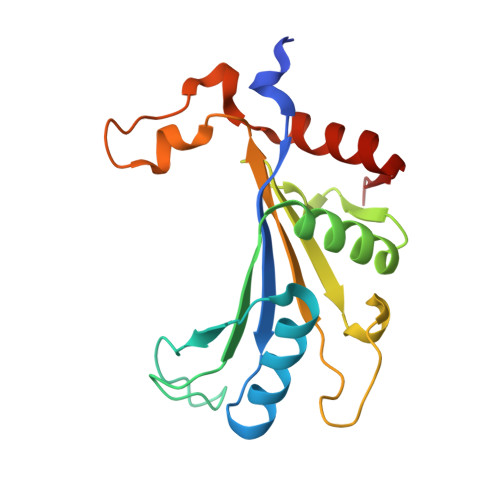
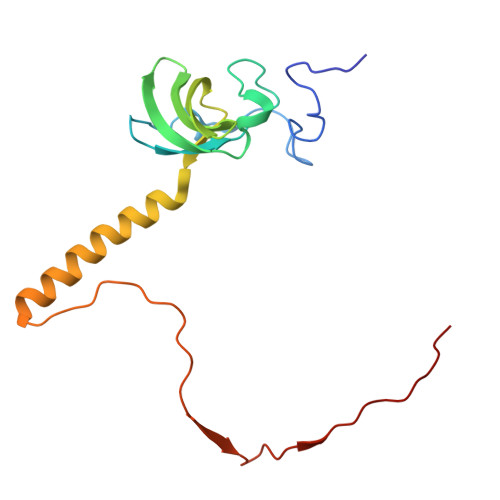
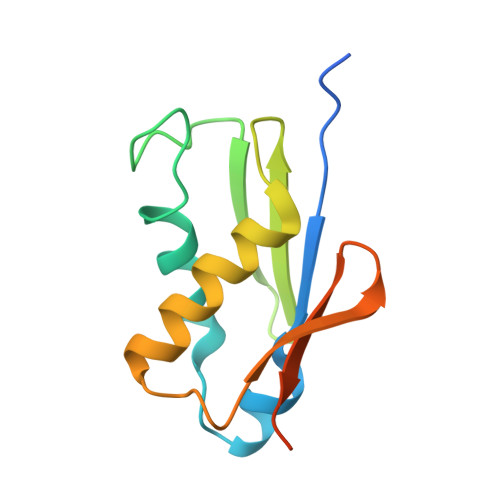
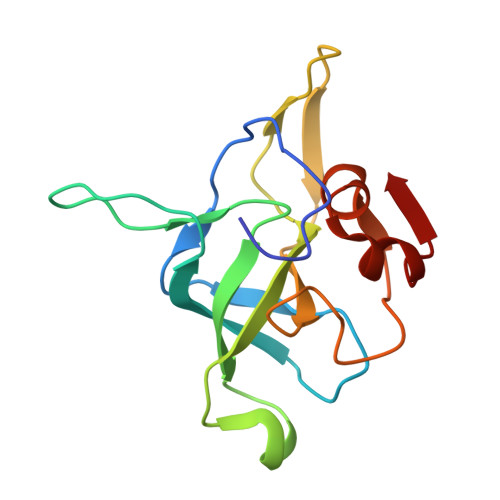
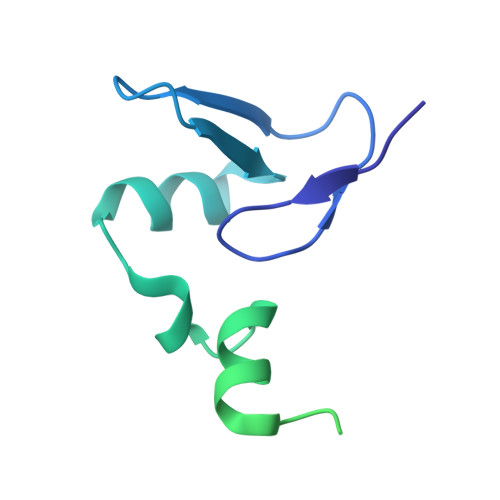
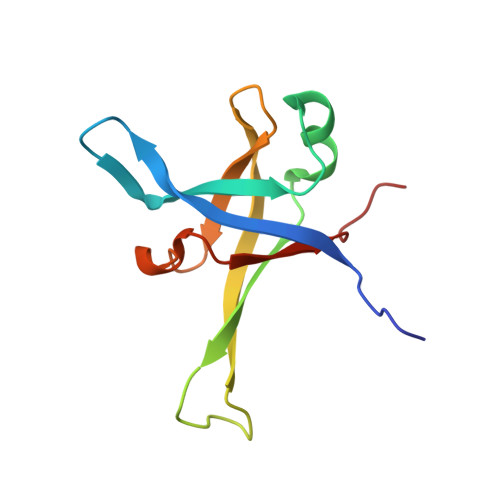
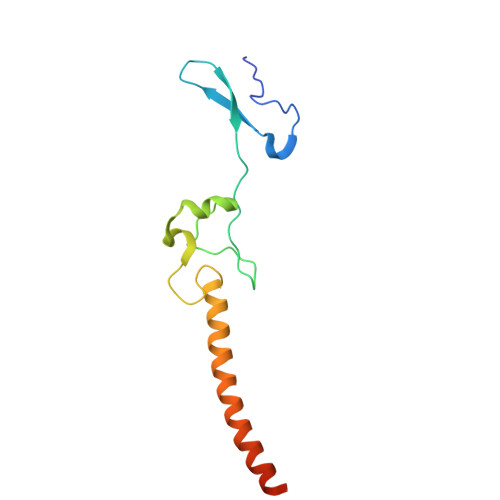
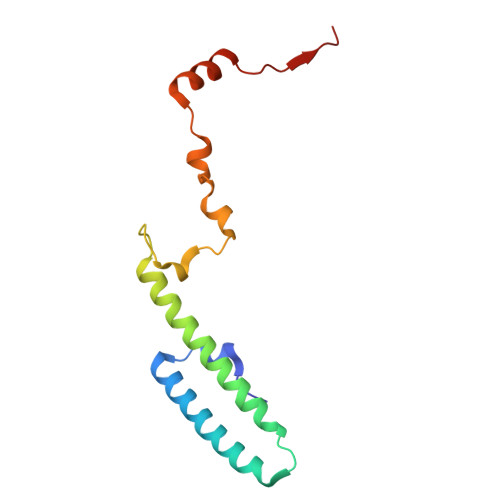
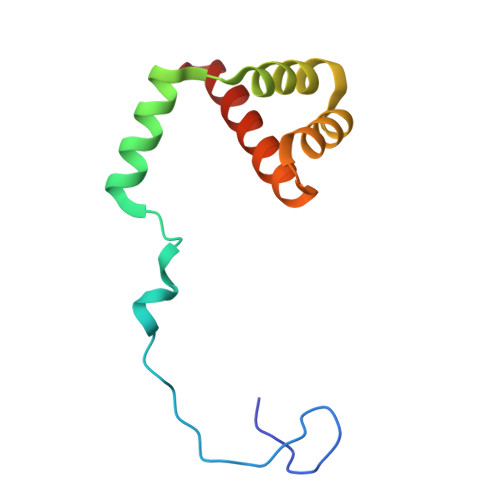
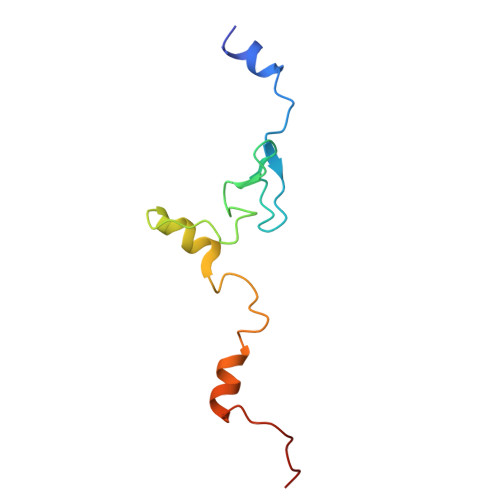
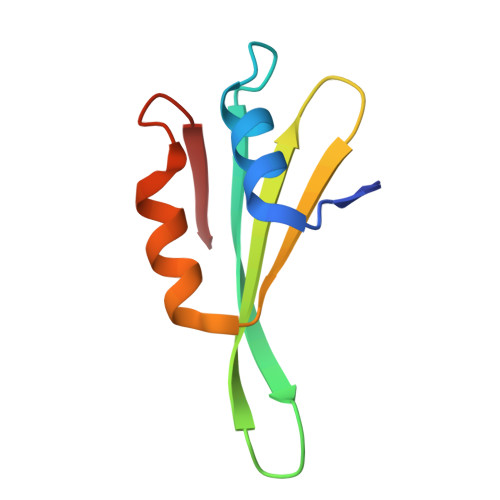
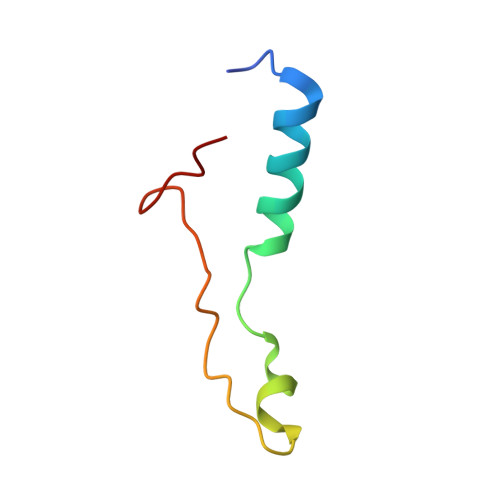
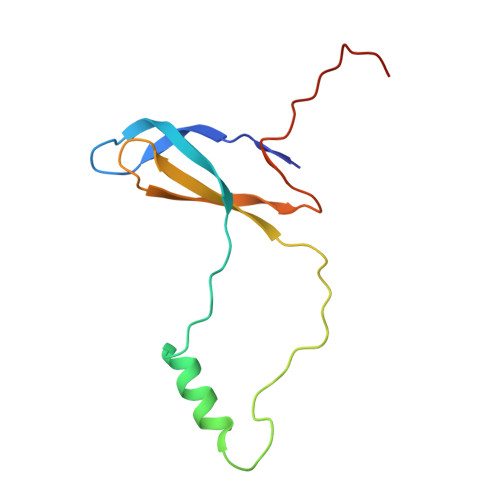
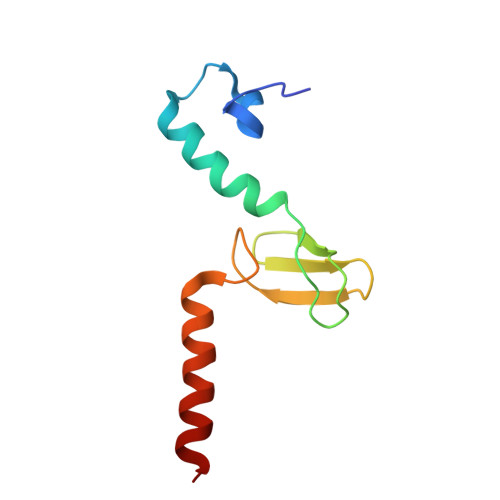
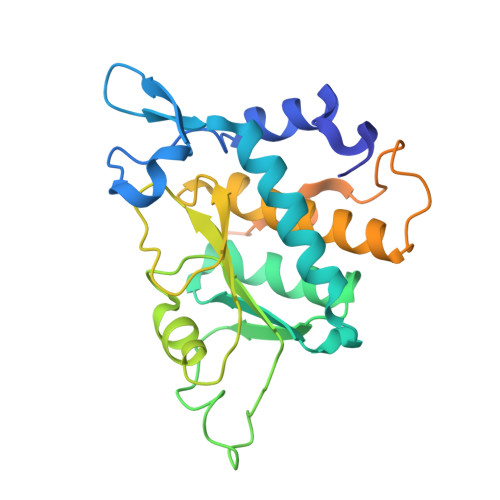
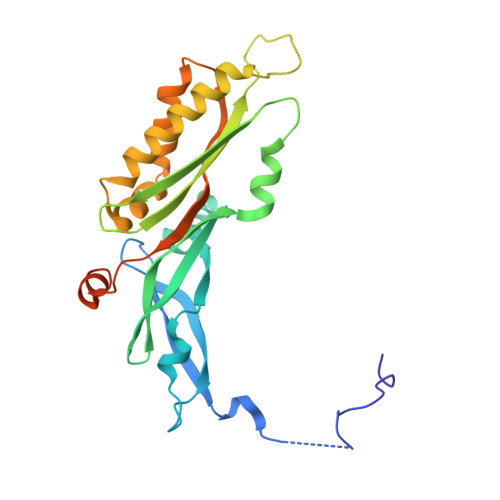
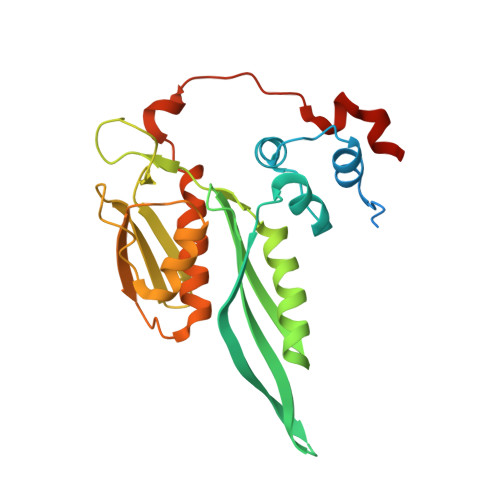
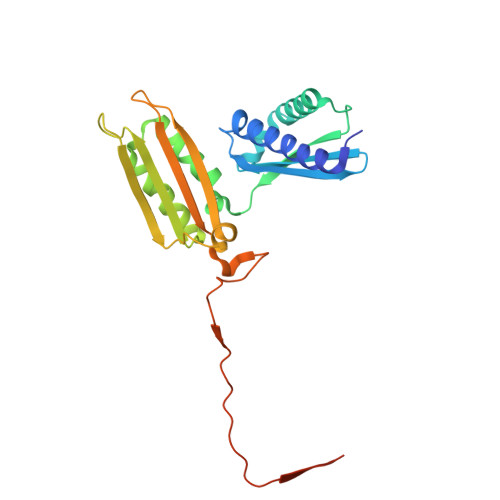
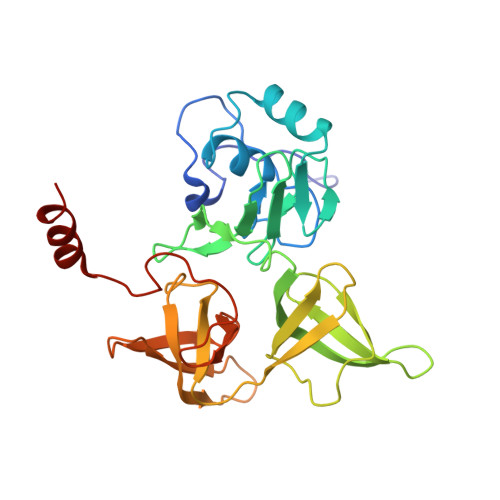
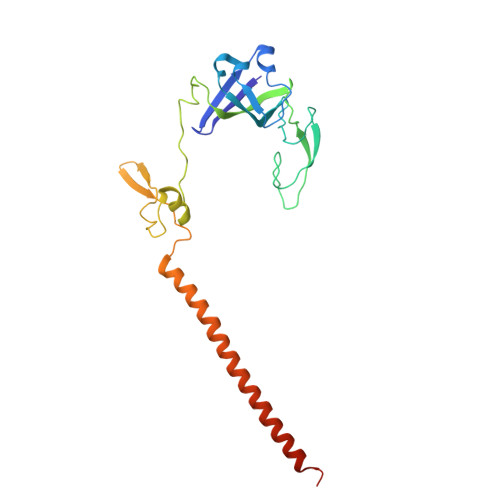
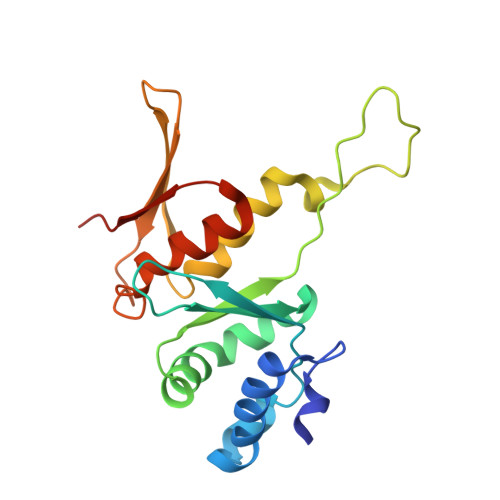
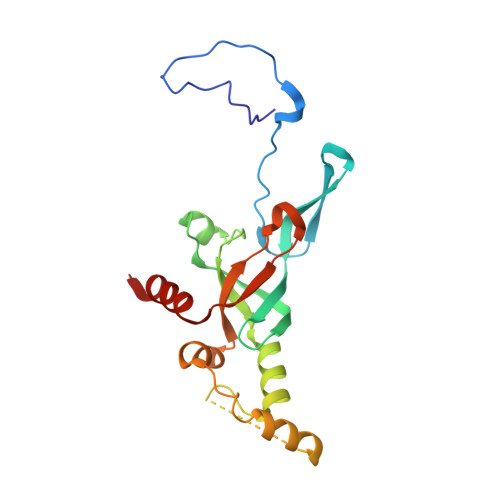
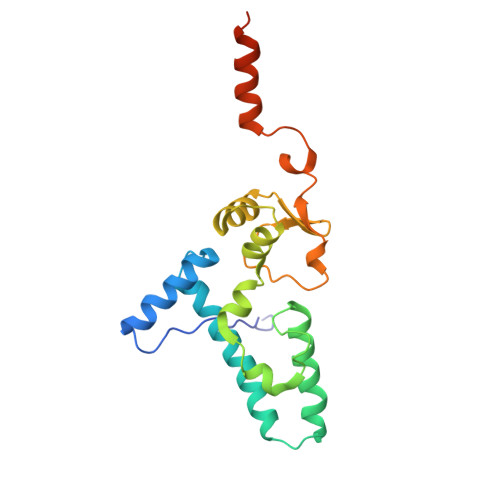
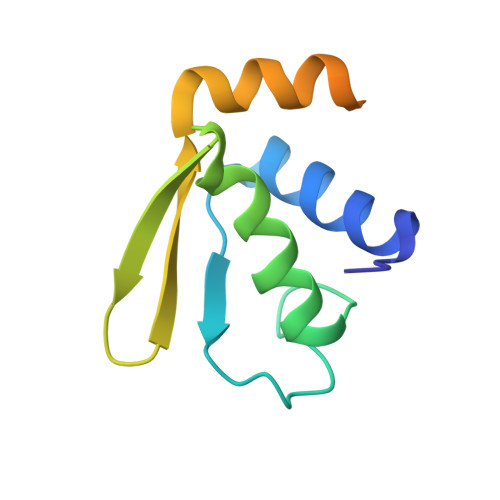
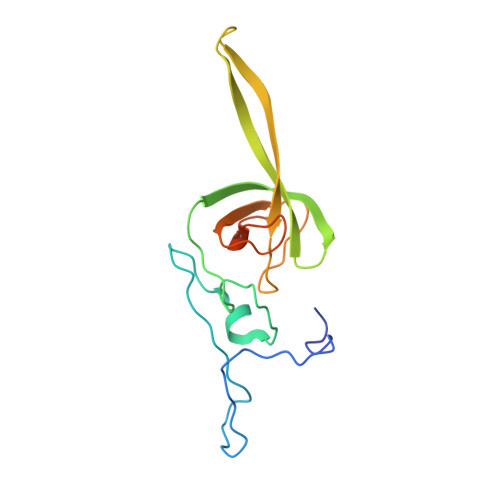
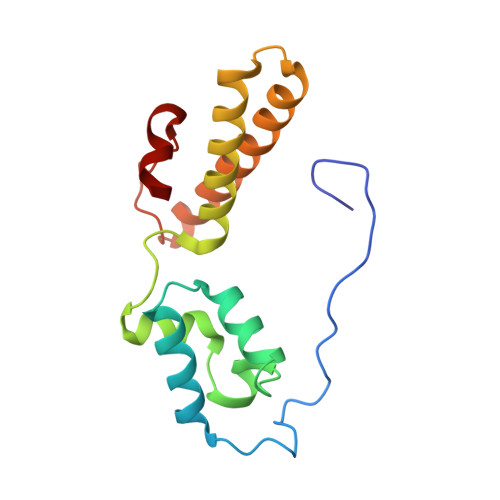
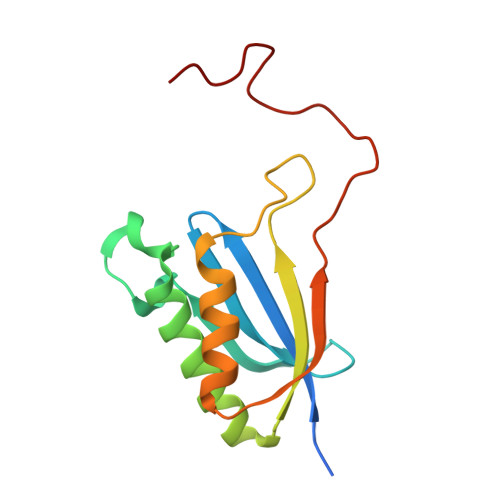
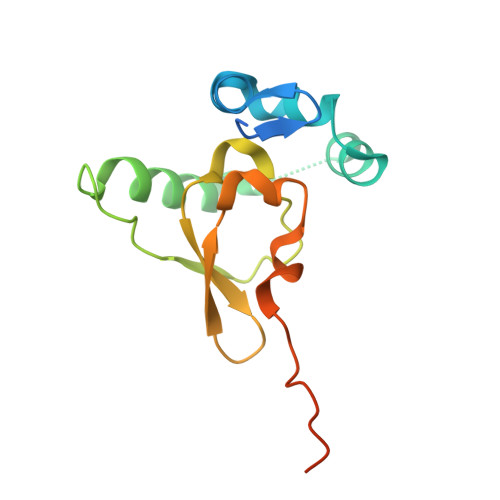
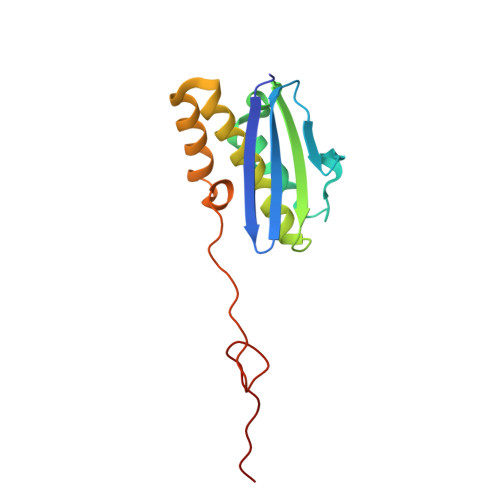
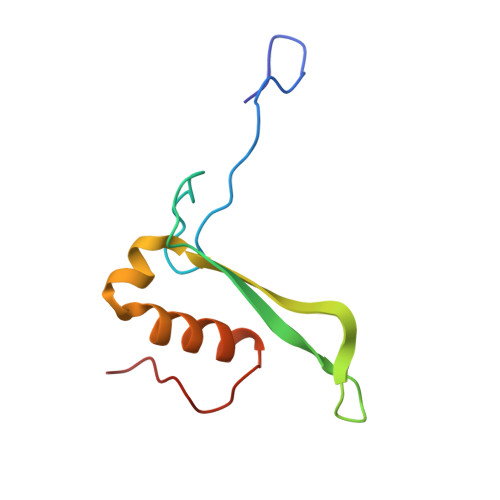
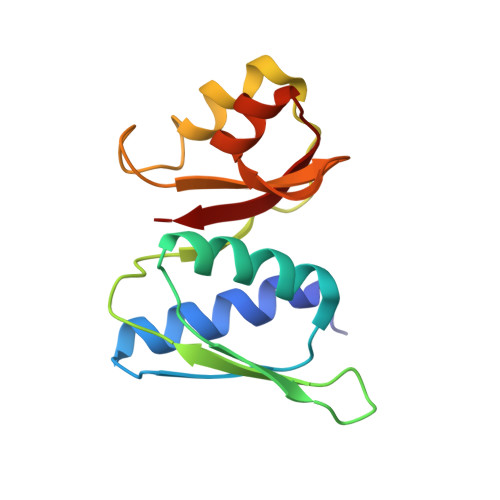
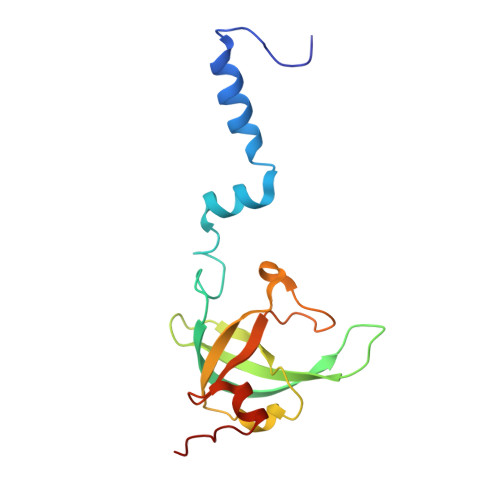
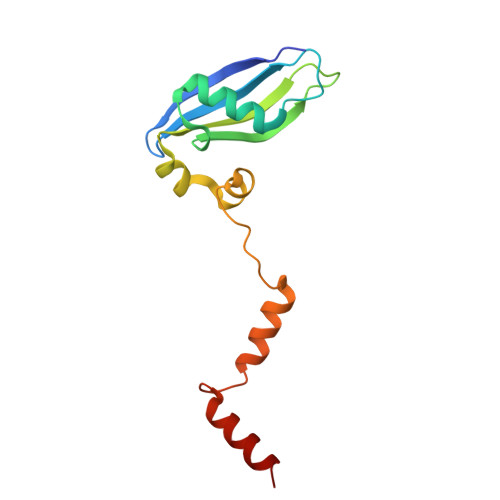
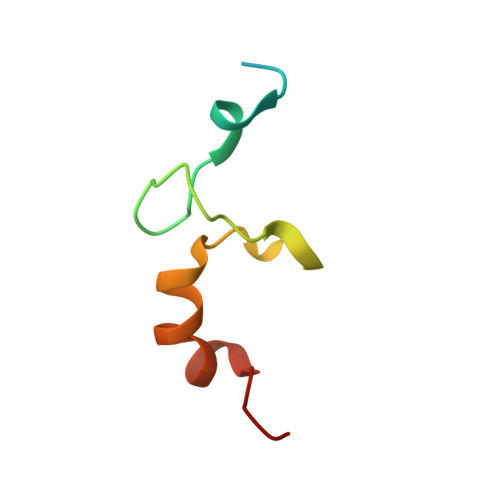
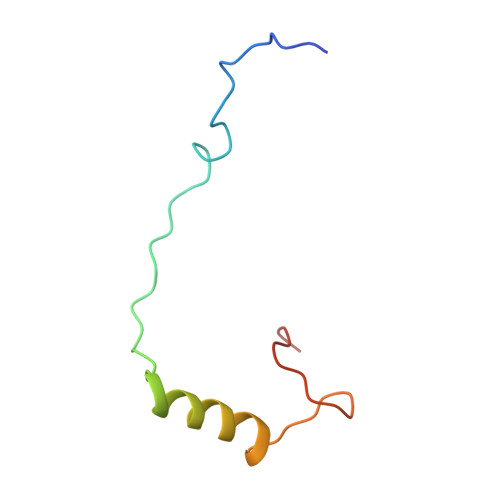
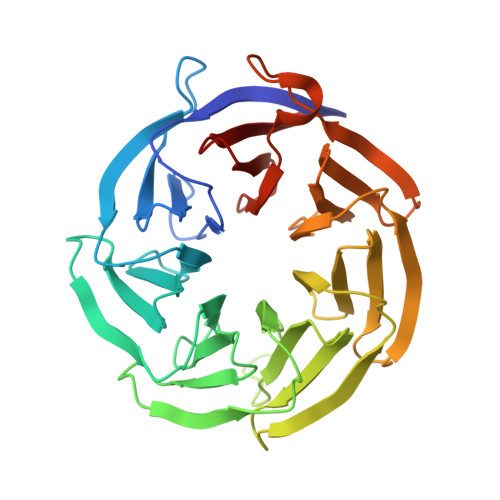
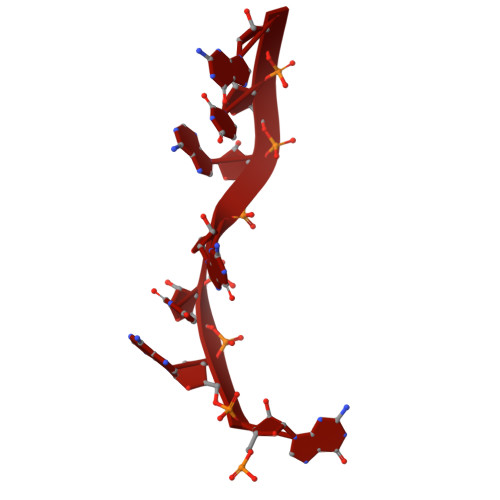
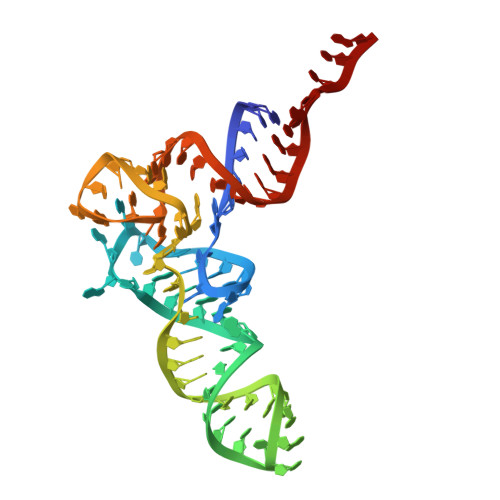
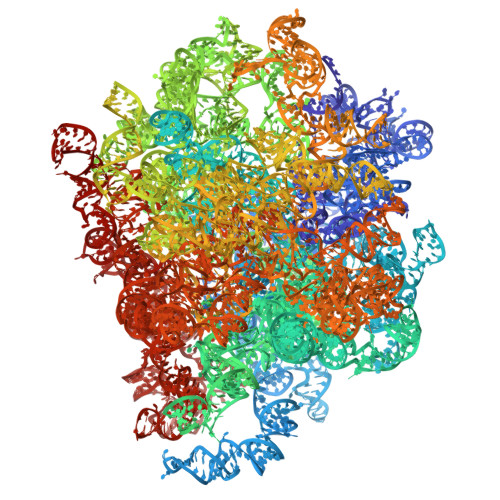
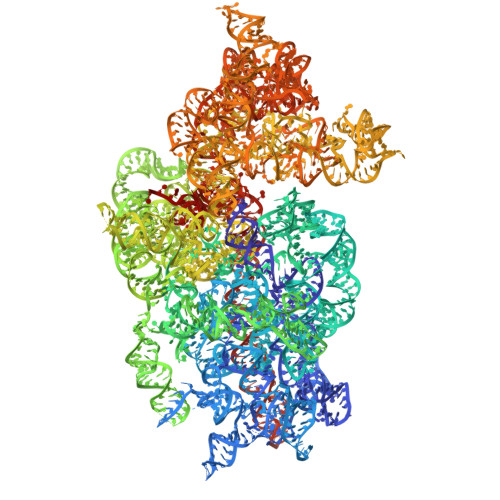
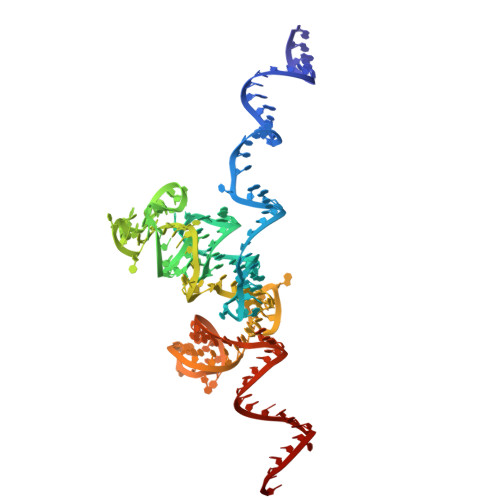
Coupling of ribosomal translation with cotranslational protein folding is essential for cellular homeostasis. In eukaryotes, Hsp70 and its J-domain cochaperone, the heterodimeric ribosome-associated complex (RAC), are central to this process; however, mechanistic insights into the coordination of Hsp70 function with translation remain limited. Here, we present two cryo-EM structures of the ribosome-bound yeast Hsp70 Ssb, identifying Rpl25/uL23 as the ribosomal binding site and revealing its interaction with a model nascent chain. Together with detailed biochemical and mutational analyses, these structures enable us to delineate the intricate RAC-dependent cycle, which positions the substrate binding domain of Ssb-ATP close to the tunnel exit to receive nascent chains. This arrangement allows Ssb to undergo substantial conformational changes upon ATP hydrolysis without steric clashes with the ribosome, while the substrate binding domain of Ssb, now anchored by the tightly bound nascent chain, remains close to the tunnel exit.
- Institute of Biochemistry and Molecular Biology, ZBMZ, Faculty of Medicine, University of Freiburg, Freiburg, Germany.
Organizational Affiliation: