Download Mendeley
Structural basis of multitasking by the apicoplast DNA polymerase from Plasmodium falciparum.
Kumari, A., Enache, T., Craggs, T.D., Pata, J.D., Lahiri, I.(2025) Nucleic Acids Res 53
- PubMed: 41099714 Search on PubMedSearch on PubMed Central
- DOI: https://doi.org/10.1093/nar/gkaf1005
- Primary Citation Related Structures:
9QSC, 9QU8, 9QUA, 9QUJ, 9QUN, 9QV9 - PubMed Abstract:
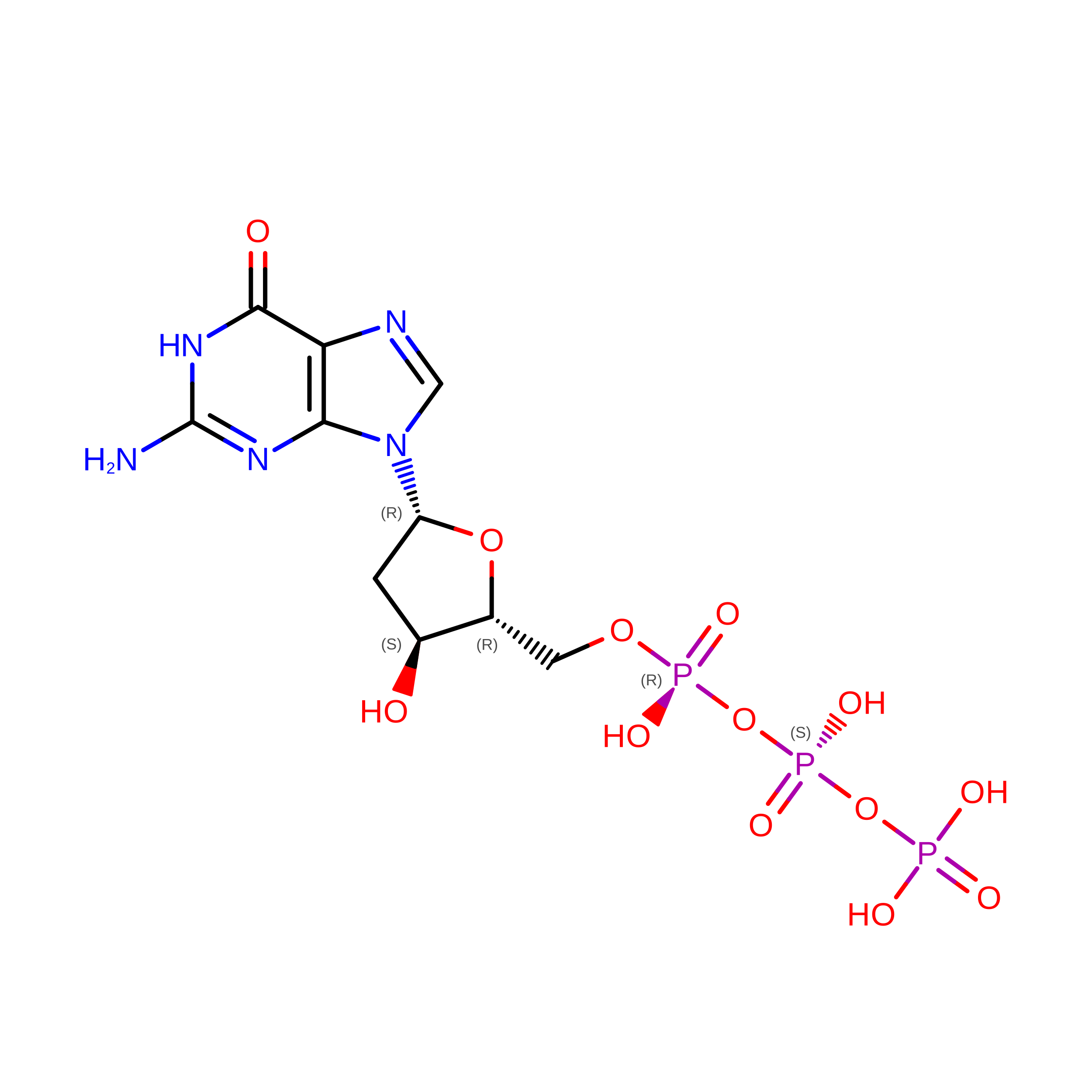
Plasmodium falciparum is a eukaryotic pathogen responsible for the majority of malaria-related fatalities. Plasmodium belongs to the phylum Apicomplexa and, like most members of this phylum, contains a non-photosynthetic plastid called the apicoplast. The apicoplast has its own genome, replicated by a dedicated replisome. Unlike other cellular replisomes, the apicoplast replisome uses a single DNA polymerase (apPol). This suggests that apPol can multitask and catalyse both replicative and lesion bypass synthesis. Replicative synthesis relies on a restrictive active site for high accuracy while lesion bypass typically requires an open active site. This raises the question: how does apPol combine the structural features of multiple DNA polymerases in a single protein? Using single-particle electron cryomicroscopy (cryoEM), we have solved the structures of apPol bound to its undamaged DNA and nucleotide substrates in five pre-chemistry conformational states. We found that apPol can accommodate a nascent base pair with the fingers in an open configuration, which might facilitate the lesion bypass activity. In the fingers-open state, we identified a nascent base pair checkpoint that preferentially selects Watson-Crick base pairs, an essential requirement for replicative synthesis. Taken together, these structural features might explain how apPol balances replicative and lesion bypass synthesis.
- Molecular Microbiology, School of Biosciences, The University of Sheffield, Sheffield S10 2TN, United Kingdom.
Organizational Affiliation: