Download Mendeley
Role of electrostatics in cold adaptation: A comparative study of eury- and stenopsychrophilic triose phosphate isomerase.
Nowak, J.S., Olesen, S., Tian, P., Baerentsen, R.L., Brodersen, D.E., Otzen, D.E.(2025) Biochim Biophys Acta Proteins Proteom 1873: 141072-141072
- PubMed: 40220927 Search on PubMed
- DOI: https://doi.org/10.1016/j.bbapap.2025.141072
- Primary Citation Related Structures:
9QUS, 9QUU - PubMed Abstract:
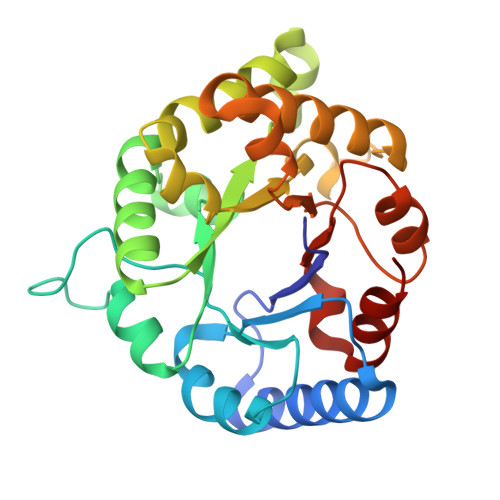
Psychrophilic (cold-active) organisms have developed enzymes that facilitate sufficient metabolic activity at low temperatures to sustain life. This occurs through molecular adaptations that tend to increase protein flexibility at the expense of stability. However, psychrophiles also vary in their growth conditions. Eurypsychrophiles thrive over a wide temperature range and often prefer temperatures above 20 °C, while stenopsychrophiles grow optimally below 15 °C and are more narrowly adapted to cold temperatures. To elucidate differences between these two classes of enzymes, we here compare the stability and unfolding kinetics of two orthologues of the basal household enzyme triose phosphate isomerase, one from the stenopsychrophilic Antarctic permafrost bacterium Rhodonellum psychrophilum (sTPI) and the other from the eurypsychrophilic Greenland ikaite column bacterium Rhodococcus sp. JG-3 (eTPI). Remarkably, sTPI proved significantly more thermostable and resistant to chemical denaturation than its eurypsychrophilic counterpart, eTPI, in the absence of ionic components in solution, whereas inclusion of electrostatic screening agents in the form of sodium chloride or the charged denaturant guanidinium chloride largely cancelled out this difference. Thus, electrostatics play a prominent role in stabilizing the stenopsychrophilic sTPI, and a mandatory low-temperature growth environment does not preclude the development of considerable thermotolerance for individual enzymes. We were able to increase the thermostability of sTPI using an evolutionary machine learning model, which transferred several sTPI residues into the eTPI active site. While the stabilizing effect was modest, the combination of individual mutations was additive, underscoring the potential of combining multiple beneficial mutations to achieve enhanced enzyme properties.
- Interdisciplinary Nanoscience Center (iNANO), Aarhus University, Gustav Wieds Vej 14, 8000 Aarhus C, Denmark.
Organizational Affiliation: