9QQR | pdb_00009qqr

S.aureus ClpC decameric resting state


Experimental Data Snapshot

  • Method: ELECTRON MICROSCOPY
  • Resolution: 4.70 Å
  • Aggregation State: PARTICLE 
  • Reconstruction Method: SINGLE PARTICLE 

wwPDB Validation   3D Report Full Report


This is version 1.3 of the entry. See complete history


Literature

Allosteric control of the bacterial ClpC/ClpP protease and its hijacking by antibacterial peptides.

Jenne, T.Engelhardt, L.Baronaite, I.Levy, D.Riven, I.Malolepszy, M.Azinas, S.Sych, T.Sezgin, E.Flemming, D.Sinning, I.Haran, G.Carroni, M.Mogk, A.

(2025) EMBO J 44: 6273-6296

  • DOI: https://doi.org/10.1038/s44318-025-00575-1
  • Primary Citation of Related Structures:  
    9QCL, 9QQR, 9QRW

  • PubMed Abstract: 

    The hexameric AAA+ protein ClpC, combined with peptidase ClpP, forms a critical ATP-dependent protease in bacteria, essential for virulence. ClpC is usually repressed in an inactive resting state, where two ClpC spirals interact via coiled-coil M-domains. Antibacterial peptides and partner proteins trigger ClpC activation by binding to its N-terminal domain (NTD). This study reveals that the NTD stabilizes the resting state through multiple anchoring points to M-domains and ATPase domains. The same NTD sites also serve as binding sites for adaptor proteins and substrates carrying phosphorylated arginines (pArg), disrupting resting state interactions and promoting active ClpC hexamer formation. This coupling ensures that ClpC activation aligns with substrate and partner protein availability. Toxic peptides exploit this regulatory mechanism, leading to continuous ClpC activation and harmful, uncontrolled proteolysis. These findings highlight the dual role of the NTD in maintaining resting state stability and mediating activation, emphasizing its critical role in bacterial protease regulation and its potential as a drug target.


  • Organizational Affiliation
    • Center for Molecular Biology of Heidelberg University (ZMBH), DKFZ-ZMBH Alliance, Im Neuenheimer Feld 345, Heidelberg, 69120, Germany.

Macromolecules
Find similar proteins by:  (by identity cutoff)  |  3D Structure
Entity ID: 1
MoleculeChains Sequence LengthOrganismDetailsImage
ATP-dependent Clp protease ATP-binding subunit ClpC818Staphylococcus aureusMutation(s): 0 
Gene Names: clpCSAOUHSC_00505
UniProt
Find proteins for Q2G0P5 (Staphylococcus aureus (strain NCTC 8325 / PS 47))
Explore Q2G0P5 
Go to UniProtKB:  Q2G0P5
Entity Groups  
Sequence Clusters30% Identity50% Identity70% Identity90% Identity95% Identity100% Identity
UniProt GroupQ2G0P5
Sequence Annotations
Expand
  • Reference Sequence
Small Molecules
Ligands 2 Unique
IDChains Name / Formula / InChI Key2D Diagram3D Interactions
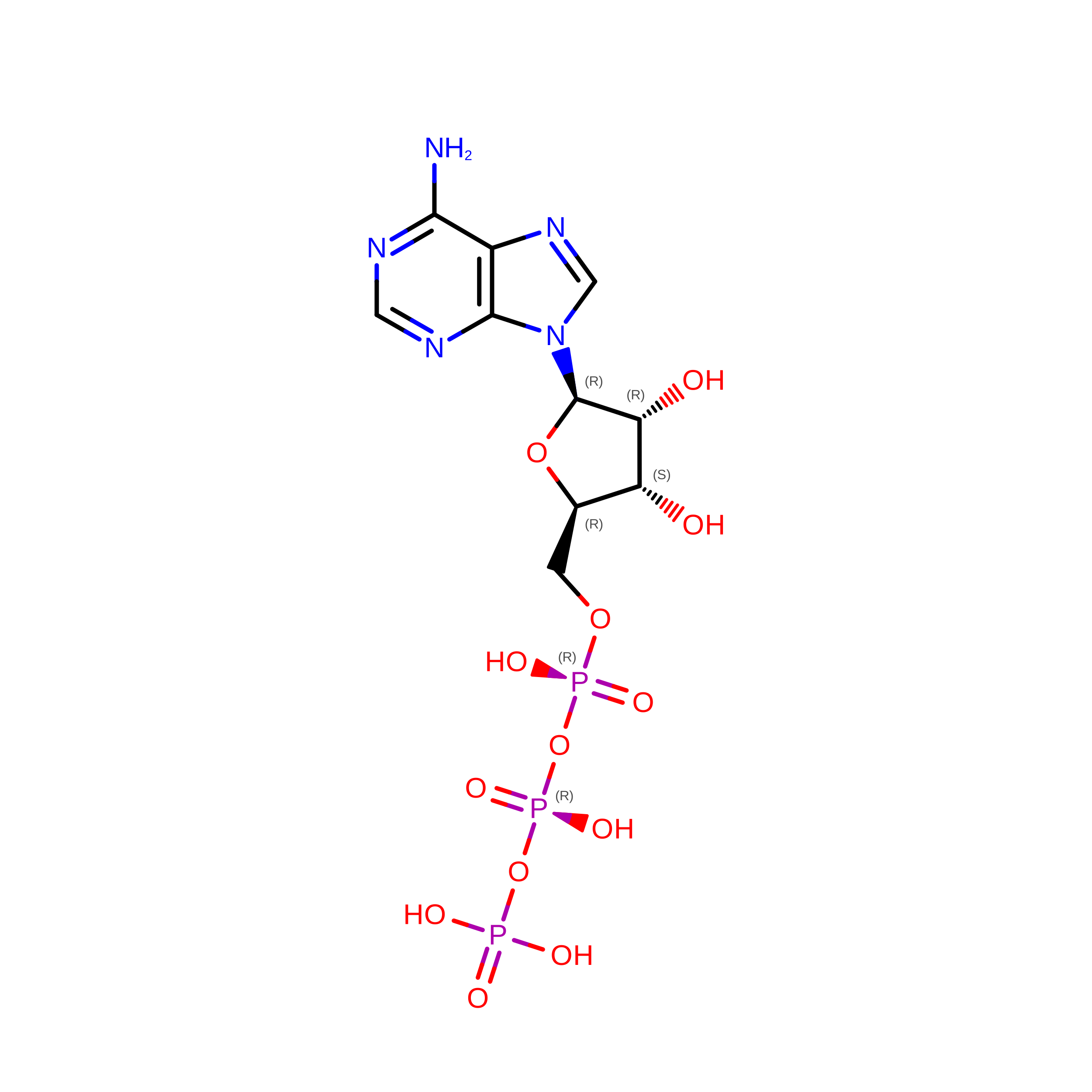
ATP (Subject of Investigation/LOI)
Query on ATP

Download Ideal Coordinates CCD File 
K [auth F]
L [auth G]
N [auth H]
P [auth I]
R [auth J]
K [auth F],
L [auth G],
N [auth H],
P [auth I],
R [auth J],
S [auth E],
T [auth D],
V [auth C],
X [auth B]
ADENOSINE-5'-TRIPHOSPHATE
C10 H16 N5 O13 P3
ZKHQWZAMYRWXGA-KQYNXXCUSA-N
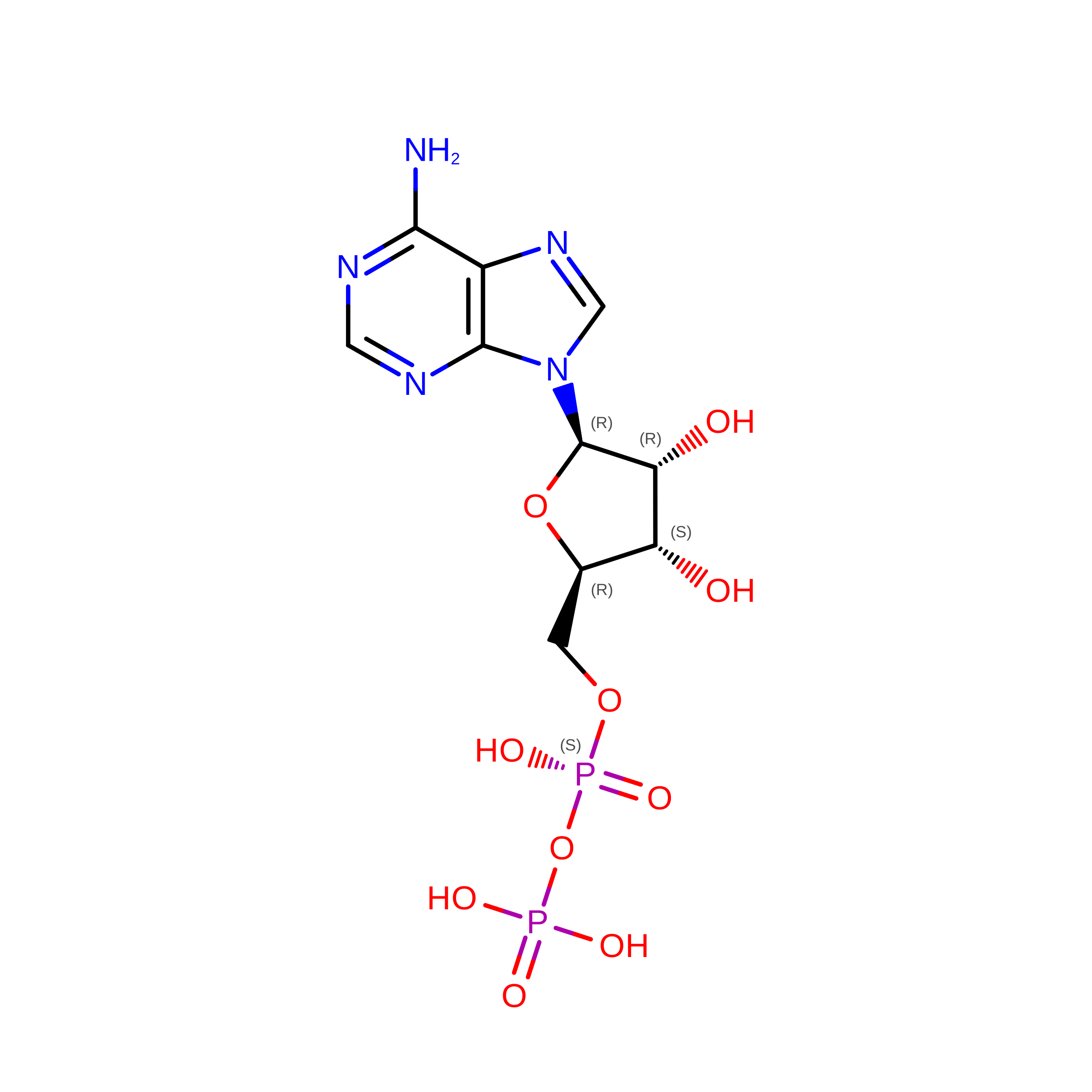
ADP (Subject of Investigation/LOI)
Query on ADP

Download Ideal Coordinates CCD File 
M [auth G]
O [auth H]
Q [auth I]
U [auth D]
W [auth C]
M [auth G],
O [auth H],
Q [auth I],
U [auth D],
W [auth C],
Y [auth B]
ADENOSINE-5'-DIPHOSPHATE
C10 H15 N5 O10 P2
XTWYTFMLZFPYCI-KQYNXXCUSA-N
Experimental Data & Validation

Experimental Data

  • Method: ELECTRON MICROSCOPY
  • Resolution: 4.70 Å
  • Aggregation State: PARTICLE 
  • Reconstruction Method: SINGLE PARTICLE 
EM Software:
TaskSoftware PackageVersion
MODEL REFINEMENTPHENIX1.21.2_5419

Structure Validation

View Full Validation Report


Entry History & Funding Information

Deposition Data


Funding OrganizationLocationGrant Number
Knut and Alice Wallenberg FoundationSweden--

Revision History  (Full details and data files)

  • Version 1.0: 2025-07-30
    Type: Initial release
  • Version 1.1: 2025-08-20
    Changes: Data collection, Database references, Structure summary
  • Version 1.2: 2025-10-22
    Changes: Data collection, Database references
  • Version 1.3: 2025-11-12
    Changes: Data collection, Database references