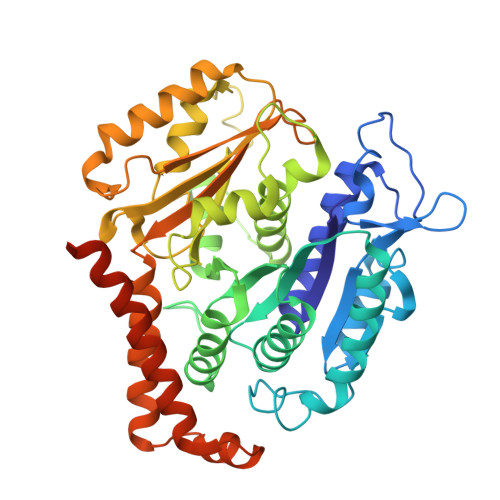
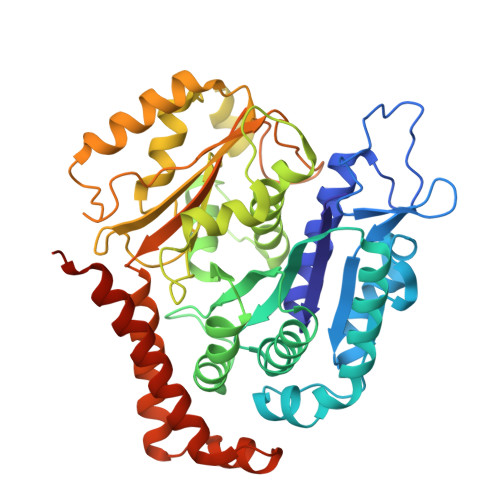
9PND | pdb_00009pnd

In situ microtubule of EpoB-induced regenerating axons


Experimental Data Snapshot

  • Method: ELECTRON MICROSCOPY
  • Resolution: 3.19 Å
  • Aggregation State: FILAMENT 
  • Reconstruction Method: HELICAL 

Starting Model: experimental
View more details

wwPDB Validation   3D Report Full Report


This is version 1.2 of the entry. See complete history


Literature

In situ structural mechanism of epothilone-B-induced CNS axon regeneration.

Bodakuntla, S.Taira, K.Yamada, Y.Alvarez-Brecht, P.Cada, A.K.Basnet, N.Zhang, R.Martinez-Sanchez, A.Biertumpfel, C.Mizuno, N.

(2025) Nature 648: 477-487

  • DOI: https://doi.org/10.1038/s41586-025-09654-z
  • Primary Citation of Related Structures:  
    9PND

  • PubMed Abstract: 

    Axons in the adult central nervous system (CNS) do not regenerate following injury, in contrast to neurons in the peripheral nervous system and neuronal growth during embryonic development. The molecular mechanisms that prevent regeneration of neurons in the CNS remain largely unknown 1,2 . Here, to address the intracellular response to injury, we developed an in situ cryo-electron tomography and cryo-electron microscopy platform to mimic axonal damage and present the structural mechanism underlying thalamic axon regeneration induced by the drug epothilone B. We observed that stabilized microtubules extend beyond the injury site, generating membrane tension and driving membrane expansion. Cryo-electron microscopy reveals the in situ structure of microtubules at 3.19 Å resolution, which engage epothilone B within the microtubule lattice at the regenerating front. During repair, tubulin clusters are delivered and incorporated into polymerizing microtubules at the regenerating site. These microtubule shoots serve as scaffolds for various types of vesicles and endoplasmic reticulum, facilitating the supply of materials necessary for axon repair until membrane tension normalizes. We demonstrate the unexpected ability of neuronal cells to adjust to strain induced by epothilone B, which creates homeostatic imbalances and activates axons to regeneration mode.


  • Organizational Affiliation
    • Laboratory of Structural Cell Biology, National Heart, Lung and Blood Institute, National Institutes of Health, Bethesda, MD, USA.

Macromolecules
Find similar proteins by:  (by identity cutoff)  |  3D Structure
Entity ID: 1
MoleculeChains Sequence LengthOrganismDetailsImage
Tubulin beta-3 chainA [auth B],
B [auth D]
450Mus musculusMutation(s): 0 
UniProt
Find proteins for Q9ERD7 (Mus musculus)
Explore Q9ERD7 
Go to UniProtKB:  Q9ERD7
Entity Groups  
Sequence Clusters30% Identity50% Identity70% Identity90% Identity95% Identity100% Identity
UniProt GroupQ9ERD7
Sequence Annotations
Expand
  • Reference Sequence
Find similar proteins by:  (by identity cutoff)  |  3D Structure
Entity ID: 2
MoleculeChains Sequence LengthOrganismDetailsImage
Detyrosinated tubulin alpha-1A chainC [auth A],
D [auth C]
451Mus musculusMutation(s): 0 
EC: 3.6.5
UniProt & NIH Common Fund Data Resources
Find proteins for P68369 (Mus musculus)
Explore P68369 
Go to UniProtKB:  P68369
IMPC:  MGI:98869
Entity Groups  
Sequence Clusters30% Identity50% Identity70% Identity90% Identity95% Identity100% Identity
UniProt GroupP68369
Sequence Annotations
Expand
  • Reference Sequence
Small Molecules
Ligands 4 Unique
IDChains Name / Formula / InChI Key2D Diagram3D Interactions
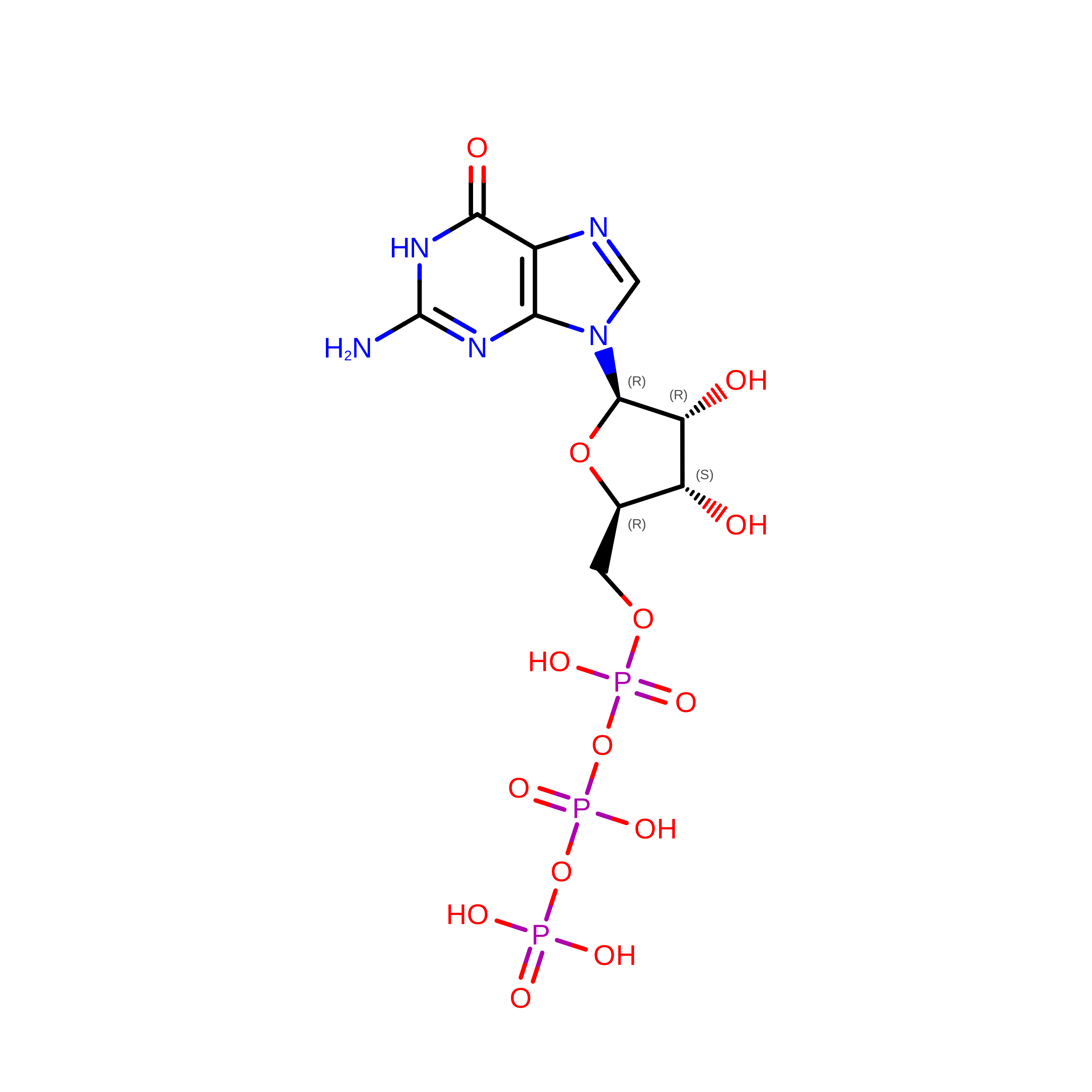
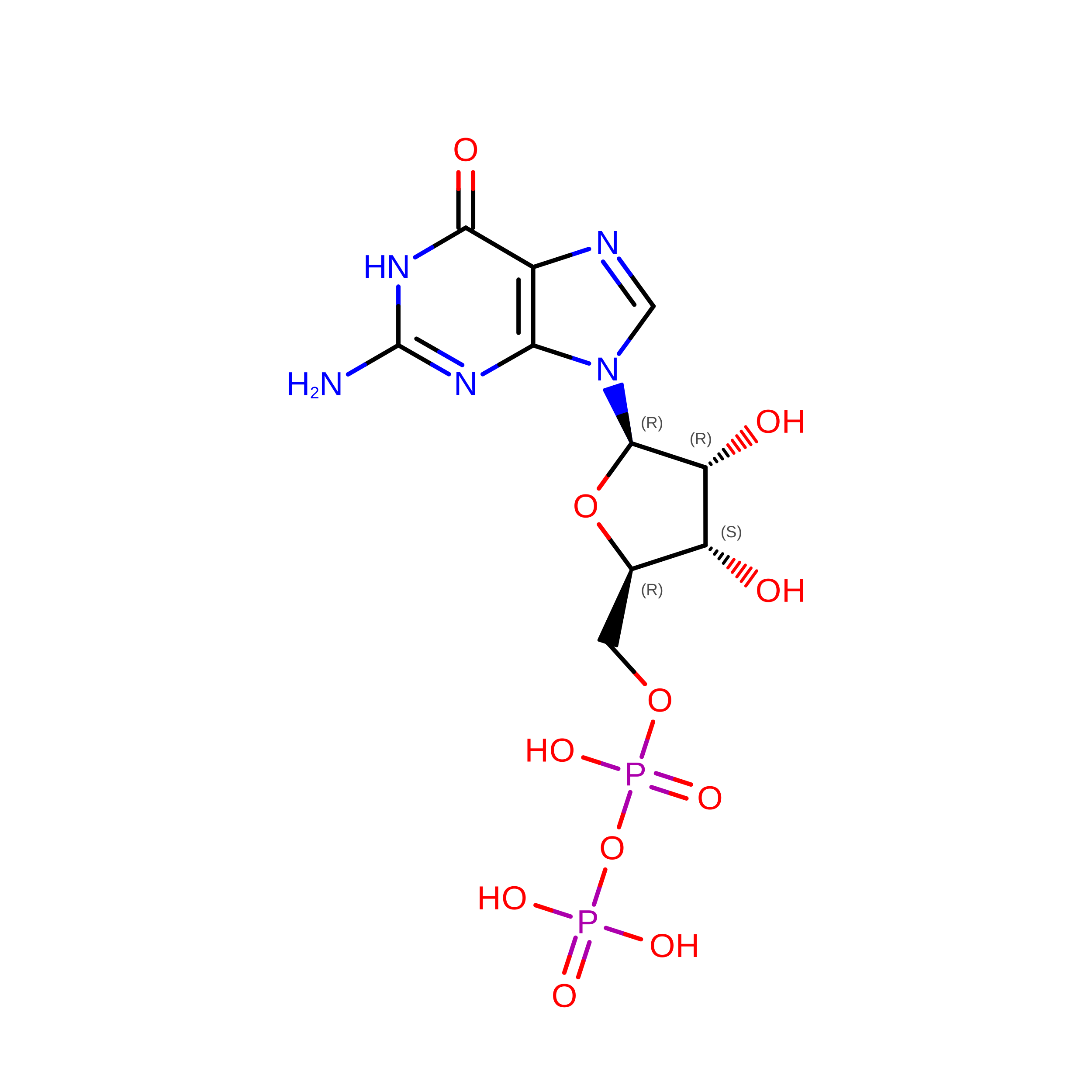
GTP
Query on GTP

Download Ideal Coordinates CCD File 
K [auth A],
M [auth C]
GUANOSINE-5'-TRIPHOSPHATE
C10 H16 N5 O14 P3
XKMLYUALXHKNFT-UUOKFMHZSA-N
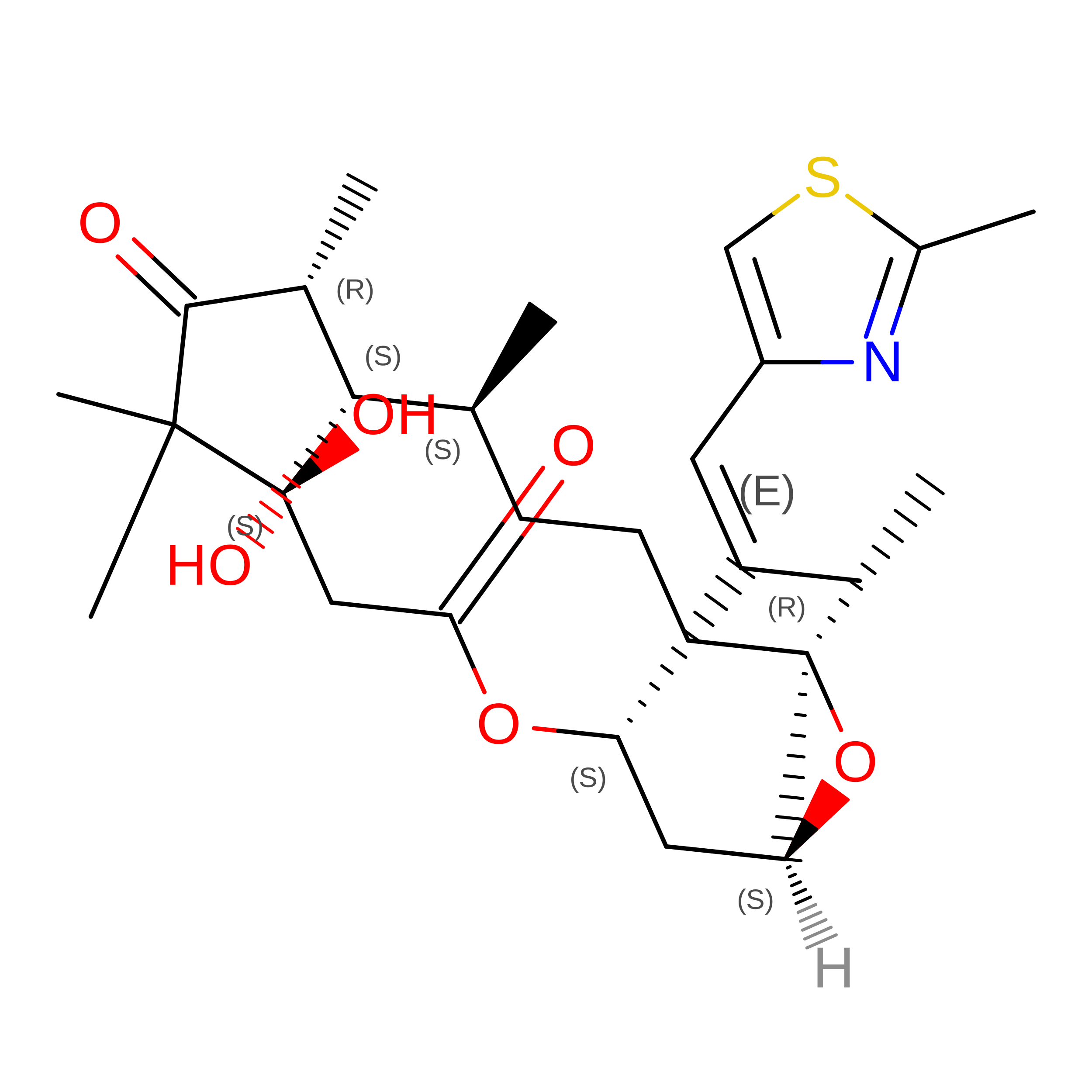
EPB (Subject of Investigation/LOI)
Query on EPB

Download Ideal Coordinates CCD File 
G [auth B],
J [auth D]
7,11-DIHYDROXY-8,8,10,12,16-PENTAMETHYL-3-[1-METHYL-2-(2-METHYL-THIAZOL-4-YL)VINYL]-4,17-DIOXABICYCLO[14.1.0]HEPTADECANE-5,9-DIONE
C27 H41 N O6 S
QXRSDHAAWVKZLJ-PVYNADRNSA-N
GDP
Query on GDP

Download Ideal Coordinates CCD File 
F [auth B],
I [auth D]
GUANOSINE-5'-DIPHOSPHATE
C10 H15 N5 O11 P2
QGWNDRXFNXRZMB-UUOKFMHZSA-N
MG
Query on MG

Download Ideal Coordinates CCD File 
E [auth B],
H [auth D],
L [auth A],
N [auth C]
MAGNESIUM ION
Mg
JLVVSXFLKOJNIY-UHFFFAOYSA-N
Experimental Data & Validation

Experimental Data

  • Method: ELECTRON MICROSCOPY
  • Resolution: 3.19 Å
  • Aggregation State: FILAMENT 
  • Reconstruction Method: HELICAL 
EM Software:
TaskSoftware PackageVersion
MODEL REFINEMENTPHENIX
RECONSTRUCTIONcryoSPARC4.5

Structure Validation

View Full Validation Report


Entry History & Funding Information

Deposition Data


Funding OrganizationLocationGrant Number
National Institutes of Health/National Heart, Lung, and Blood Institute (NIH/NHLBI)United States1ZIAHL006264

Revision History  (Full details and data files)

  • Version 1.0: 2025-11-12
    Type: Initial release
  • Version 1.1: 2025-11-26
    Changes: Data collection, Database references
  • Version 1.2: 2025-12-17
    Changes: Data collection, Database references