Download Mendeley
Structural basis for L-isoaspartyl-containing protein recognition by the human PCMTD1 cullin-RING E3 ubiquitin ligase.
Pang, E.Z., Zhao, B., Flowers, C., Oroudjeva, E., Winter, J.B., Pandey, V., Sawaya, M.R., Wohlschlegel, J., Loo, J.A., Rodriguez, J.A., Clarke, S.G.(2025) J Biol Chem 301: 110735-110735
- PubMed: 40975169 Search on PubMedSearch on PubMed Central
- DOI: https://doi.org/10.1016/j.jbc.2025.110735
- Primary Citation Related Structures:
9OMA, 9OMF - PubMed Abstract:
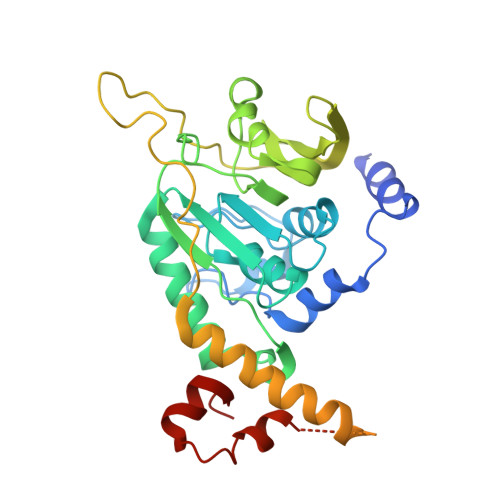
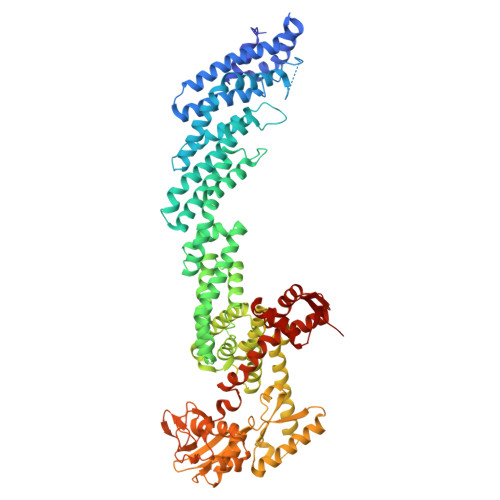
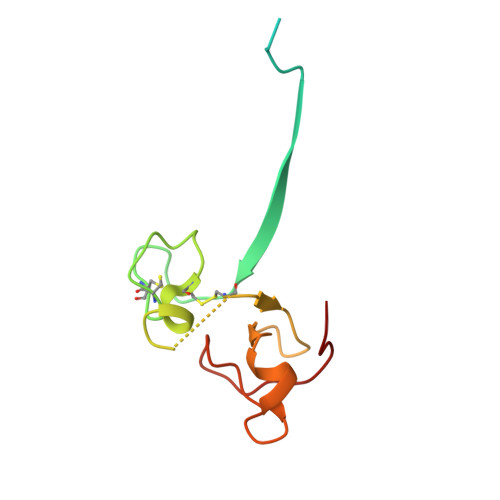
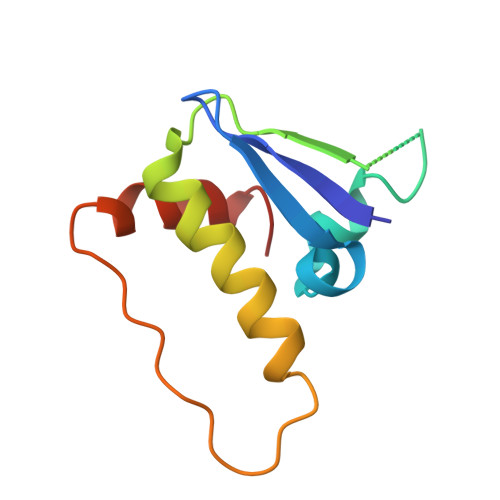
A major type of spontaneous protein damage that accumulates with age is the formation of kinked polypeptide chains with L-isoaspartyl residues. Mitigating this damage is necessary for maintaining proteome stability and prolonging organismal survival. Although repair through methylation by PCMT1 has been previously shown to suppress L-isoaspartyl accumulation, we provide an additional mechanism for L-isoaspartyl maintenance through PCMTD1, a cullin-RING ligase (CRL). We combined cryo-EM, native mass spectrometry, and biochemical assays to provide insight on how the assembly and architecture of human PCMTD1 in the context of a CRL complex fulfills this alternative mechanism. We show that the PCMTD1 CRL complex specifically binds L-isoaspartyl residues when bound to AdoMet. This work provides evidence for a growing class of E3 ubiquitin ligases that recognizes spontaneous covalent modifications as potential substrates for ubiquitylation and subsequent proteasomal degradation.
- Department of Chemistry and Biochemistry, University of California, Los Angeles, Los Angeles, California, USA.
Organizational Affiliation: