Download Mendeley
Structural pharmacology of SV2A reveals an allosteric modulation mechanism in the major facilitator superfamily.
Pidathala, S., Chen, X., Dai, Y., Nguyen, L.N., Gorgulla, C., Niu, Y., Liu, F., Lee, C.H.(2025) Nat Commun 16: 10748-10748
- PubMed: 41315229 Search on PubMedSearch on PubMed Central
- DOI: https://doi.org/10.1038/s41467-025-65781-1
- Primary Citation Related Structures:
9OKF, 9OKG, 9OKH, 9OKI, 9OKJ, 9PRS - PubMed Abstract:
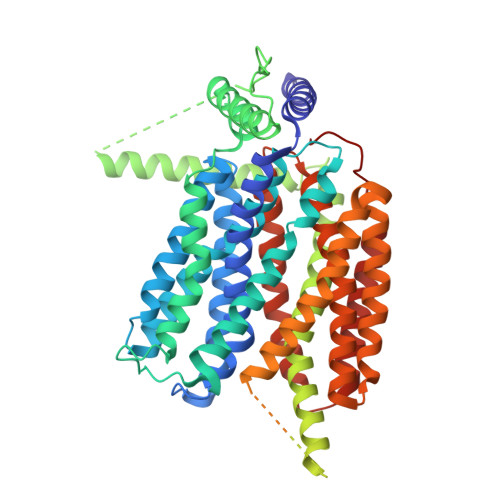
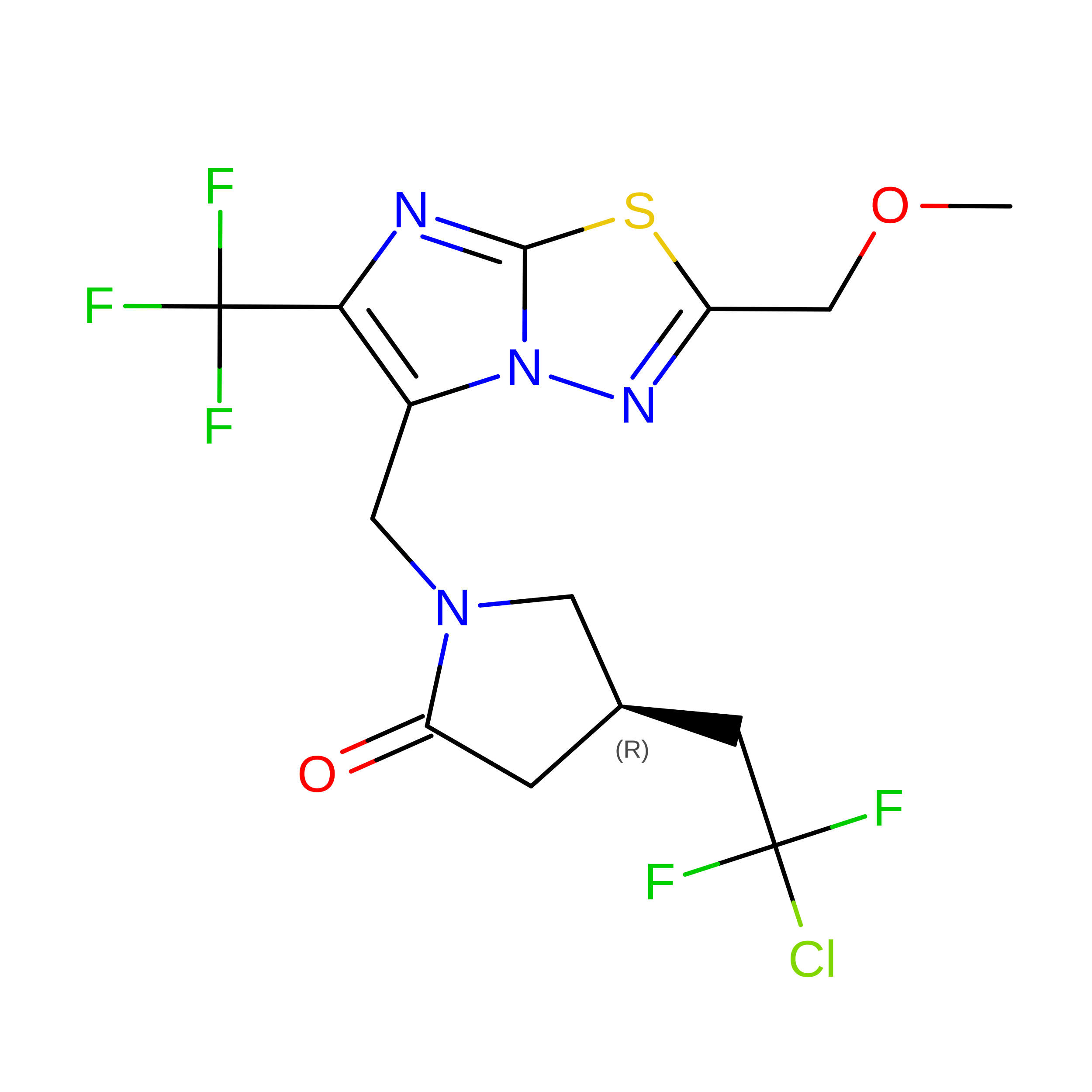
The synaptic vesicle glycoprotein 2A (SV2A), a member of the major facilitator superfamily (MFS), is a key target for antiseizure medications and a biomarker for synaptic density imaging. Despite its clinical importance, the mechanisms underlying SV2A ligand binding and modulation remain poorly understood. Here, we report sub-3 Å resolution cryo-electron microscopy (cryo-EM) structures of human SV2A in its apo form and in complex with FDA-approved antiseizure medication levetiracetam; PET imaging tracer UCB-J; experimental antiseizure drug padsevonil; and allosteric modulator UCB1244283. We find that levetiracetam and UCB-J induce vestibule occlusion, a hallmark conformational transition of MFS transporters that had not been observed in previous SV2A structures. UCB1244283 binds to an allosteric site and enhances orthosteric ligand engagement by stabilizing the occluded state and slowing ligand dissociation. Notably, padsevonil occupies both orthosteric and allosteric sites, functionally precluding modulation. These findings uncover an allosteric mechanism of regulation and provide a structural framework for the development of modulators targeting SV2A and related MFS transporters.
- Department of Structural Biology, St. Jude Children's Research Hospital, Memphis, TN, USA.
Organizational Affiliation: