Download Mendeley
Membrane-forming phospholipids allosterically modulate native-state prolyl isomerization in a CNG channel.
Newton, A.J., Latvala, R.D., Kuforiji, A.E., Schmidpeter, P.A.M.(2025) Protein Sci 34: e70383-e70383
- PubMed: 41263484 Search on PubMedSearch on PubMed Central
- DOI: https://doi.org/10.1002/pro.70383
- Primary Citation Related Structures:
9NWJ, 9NWK - PubMed Abstract:
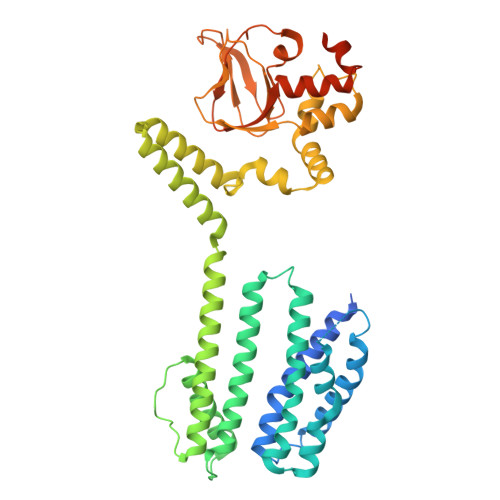
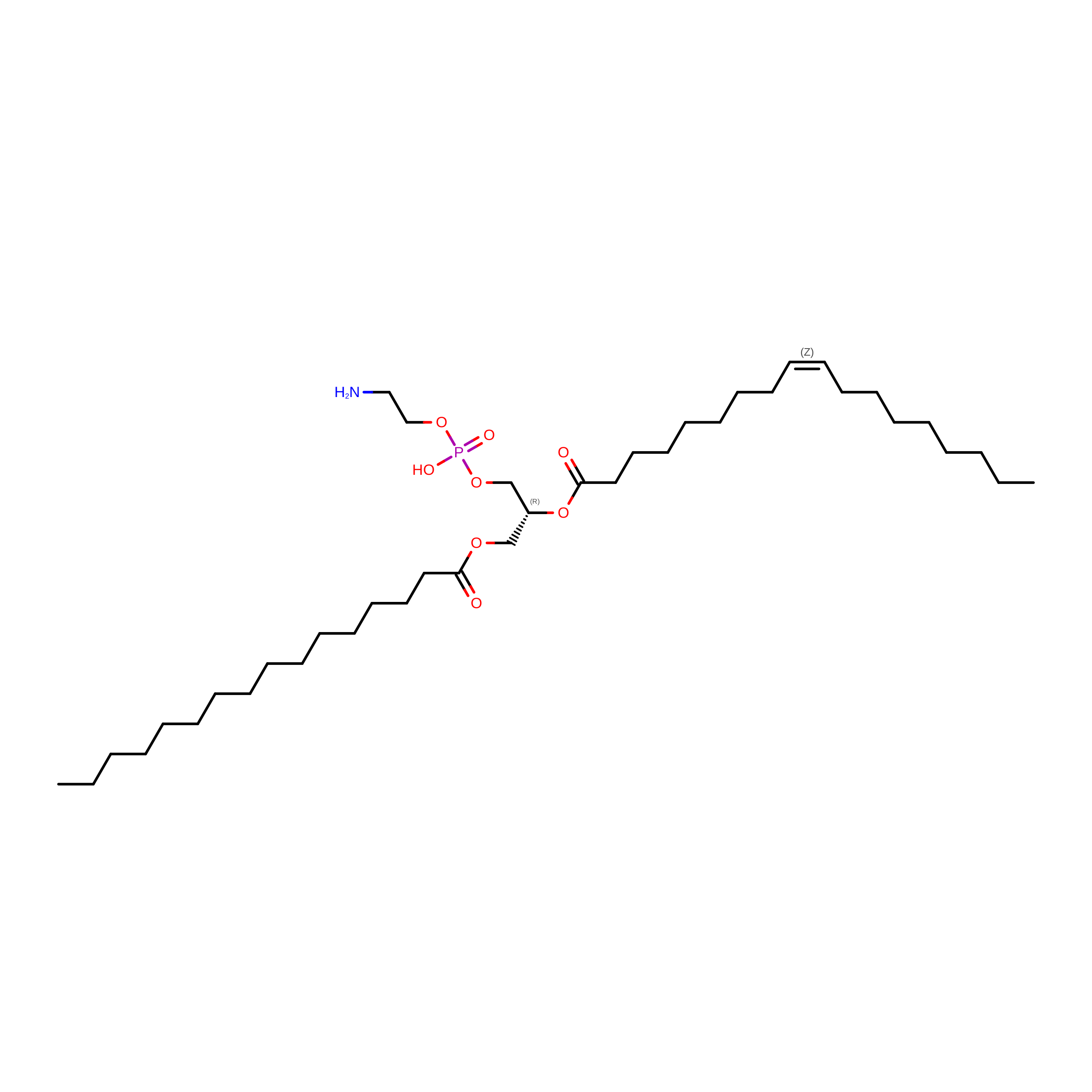
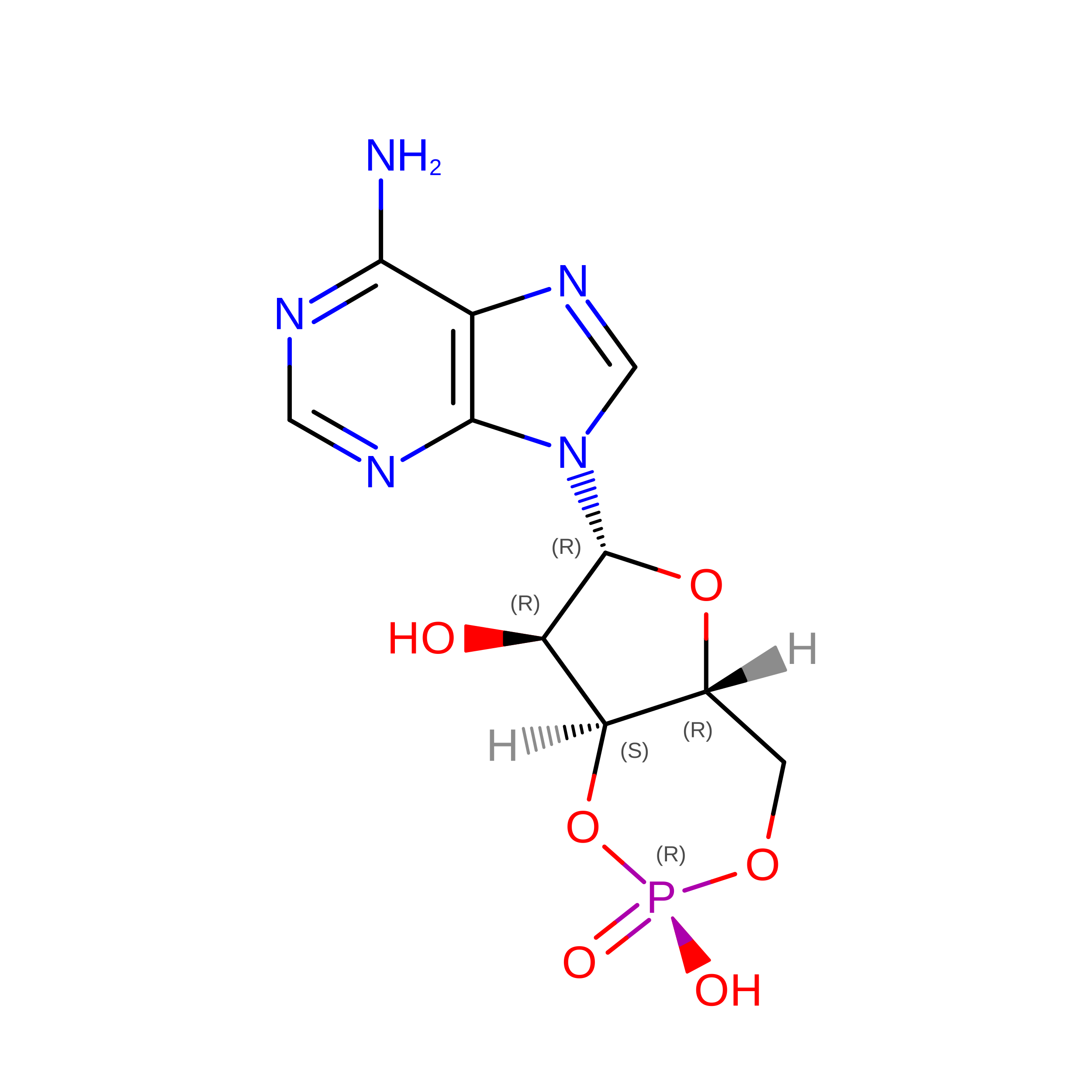
Ion channel activity is intricately linked to the surrounding lipid environment, yet the molecular effects of lipid-mediated regulation remain largely understudied. Here, we show that membrane-forming phospholipids, which are known to modulate the activity of the cyclic nucleotide-gated channel SthK from Spirochaeta thermophila, exhibit effects that extend well beyond the membrane boundary. Using stopped-flow flux assays, we demonstrate that anionic lipids, which are known to promote channel opening, also affect the fast-to-slow activation ratio and the cAMP potency in SthK. Enzymatic catalysis studies confirm that this occurs by altering the cis/trans equilibrium at Pro300 in the apo state. Additionally, cryogenic electron microscopy structures of SthK reveal lipid-dependent conformational changes that propagate from the bundle crossing into the cytosolic domains. All observed effects correlate with the electronegativity of the lipid headgroup, indicating a common underlying mechanism. Our results highlight membrane-forming phospholipids as allosteric regulators of SthK, controlling multiple functional characteristics of the channel.
- Department of Chemistry, The University of Texas at San Antonio, San Antonio, Texas, USA.
Organizational Affiliation: