Download Mendeley
ITGB1 Regulates Triple-Negative Breast Cancer Development by Modulating the Tumor Microenvironment.
Song, N., Chen, S., Wang, L., Dang, J., Cao, X., Singh, S., Yang, L., Wang, J., Rosen, S.T., Wang, Y., Chen, C.D., Zhang, C., Feng, M.(2026) Adv Sci (Weinh) 13: e13672-e13672
- PubMed: 41632816 Search on PubMedSearch on PubMed Central
- DOI: https://doi.org/10.1002/advs.202513672
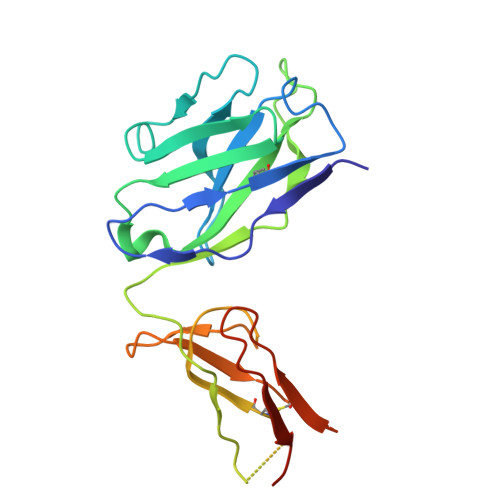
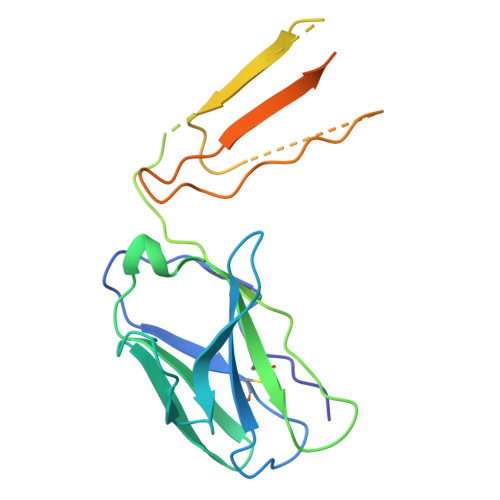
- Primary Citation Related Structures:
9NAB - PubMed Abstract:
Tumorigenesis and metastasis are frequently attributed to the intricate interplay between cancer cells and the tumor microenvironment (TME). Comprehending the mechanisms and key regulators of cancer-immune crosstalk in the TME is imperative for developing efficacious immunotherapy. Through a series of in vivo CRISPR screens, we identified tumor-intrinsic ITGB1 as a critical regulator of triple-negative breast cancer (TNBC) development and deciphered its underlying mechanisms. Tumoral ITGB1 facilitated the establishment of pro-tumorigenic TME by orchestrating tumor-associated myeloid populations. Suppressing ITGB1 favored the enrichment of anti-tumorigenic myeloid cells and enhanced infiltration of CD4 and CD8 T cells, culminating in superior antitumor effects. CRISPR scanning pinpointed a previously unrecognized functional domain essential for ITGB1's pro-tumorigenic activity. This domain is distinct from all known ligand-binding sites in ITGB1. An antibody capable of sterically blocking this domain significantly impaired TNBC progression. These findings position tumoral ITGB1 as a promising therapeutic target for reprogramming the TME from a pro- to an anti-tumorigenic state, thereby effectively inhibiting TNBC development. Our study uncovers a novel mechanism of TNBC development and provides a unique therapeutic strategy for targeting ITGB1 in TNBC treatment.
- Department of Immuno-Oncology, Beckman Research Institute, City of Hope, Duarte, California, USA.
Organizational Affiliation: