Download Mendeley
Enhancement of Potency and Selectivity of 2-Aminoquinoline-Based Human Neuronal Nitric Oxide Synthase Inhibitors.
Ansari, A., Kang, K.M., Li, H., Hardy, C.D., Rathnayake, A.D., Awasthi, A., Poulos, T.L., Silverman, R.B.(2026) J Med Chem 69: 3779-3795
- PubMed: 41635994 Search on PubMedSearch on PubMed Central
- DOI: https://doi.org/10.1021/acs.jmedchem.5c01679
- Primary Citation Related Structures:
9MYU, 9MYV, 9MYW, 9MYX, 9MYY, 9MYZ, 9MZ0, 9MZ1, 9MZ2, 9MZ3, 9MZ4 - PubMed Abstract:
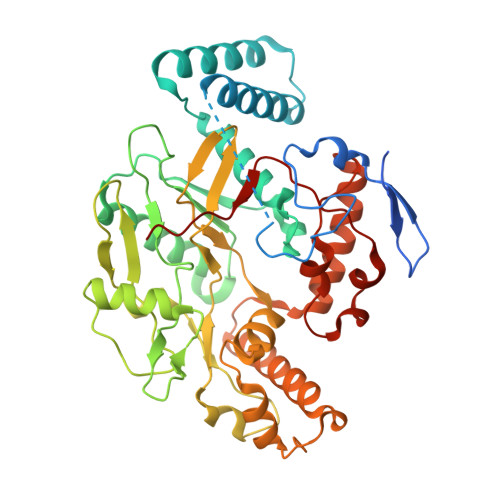
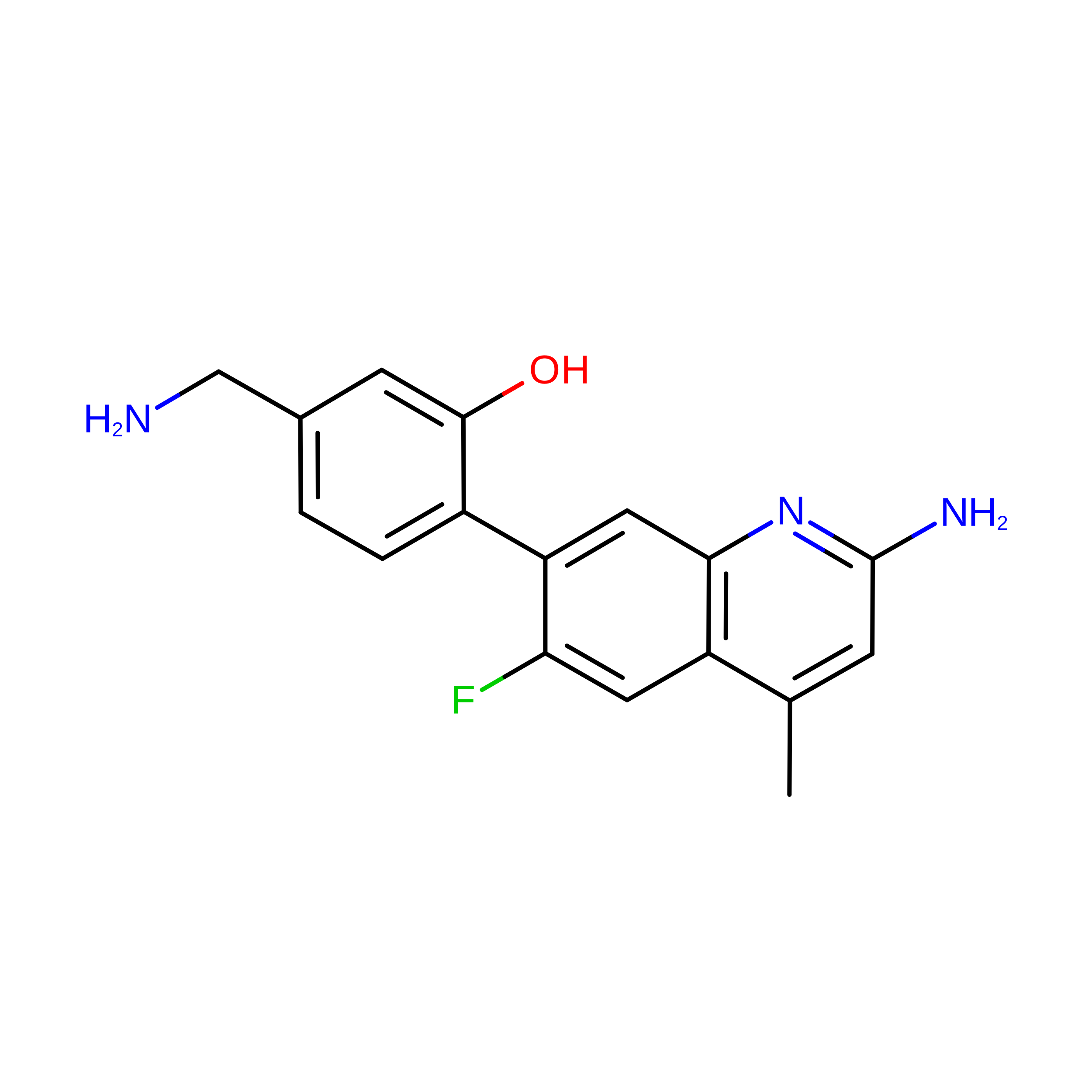
Neuronal nitric oxide synthase (nNOS) is a key enzyme in neurodegenerative diseases and melanoma, making it an important therapeutic target. We previously reported 2-aminoquinoline-based nNOS inhibitors with promising activity but limited by suboptimal potency, isoform selectivity, and off-target effects. To address these issues, we designed and synthesized a new series of 7-aryl-6-fluoro-4-methyl-2-aminoquinoline derivatives. Compound 16 showed excellent potency against human nNOS ( K i 16 nM), with ∼1800-fold selectivity over human endothelial NOS (eNOS) and ∼2900-fold over human inducible NOS (iNOS). PAMPA-BBB experiments indicated high effective permeability ( P e = 13.04 × 10 -6 cm/s), suggesting strong CNS drug potential. In vivo pharmacokinetic studies in mice further demonstrated sustained systemic exposure, low clearance, and robust brain penetration. In contrast, compound 24 , the N -Me analogue of 16, was inactive. Molecular dynamics simulations indicated that N -methylation disrupted the favorable solvation of the tail amino group, likely contributing to its loss of activity and nNOS affinity.
- Department of Chemistry, Department of Molecular Biosciences, Chemistry of Life Processes Institute, Northwestern University, 2145 Sheridan Road, Evanston, Illinois 60208-3113, United States.
Organizational Affiliation: