Download Mendeley
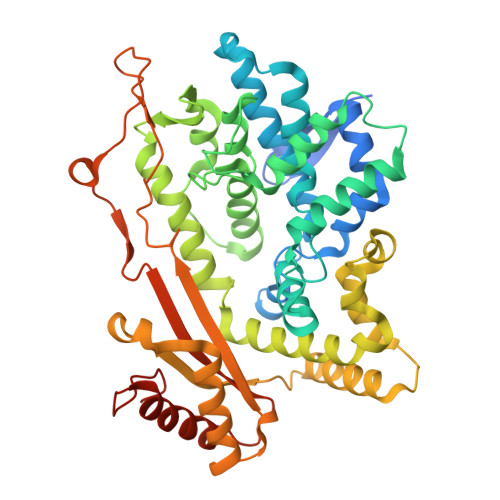
Activation and Allostery in a Fungal SAMHD1 Hydrolase: An Evolutionary Blueprint for dNTP Catabolism.
Pan, L., Lachowicz, J.C., Paddy, I., Xu, Y., Yang, Q., Zizola, C., Milne, A., Grove, T.L., Pandelia, M.E.(2025) JACS Au 5: 1862-1874
- PubMed: 40313832 Search on PubMedSearch on PubMed Central
- DOI: https://doi.org/10.1021/jacsau.5c00090
- Primary Citation Related Structures:
9MR6 - PubMed Abstract:
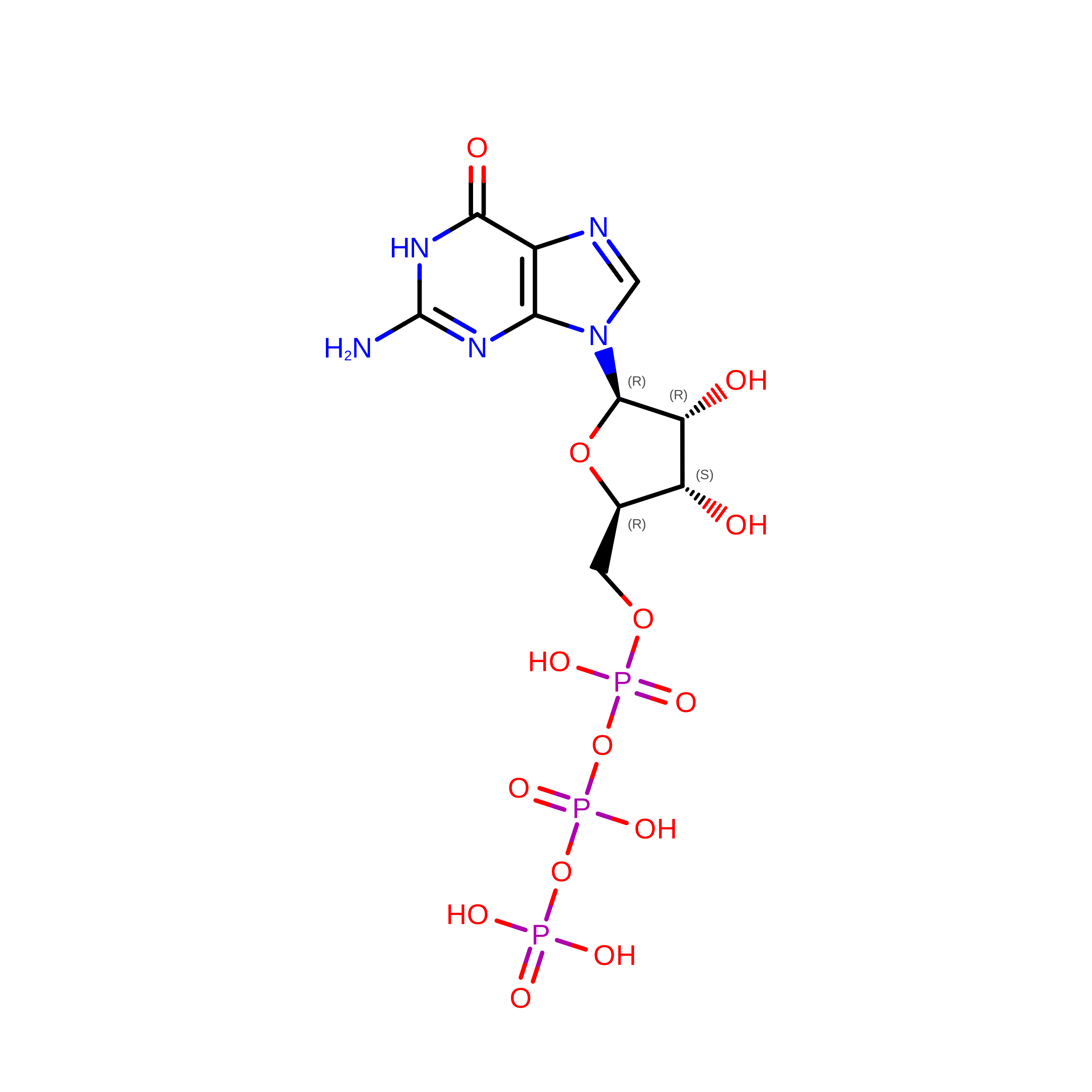
Sterile alpha motif and HD domain-containing protein 1 (SAMHD1) is a metal-dependent hydrolase that plays key roles in dNTP homeostasis, antiretroviral defense, and regulation of various cancers in humans. Beyond mammals, SAMHD1 is also present in a wide range of eukaryotes, including invertebrates, plants, and human parasites. Although the specific mechanisms and biological significance of SAMHD1 in these organisms are not well understood, its functions are linked to essential processes such as photosynthesis, genome maintenance, and immune response. In this study, we bioinformatically mined the SAMHD1 superfamily and selected the ortholog from the mycorrhizal fungus Rhizophagus irregularis as a model system for both fungal and biochemically intractable plant SAMHD1s. Ri SAMHD1 retains the substrate promiscuity of the human enzyme but bypasses the strict requirement for allosteric activation through tetramerization, positioning it as a prototypical enzyme in which hydrolysis and allosteric regulation can be uncoupled. Its activity is selectively dependent on transition metal ions such as Mn and Fe, while Mg serves as a poor activator. Although Ri SAMHD1 lacks several ancillary regulatory features present in human SAMHD1, its activity is differentially modulated by GTP, which acts as an allosteric activator at lower concentrations and an allosteric inhibitor at higher concentrations. These results demonstrate that metal dependence and allosteric regulation are adaptive traits that have evolved divergently among mammals, fungi, and plants, invoking alternative molecular routes for fine-tuning dNTP levels. Our findings on Ri SAMHD1 provide a paradigm for the mechanistic diversification of SAMHD1 enzymes and offer valuable insights for dissecting the complex mechanisms of nucleotide regulation in humans.
- Department of Biochemistry, Brandeis University, Waltham, Massachusetts 02453, United States.
Organizational Affiliation: