Download Mendeley
Small molecule dysregulation of ClpP activity via bidirectional allosteric pathways.
Barghash, M.M., Mabanglo, M.F., Hoff, S.E., Brozdnychenko, D., Wong, K.S., Binepal, G., Ip, P., Shen, J., Furukawa, T., Katayama, H., Trudel, V., Tan, J., Yudin, A.K., Gray-Owen, S.D., Sakuda, S., Batey, R.A., Vahidi, S., Bonomi, M., Houry, W.A.(2025) Structure 33: 1700
- PubMed: 40795847 Search on PubMed
- DOI: https://doi.org/10.1016/j.str.2025.07.013
- Primary Citation Related Structures:
9MJP, 9MK2, 9MK5 - PubMed Abstract:
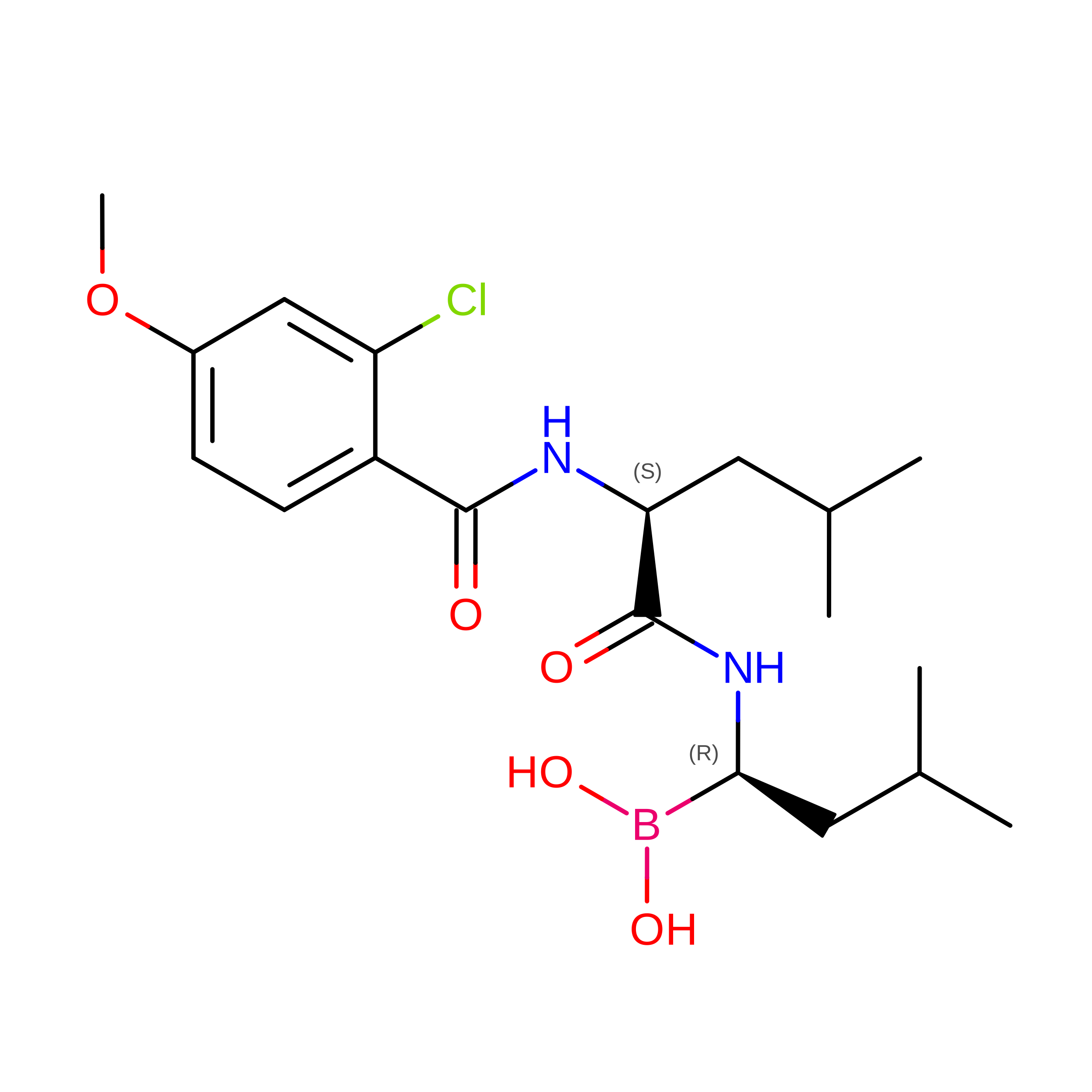
The bacterial ClpP protease is essential for the virulence and infectivity of many human pathogens and has emerged as a novel antibacterial drug target. Several classes of small molecules dysregulate or activate ClpP, leading to uncontrolled protein degradation and cell death. Here, we investigate the mechanism of ClpP activation by these compounds using an integrative approach combining structural, biochemical, and computational tools. We identified small molecules that activate ClpP through binding at internal catalytic sites where peptide bond hydrolysis occurs. Combined with knowledge of ClpP activation by small molecules that bind to external hydrophobic sites, this work sheds light on the mechanisms governing ClpP allostery and identifies a common molecular pathway utilized by site-specific effectors to achieve allosteric activation. We propose a consensus, bidirectional ClpP activation mechanism causing protease dysregulation.
- Department of Biochemistry, University of Toronto, Toronto, ON M5G 1M1, Canada.
Organizational Affiliation: