Download Mendeley
Small-molecule inhibition of YTHDC1 as a strategy against acute myeloid leukemia in mouse models.
Zhang, H., Li, Y., Zhao, Y., Wang, F., Lin, G., Niu, T., Li, H., Li, Y., Liu, L., Liang, Y., Shen, Y., Yi, Y., Zhou, H., Lou, S., Ye, Y., He, Y., Yang, R., Yao, R., Tian, C., Zhou, P., Wu, M., Chen, M., Xu, H., You, J., Liao, Y., Yang, C., Zhao, A., Chen, C., Li, L., Pei, S., Yang, S.(2026) Sci Transl Med 18: eadu3137-eadu3137
- PubMed: 41637525 Search on PubMed
- DOI: https://doi.org/10.1126/scitranslmed.adu3137
- Primary Citation Related Structures:
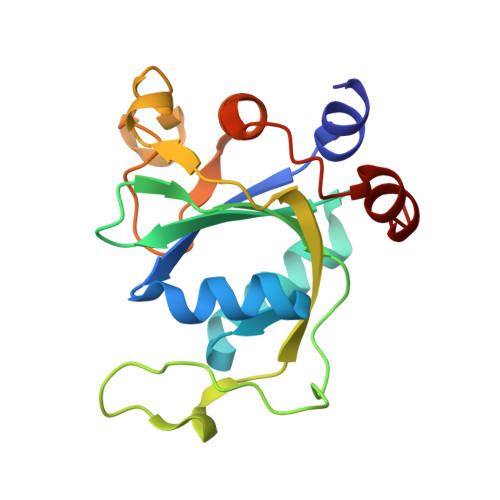
9MB3, 9V84 - PubMed Abstract:
Dysregulation of RNA N 6 -methyladenosine (m 6 A) readers has been linked to various diseases, but the therapeutic potential of small-molecule inhibitors targeting them is of interest. Here, we reported the identification and characterization of a potent and selective first-in-class inhibitor (YL-5092) of YTHDC1, a nuclear RNA m 6 A reader. We provided a high-resolution cocrystal structure of the YTHDC1-YL-5092 complex. In acute myeloid leukemia (AML) models, YL-5092 blocked the binding of YTHDC1 to its m 6 A substrates and reduced mRNA stability, resulting in apoptosis of AML cells and myeloid differentiation. In multiple xenograft models of AML representing disease heterogeneity, YL-5092 alone or in combination with standard AML therapy eliminated leukemia and extended survival. Moreover, YL-5092 functionally impaired leukemia stem cells yet spared normal hematopoietic counterparts. Collectively, our work demonstrates the efficacy of a selective YTHDC1 inhibitor and suggests that targeting of m 6 A readers is a potential strategy in the treatment of hematologic cancers.
- Department of Biotherapy, Cancer Center and State Key Laboratory of Biotherapy, West China Hospital, Sichuan University, Chengdu, Sichuan 610041, China.
Organizational Affiliation: