Download Mendeley
Structural basis of the multiple ligand binding mechanisms of the P2X1 receptor.
Qiang, Y.T., Wu, P.P., Liu, X., Peng, L., Zhao, L.K., Chen, Y.T., Gao, Z.B., Zhao, Q., Chen, K.(2025) Acta Pharmacol Sin 46: 2564-2573
- PubMed: 40175702 Search on PubMedSearch on PubMed Central
- DOI: https://doi.org/10.1038/s41401-025-01512-y
- Primary Citation Related Structures:
9LX5, 9LXC - PubMed Abstract:
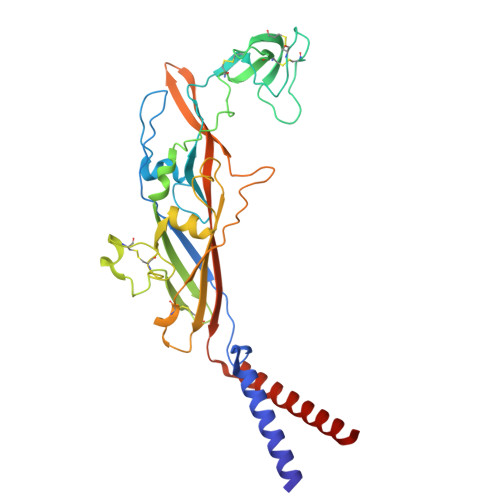
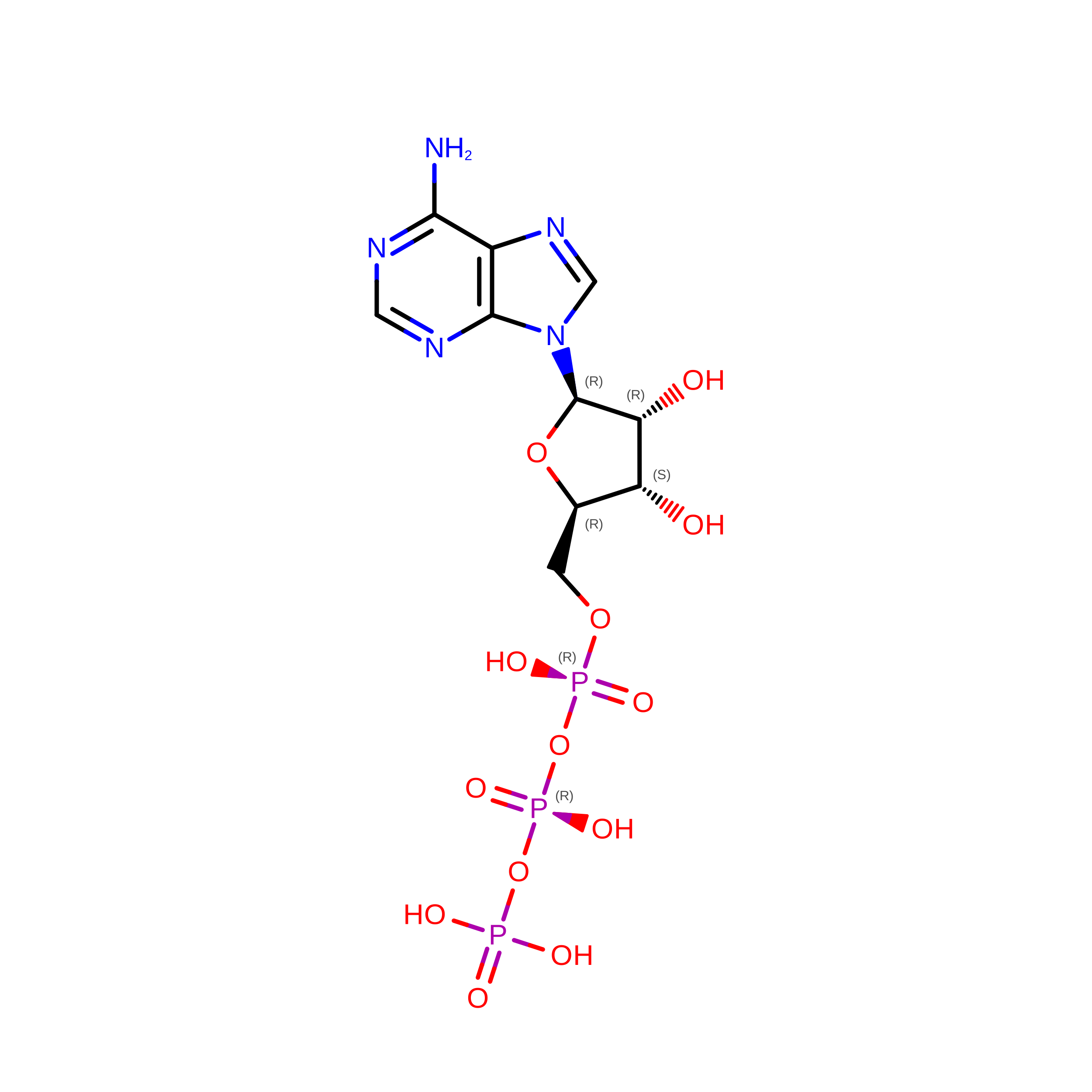
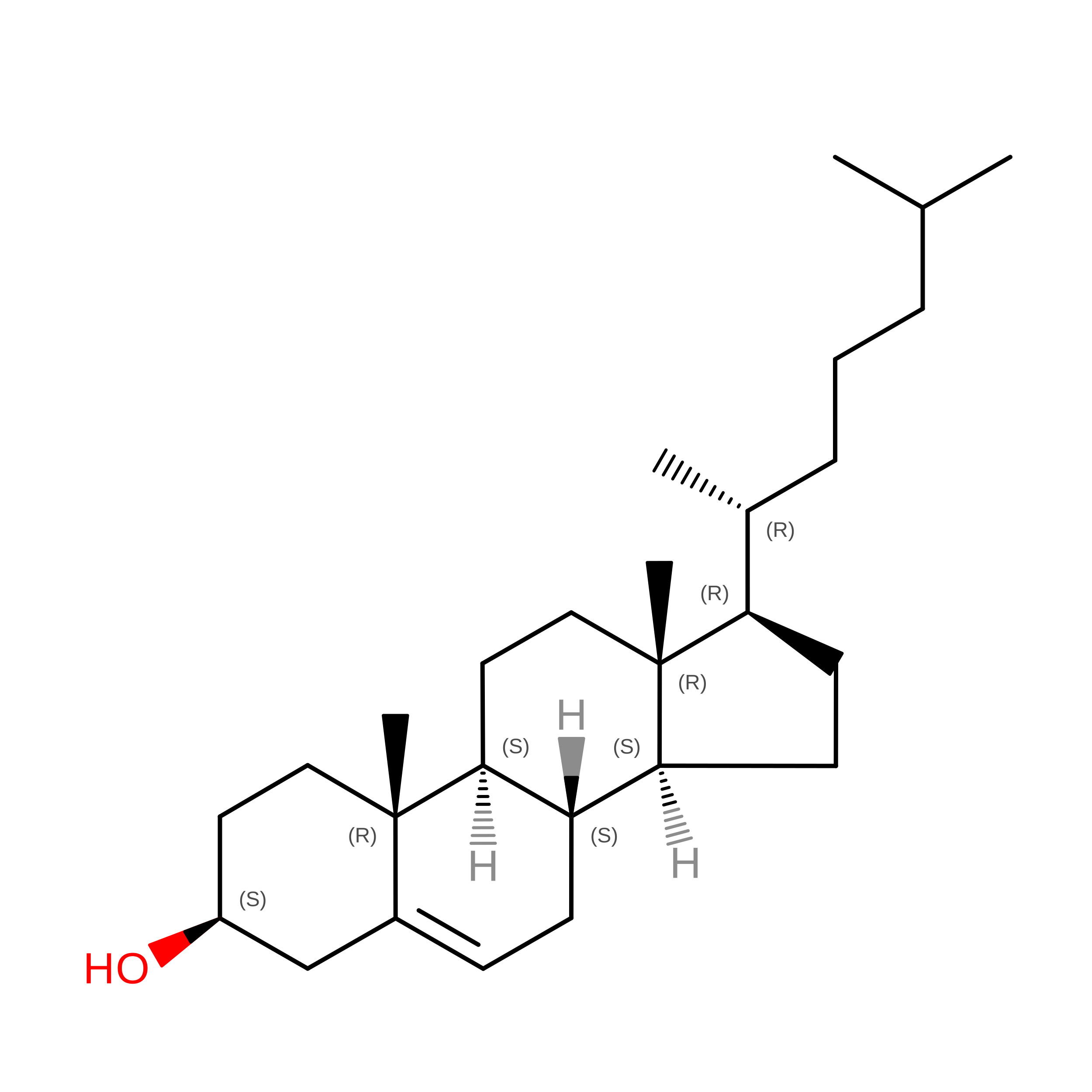
As important modulators of human purinergic signaling, P2X1 receptors form homotrimers to transport calcium, regulating multiple physiological processes, and are long regarded as promising therapeutic targets for male contraception and inflammation. However, the development of drugs that target the P2X1 receptor, such as the antagonist NF449, is greatly hindered by the unclear molecular mechanism of ligand binding modes and receptor activation. Here, we report the structures of the P2X1 receptor in complex with the endogenous agonist ATP or the competitive antagonist NF449. The P2X1 receptor displays distinct conformational features when bound to different types of compounds. Despite coupling to the agonist ATP, the receptor adopts a desensitized conformation that arrests the ions in the transmembrane (TM) domain, aligning with the nature of the high desensitization rates of the P2X1 receptor within the P2X family. Interestingly, the antagonist NF449 not only occupies the orthosteric pocket of ATP but also interacts with the dorsal fin, left flipper, and head domains, suggesting a unique binding mode to perform both orthosteric and allosteric mechanisms of NF449 inhibition. Intriguingly, a novel lipid binding site adjacent to the TM helices and lower body of P2X1, which is critical for receptor activation, is identified. Further functional assay results and structural alignments reveal the high conservation of this lipid binding site in P2X receptors, indicating important modulatory roles upon lipid binding. Taken together, these findings greatly increase our understanding of the ligand binding modes and multiple modulatory mechanisms of the P2X1 receptor and shed light on the further development of P2X1-selective antagonists.Keywords: Structural biology; Ligand binding mode; Ion channel; Purinergic P2X1 receptor.
- School of Pharmacy, Guizhou Medical University, Guizhou, 550025, China.
Organizational Affiliation: