Download Mendeley
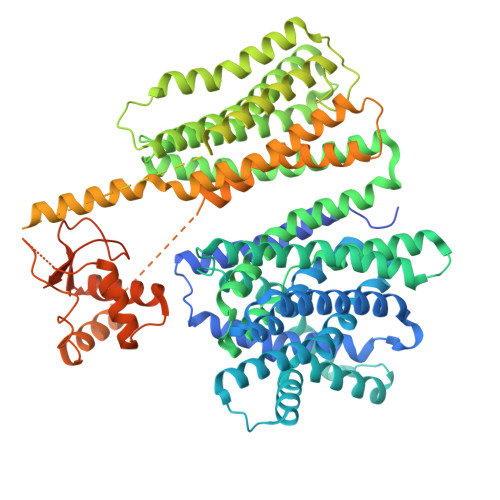
Structural insight into GPR155-mediated cholesterol sensing and signal transduction.
Li, D., Zhang, X., Feng, J., Xie, Y., Han, P., He, M., Hao, L., Guo, T., Bai, X., Yuan, K., Sun, J., Pang, X., Wu, Y., Liu, Y., Gao, G.F., Huang, N., Xiao, H., Gao, F.(2025) Sci Bull (Beijing) 70: 3625-3637
- PubMed: 41058362 Search on PubMed
- DOI: https://doi.org/10.1016/j.scib.2025.09.012
- Primary Citation Related Structures:
9LHQ, 9LHV, 9LHX - PubMed Abstract:
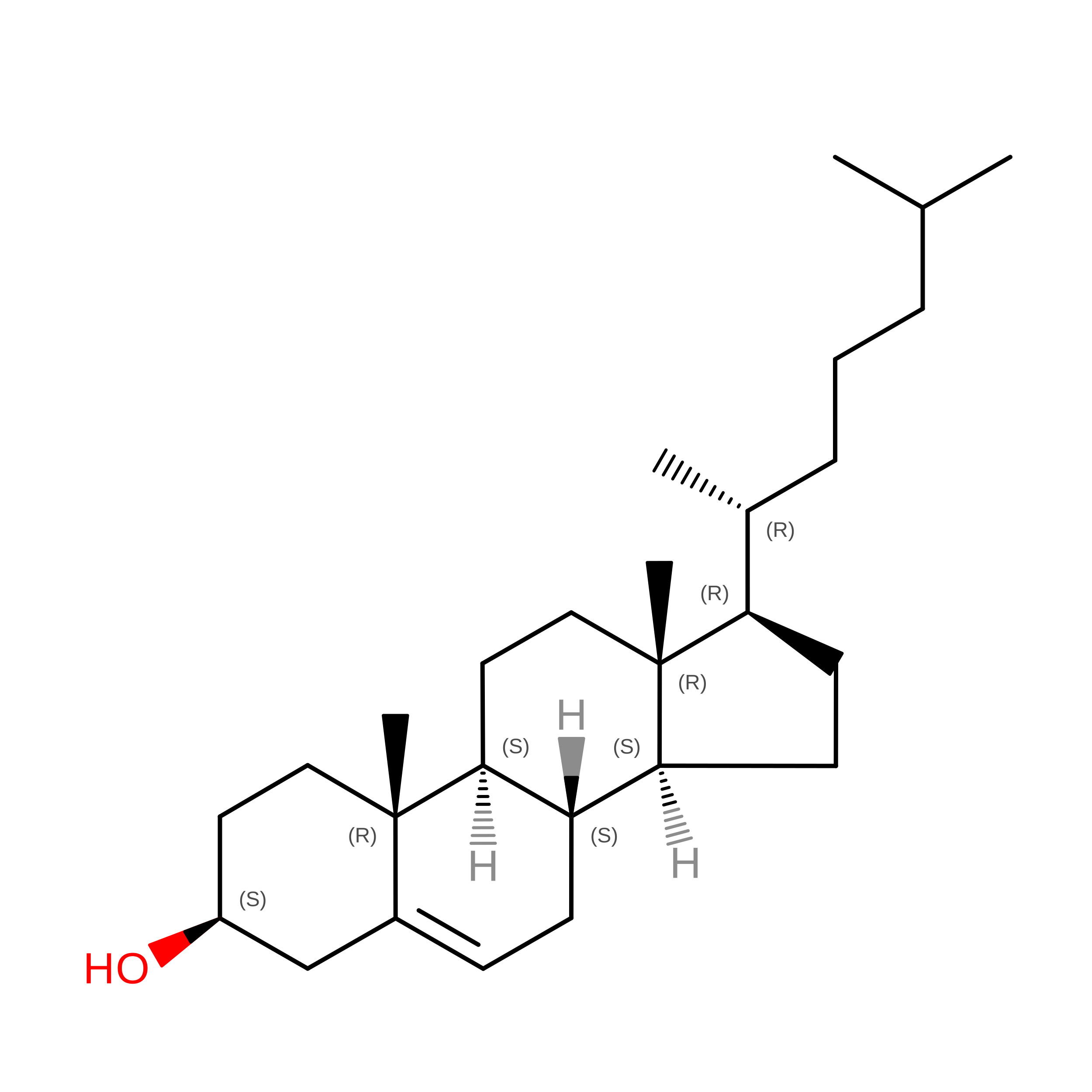
Cholesterol (CHL) serves as a building block for membrane biogenesis and a precursor to oxysterols, steroid hormones, bile acids, and vitamin D. The lysosome serves as a major sorting station for low-density lipoproteins (LDLs), which carry dietary CHL, and it is also the cellular site where the master growth regulator, the protein kinase mechanistic Target of Rapamycin Complex 1 (mTORC1), is activated. Recently, the lysosomal transmembrane protein GPR155 was reported to signals CHL sufficiency to mTORC1 through sequestration of the GTPase-activating protein towards the Rags 1 (GATOR1). Although the recently reported structures of GPR155 have revealed the CHL binding site, how the signal is transduced from the CHL binding site to the soluble parts of GPR155 and GATOR1 remains unknown. Here, with our three cryo-EM structures of GPR155 captured in different conformations in complex with CHL, complemented by long-time scale molecular dynamics simulations, the dynamic rearrangement of different domains was observed. CHL binding induces a widening of the crevice between the transporter and GPCR domains. The extending helix preceding transmembrane helix (TM) 16, which was unresolved in other structures, acts as a linkage lever that transmits the rotation of the GPCR domain to the soluble parts of GPR155 in response to CHL binding. This work not only answers the question of how CHL is sensed by GPR155, but also addresses a more profound question: how the signal perceived by the TMs regions is transduced to the LED and DEP domains.
- Laboratory of Protein Engineering and Vaccines, Tianjin Institute of Industrial Biotechnology, Chinese Academy of Sciences, Tianjin 300308, China; Innovative Vaccine and lmmunotherapy Research Center, The Second Affiliated Hospital, Zhejiang University School of Medicine, Hangzhou 310009, China; Shanxi Academy of Advanced Research and Innovation, Taiyuan 030032, China.
Organizational Affiliation: