Download Mendeley
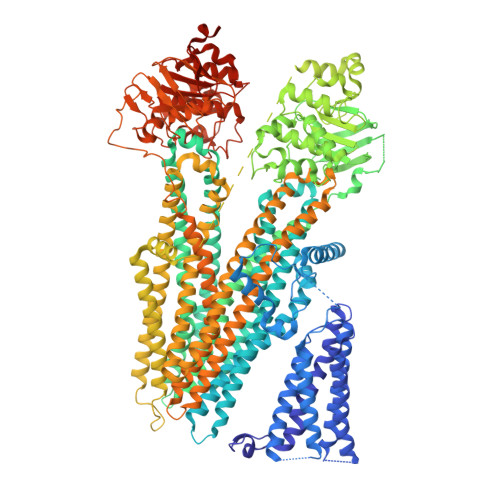
Substrate recognition diversity and transport dynamics of ABCC1.
Sun, P., Liu, K., Zhang, L., Zhang, Q., Gao, Y., Li, Z., Zhu, Y., Liu, S., Zhang, L., Gao, A., Gao, P.(2025) Nat Commun 16: 10499-10499
- PubMed: 41290683 Search on PubMedSearch on PubMed Central
- DOI: https://doi.org/10.1038/s41467-025-65501-9
- Primary Citation Related Structures:
9LG6, 9LG7, 9LG8, 9LG9, 9LGA, 9LGB, 9LGC, 9LGD, 9LGE, 9LGF - PubMed Abstract:
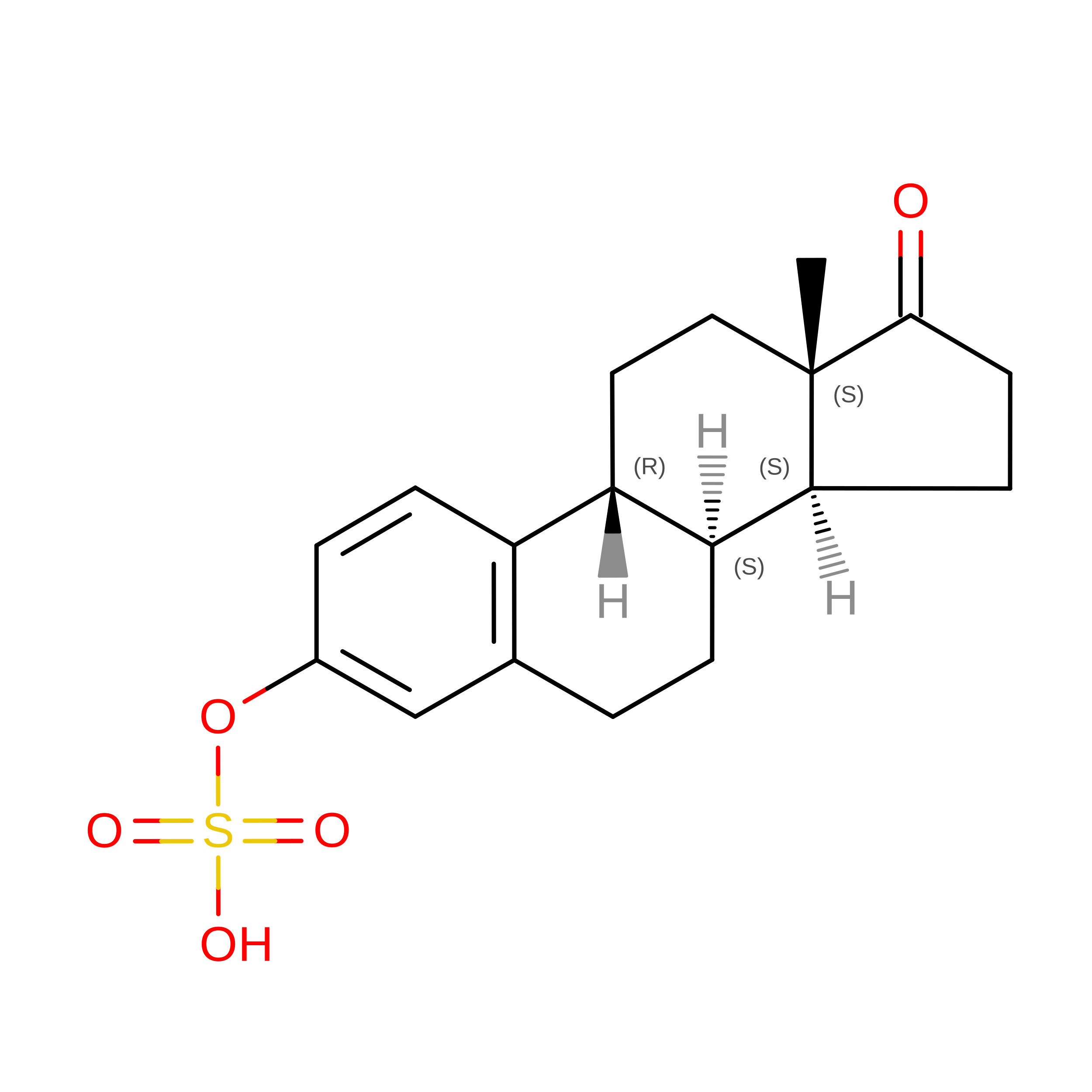
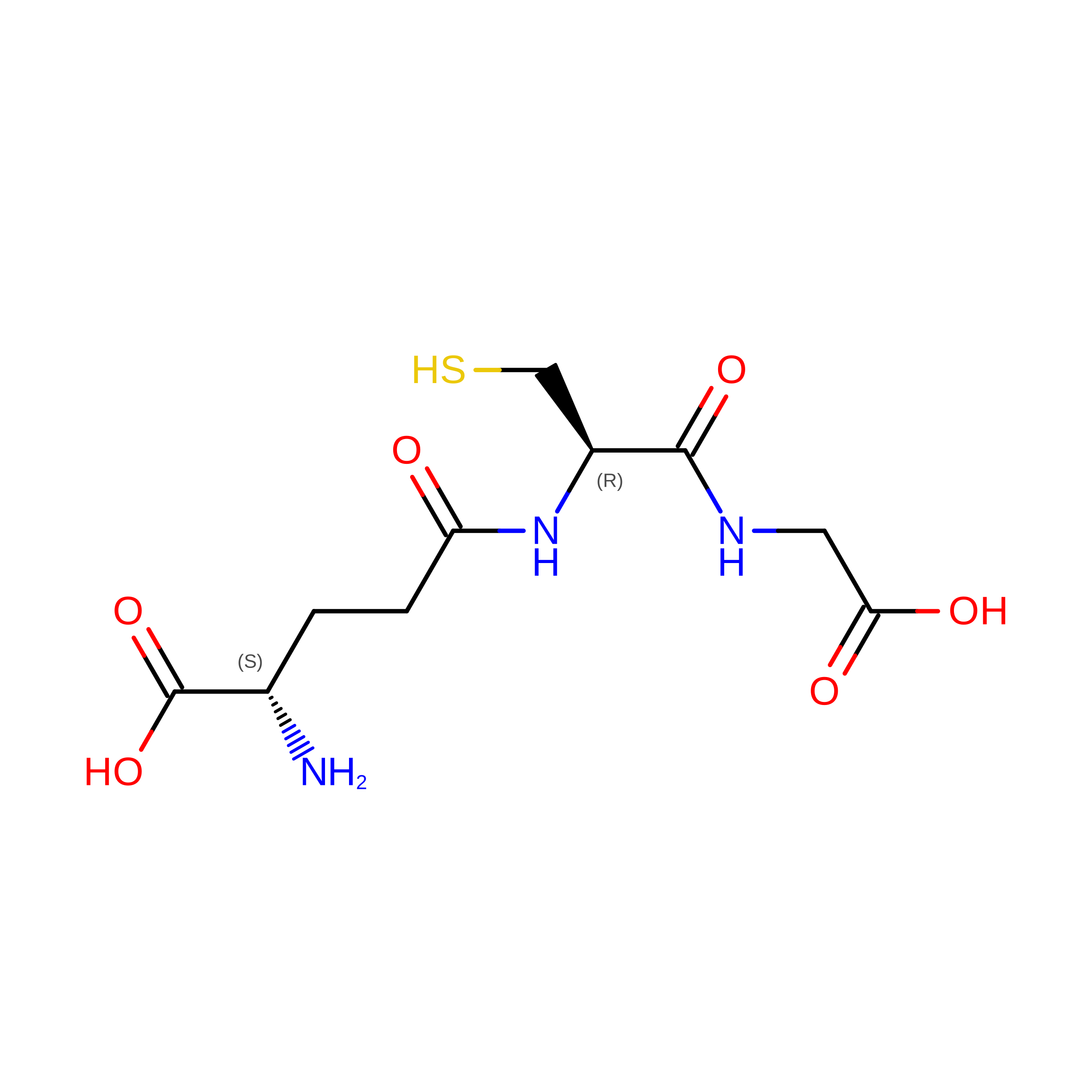
ABCC1 is an ATP-binding cassette (ABC) transporter that exports diverse endogenous and exogenous substrates, conferring resistance to many anticancer drugs and mediating various physiological functions. Here, we present ten cryo-EM structures of ABCC1 in different functional states, providing systematic insights into its substrate recognition diversity and transport dynamics. ABCC1 utilizes a plastic bipartite substrate-binding pocket and a substrate-induced conformational flexibility to accommodate molecules with diverse properties, including bimolecular glutathione (GSH)-substrate pairs, GSH conjugates, and GSH-independent cyclic dinucleotides. A herein characterized substrate-releasing intermediate state reveals ATP-mediated overall conformational transitions and detailed pocket reorganization during substrate loading, pre-release, and post-release. Unexpectedly, we identify a sequential nucleotide release mechanism where the hydrolysis product ADP, rather than unhydrolyzed ATP, releases first, priming the transporter for turnover and resetting. Complemented by mutagenesis and functional assays, these findings provide a complete framework for understanding ABCC1's molecular basis and offer a foundation for developing next-generation modulators.
- National Laboratory of Biomacromolecules, CAS Center for Excellence in Biomacromolecules, Institute of Biophysics, Chinese Academy of Sciences, Beijing, China.
Organizational Affiliation: