9L11 | pdb_00009l11

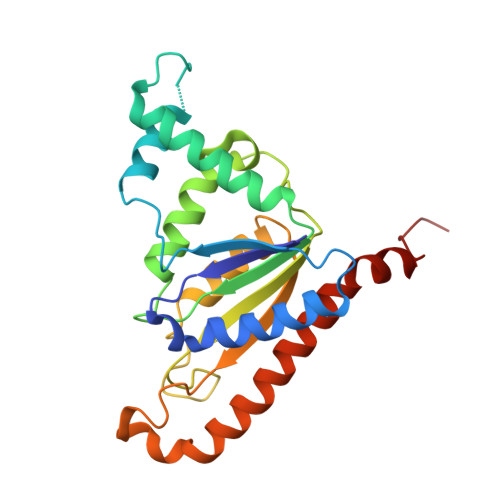
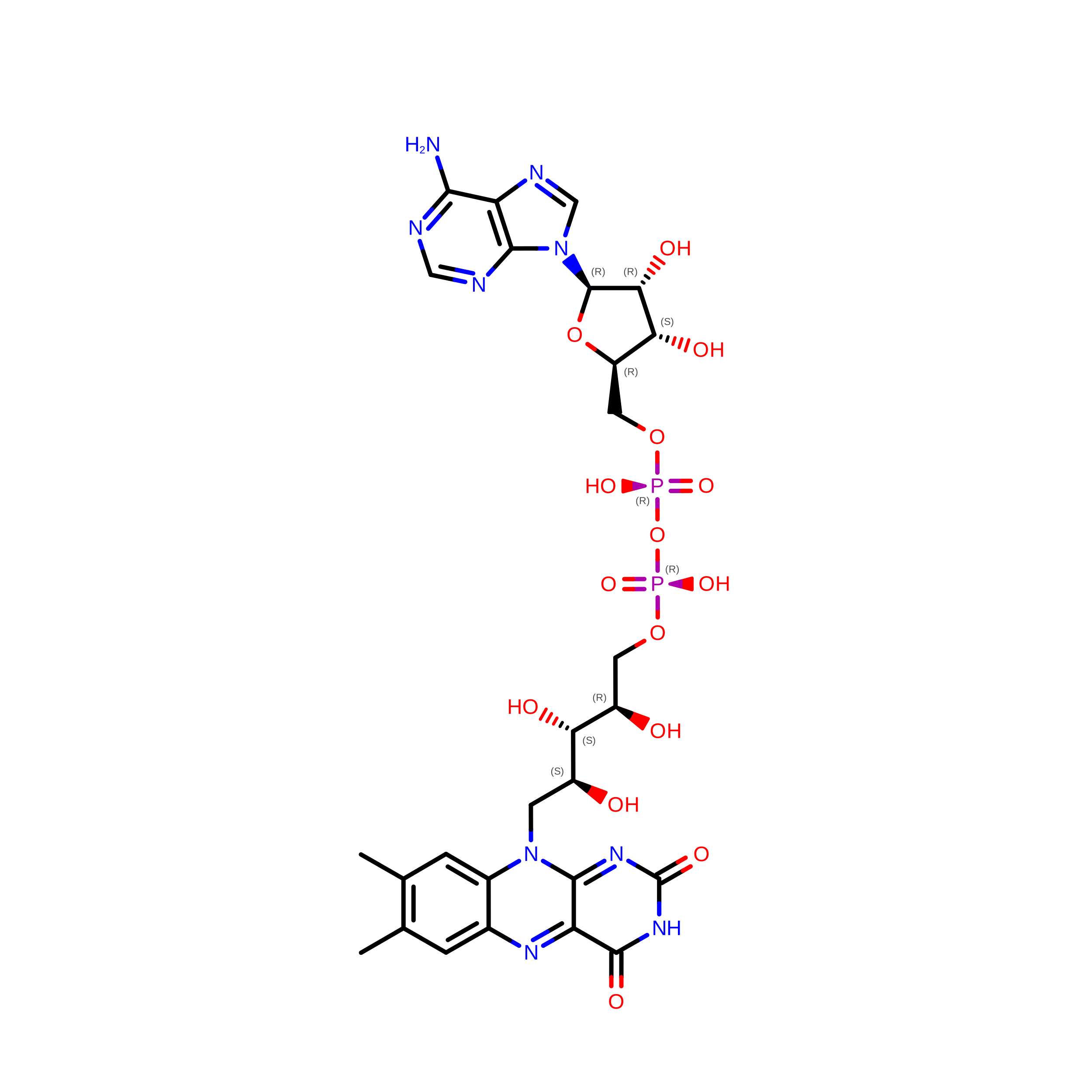
Crystal structure of flavin reductase (StnC) complexed with FAD


Experimental Data Snapshot

  • Method: X-RAY DIFFRACTION
  • Resolution: 1.82 Å
  • R-Value Free: 
    0.205 (Depositor), 0.214 (DCC) 
  • R-Value Work: 
    0.188 (Depositor), 0.196 (DCC) 
  • R-Value Observed: 
    0.189 (Depositor) 

Starting Model: in silico
View more details

wwPDB Validation 3D Report Full Report

Validation slider image for 9L11

Ligand Structure Quality Assessment 


This is version 1.0 of the entry. See complete history. 

Literature

A new family of StnC-like pseudo-FMN-preferred reductase components in two-component flavoprotein monooxygenases.

Xie, X., Wang, X., Yang, X., Ji, S., Ouyang, X., Zhou, Z., Xiao, Z., Guo, W., Liang, R., Huang, T., Deng, Z., Zhao, Y.L., Lin, S.

(2025) Int J Biol Macromol 328: 147543-147543

  • DOI: https://doi.org/10.1016/j.ijbiomac.2025.147543
  • Primary Citation Related Structures: 
    9L10, 9L11

  • PubMed Abstract: 

    The reductase components of two-component flavoprotein monooxygenases (FPMOs) can reduce flavin mononucleotide (FMN) or flavin adenine dinucleotide (FAD) for their monooxygenase partners. Typically, the type of flavin cofactor bound by a flavoenzyme dictates the cofactor applied in its catalytic reactions. Here, we report the discovery of StnC, a previously unknown reductase family member involved in the biosynthesis of streptonigrin, a potent antimicrobial and antitumor compound. StnC exhibits a paradoxical performance in binding ability and catalytic activity toward flavins. Specifically, it binds FMN 147-fold stronger than FAD, but reduces FAD six times faster than FMN, enabling it to supply reduced FAD to its FAD-preferred monooxygenase partner StnD efficiently. Crystallographic, computational, and structural comparative analyses identified key residues and distinct structural features in StnC-like reductases, including extended clamp-like loops, that enable tight FMN binding and efficient FAD reduction. These features define a family of FAD-preferred reductases under physiological conditions. Our findings significantly broaden the understanding of the sequence-structure-function relationships in FPMO reductase components, uncover a structurally unique family of FAD-preferred reductases, and provide mechanistic insights into their coordination with monooxygenase partners.


  • Organizational Affiliation: 
    • State Key Laboratory of Microbial Metabolism, School of Life Sciences and Biotechnology, Shanghai Jiao Tong University, Shanghai, China.

Macromolecule Content 

  • Total Structure Weight: 51.38 kDa 
  • Atom Count: 3,705 
  • Modeled Residue Count: 436 
  • Deposited Residue Count: 454 
  • Unique protein chains: 1

Macromolecules

Find similar proteins by:|  3D Structure
Entity ID: 1
MoleculeChains  Sequence LengthOrganismDetailsImage
FMN dependent NADH:quinone oxidoreductase
A, B
227Streptomyces albusMutation(s): 0 
Gene Names: stnC, azoR
EC: 1.6.5 (PDB Primary Data), 1.7.1.17 (PDB Primary Data)
UniProt
Find proteins for L7PH54 (Streptomyces albus)
Explore L7PH54 
Go to UniProtKB:  L7PH54
Entity Groups
Sequence Clusters30% Identity50% Identity70% Identity90% Identity95% Identity100% Identity
UniProt GroupL7PH54
Sequence Annotations
Expand
Reference Sequence

Experimental Data & Validation

Experimental Data

  • Method: X-RAY DIFFRACTION
  • Resolution: 1.82 Å
  • R-Value Free:  0.205 (Depositor), 0.214 (DCC) 
  • R-Value Work:  0.188 (Depositor), 0.196 (DCC) 
  • R-Value Observed: 0.189 (Depositor) 
Space Group: P 21 21 21
Unit Cell:
Length ( Å )Angle ( ˚ )
a = 45.921α = 90
b = 52.86β = 90
c = 174.854γ = 90
Software Package:
Software NamePurpose
REFMACrefinement
HKL-3000data scaling
PDB_EXTRACTdata extraction
PHASERphasing
HKL-3000data reduction

Structure Validation

View Full Validation Report


Ligand Structure Quality Assessment 


Entry History 

& Funding Information

Deposition Data


Funding OrganizationLocationGrant Number
National Natural Science Foundation of China (NSFC)China21632007

Revision History  (Full details and data files)

  • Version 1.0: 2025-11-19
    Type: Initial release