Find PDB structures and Computed Structure Models (CSM) by combining queries from tools in this suite: Attribute Search, Sequence Similarity, Sequence Motif, 3D Similarity, and 3D Motif with 'AND' logic.
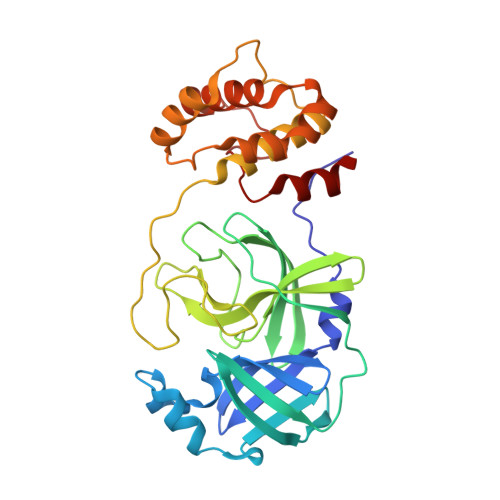
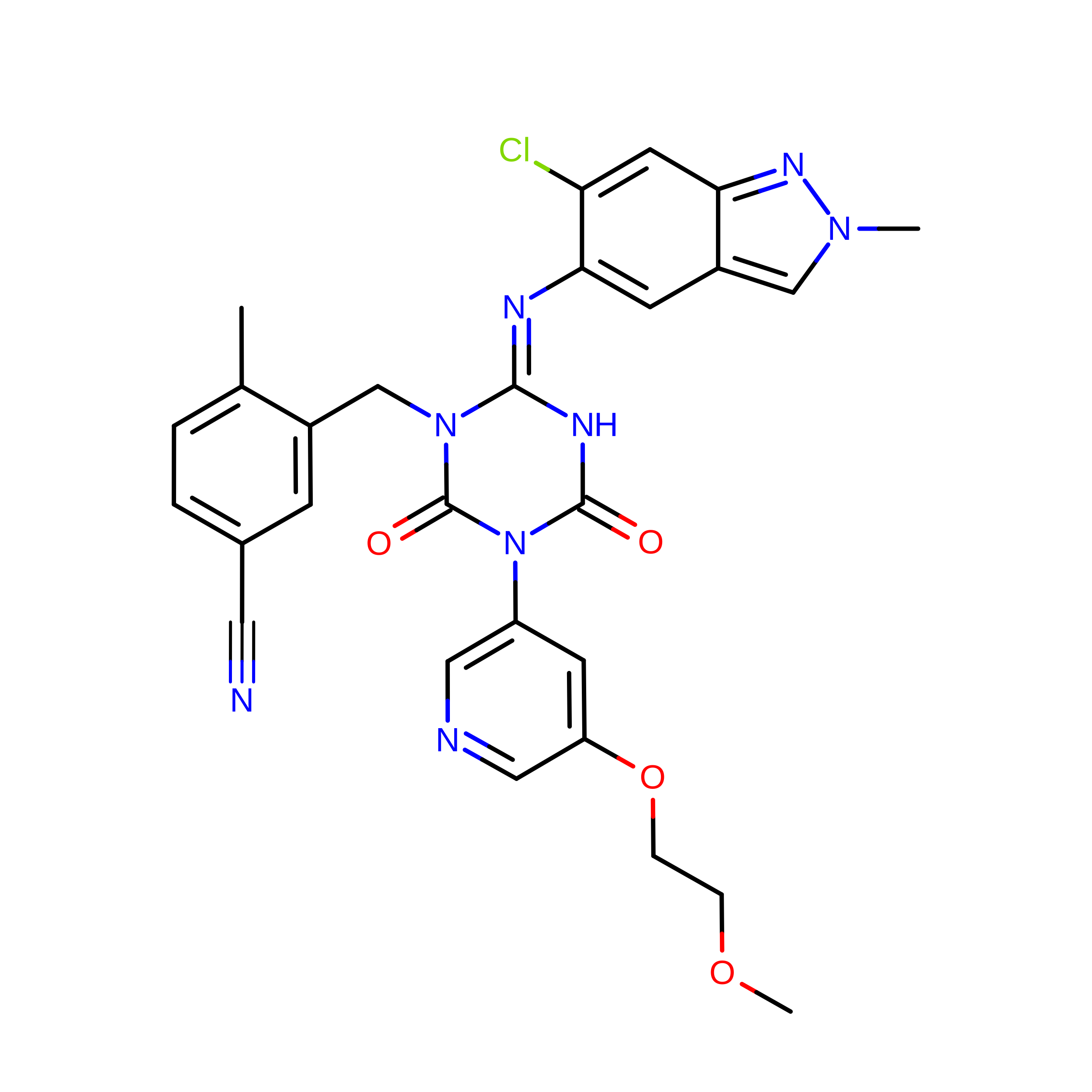
The coronavirus disease 2019 (COVID-19) pandemic, caused by severe acute respiratory syndrome coronavirus 2 (SARS-CoV-2), has resulted in millions of deaths and continues to pose serious threats to global public health. The main protease (M pro ) of SARS-CoV-2 is crucial for viral replication and its conservation, making it an attractive drug target. Here, we employed a structure-based drug design strategy to develop and optimize novel inhibitors targeting SARS-CoV-2 M pro . By fully exploring occupation of the S1, S2, and S3/S4 binding pockets, we identified eight promising inhibitors with half-maximal inhibitory concentration (IC 50 ) values below 20 nM. The cocrystal structure of M pro with compound 10 highlighted the crucial roles of the interactions within the S3/S4 pockets in inhibitor potency enhancement. These findings demonstrated that expanding the utilization of these binding pockets was an effective strategy for developing noncovalent small molecule inhibitors that target SARS-CoV-2 M pro . Compound 4 demonstrated outstanding in vitro antiviral activity against wild-type SARS-CoV-2 with an EC 50 of 9.4 nM. Moreover, oral treatment with compounds 1 and 9 exhibited excellent antiviral potency and substantially ameliorated virus-induced tissue damage in the lungs of Omicron BA.5-infected K18-human ACE2 (K18-hACE2) transgenic mice, indicating that these novel noncovalent inhibitors could be potential oral agents for the treatment of COVID-19.
Organizational Affiliation:
State Key Laboratory of Respiratory Disease, Guangzhou Medical University, Guangzhou, 511436, China; Guangzhou National Laboratory, Guangzhou, 510005, China.
Guangzhou National Laboratory, Guangzhou, 510005, China; Innovative Center for Pathogen Research, Guangzhou National Laboratory, Guangzhou, 510005, China.
State Key Laboratory of Respiratory Disease, Guangzhou Medical University, Guangzhou, 511436, China; The First Affiliated Hospital of Guangzhou Medical University, Guangzhou, 511436, China.
Guangzhou National Laboratory, Guangzhou, 510005, China; Innovative Center for Pathogen Research, Guangzhou National Laboratory, Guangzhou, 510005, China; Guangzhou Medical University, Guangzhou, 511436, China.
Guangzhou National Laboratory, Guangzhou, 510005, China; Innovative Center for Pathogen Research, Guangzhou National Laboratory, Guangzhou, 510005, China; The First Affiliated Hospital of Guangzhou Medical University, Guangzhou, 511436, China.
State Key Laboratory of Respiratory Disease, Guangzhou Medical University, Guangzhou, 511436, China; Guangzhou National Laboratory, Guangzhou, 510005, China; The First Affiliated Hospital of Guangzhou Medical University, Guangzhou, 511436, China.
Shanghai Institute for Advanced Immunochemical Studies and School of Life Science and Technology, ShanghaiTech University, Shanghai, 201210, China.
National Clinical Research Center for Infectious Disease, Shenzhen Third People's Hospital, Shenzhen, 518112, China.
Technology Centre, Guangzhou Customs, Guangzhou, 510623, China.
State Key Laboratory of Respiratory Disease, Guangzhou Medical University, Guangzhou, 511436, China; Guangzhou National Laboratory, Guangzhou, 510005, China; Innovative Center for Pathogen Research, Guangzhou National Laboratory, Guangzhou, 510005, China. Electronic address: zhang_wei2@gzlab.ac.cn.
State Key Laboratory of Respiratory Disease, Guangzhou Medical University, Guangzhou, 511436, China; Guangzhou National Laboratory, Guangzhou, 510005, China; The First Affiliated Hospital of Guangzhou Medical University, Guangzhou, 511436, China. Electronic address: zhaojincun@gird.cn.
State Key Laboratory of Respiratory Disease, Guangzhou Medical University, Guangzhou, 511436, China; Guangzhou National Laboratory, Guangzhou, 510005, China; The First Affiliated Hospital of Guangzhou Medical University, Guangzhou, 511436, China. Electronic address: chen_xinwen@gzlab.ac.cn.
Guangzhou National Laboratory, Guangzhou, 510005, China; Innovative Center for Pathogen Research, Guangzhou National Laboratory, Guangzhou, 510005, China; Laboratory of Structural Biology, School of Life Sciences and School of Medicine, Tsinghua University, Beijing, 100084, China; Shanghai Institute for Advanced Immunochemical Studies and School of Life Science and Technology, ShanghaiTech University, Shanghai, 201210, China. Electronic address: raozh@tsinghua.edu.cn.
State Key Laboratory of Respiratory Disease, Guangzhou Medical University, Guangzhou, 511436, China; Guangzhou National Laboratory, Guangzhou, 510005, China; Innovative Center for Pathogen Research, Guangzhou National Laboratory, Guangzhou, 510005, China; The First Affiliated Hospital of Guangzhou Medical University, Guangzhou, 511436, China; University of South China, Hengyang, 421001, China. Electronic address: peng_wei@gzlab.ac.cn.

 Download Mendeley