Download Mendeley
Structural basis of human ABCC4 recognition of cAMP and ligand recognition flexibility.
Wen, X., Si, K., Zhu, D., Zhang, A., Guo, C., Li, M., Tian, W.(2025) Cell Biosci 15: 39-39
- PubMed: 40148998 Search on PubMedSearch on PubMed Central
- DOI: https://doi.org/10.1186/s13578-025-01377-y
- Primary Citation Related Structures:
9KRK, 9KRL, 9KRM, 9KRN - PubMed Abstract:
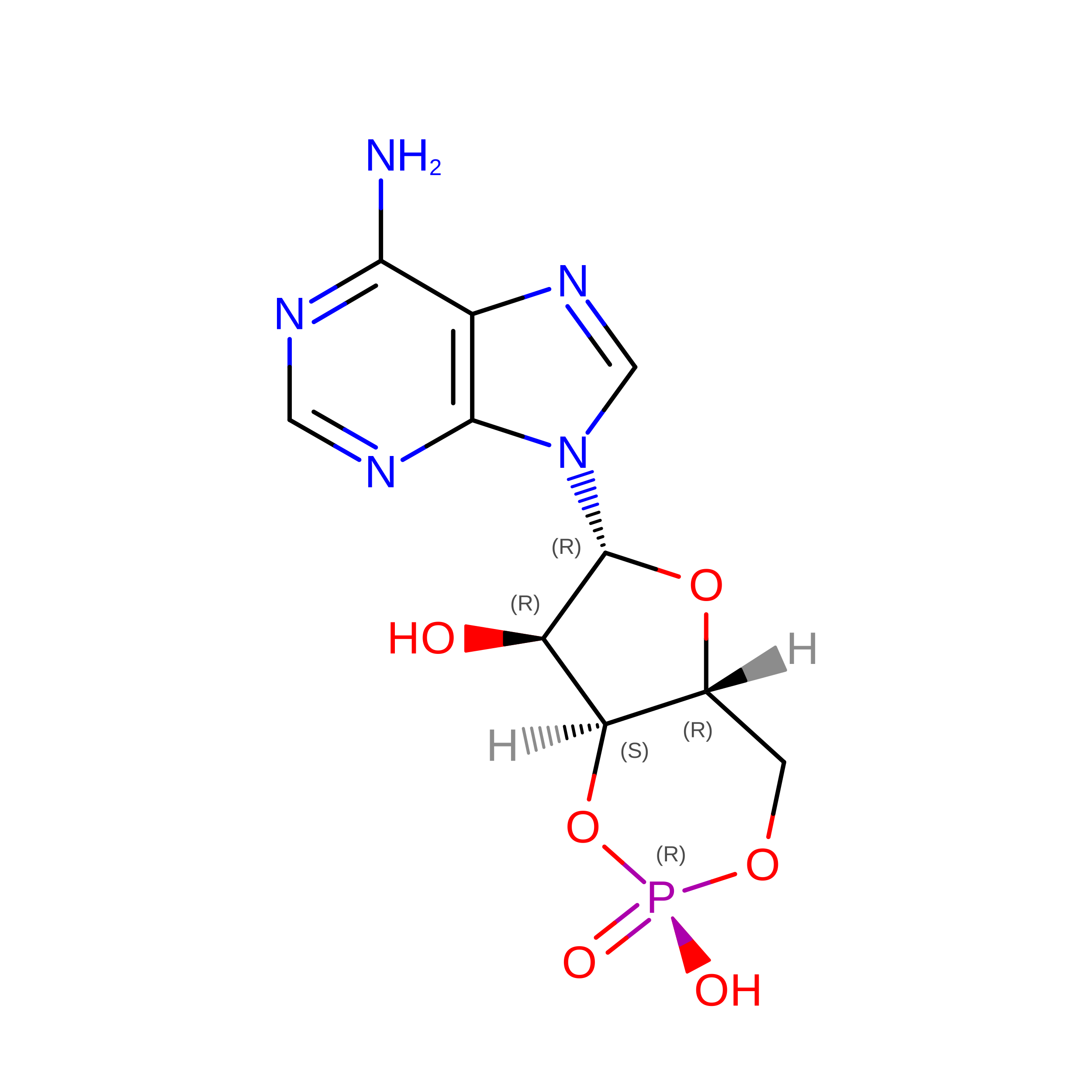
ABCC4 (ATP-binding cassette sub-family C member 4) is a transporter protein that is primarily localized to the plasma membrane, and its efflux activity is associated with the progression of various cancers and the development of drug resistance. Cyclic adenosine monophosphate (cAMP) is an important biomolecule that is considered a transport substrate of ABCC4. However, there is currently no direct structural understanding of how ABCC4 binds cAMP, and the mechanisms by which it recognizes a diverse range of substrate ligands remain poorly understood. Some studies have indicated that, under physiological conditions, cAMP does not significantly stimulate the ATPase activity of ABCC4, making the commonly used ATPase activity assays for ABC proteins unsuitable for studying cAMP. Here, we successfully resolved the cryo-electron microscopy (cryo-EM) structure of the human ABCC4-cAMP (hABCC4-cAMP) complex, revealing how hABCC4 binds to cAMP and identifying the key residues involved. This structure was compared with two other hABCC4 complex structures we obtained (Methotrexate and Prostaglandin E 2 ) and with previously published structures. We discovered some new structural insights into how hABCC4 binds ligands. On the basis of the structural information obtained, we confirmed the feasibility of using 8-[Fluo]-cAMP in a transport assay to detect cAMP translocation and found that some challenges remain to be addressed. These results suggest that hABCC4 can bind cAMP and exhibits varying degrees of flexibility when binding with different substrates, including cAMP. These findings expand our understanding of the structural biology of ABCC4.
- School of Life Science and Technology, Harbin Institute of Technology, Harbin, China.
Organizational Affiliation: