Download Mendeley
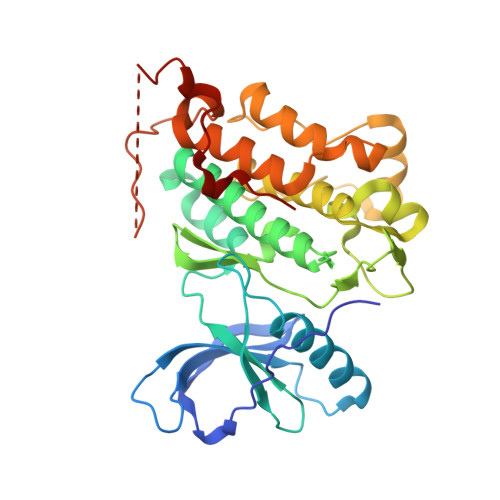
TAS3351 is a brain penetrable EGFR-TKI that overcomes T790M and C797S resistant mutations.
Kasuga, H., Kataoka, Y., Yamamoto, F., Miyamoto, R., Tsuji, S., Suzuki, T., Mizuarai, S.(2026) Commun Med (Lond) 6
- PubMed: 41882274 Search on PubMedSearch on PubMed Central
- DOI: https://doi.org/10.1038/s43856-026-01546-1
- Primary Citation Related Structures:
9KL4, 9KLW - PubMed Abstract:
Activating mutations in the epidermal growth factor receptor (EGFR), particularly exon 19 deletions and L858R mutation, are frequently observed in non-small cell lung cancer (NSCLC) and confer sensitivity to EGFR-tyrosine kinase inhibitors (EGFR-TKIs). Among these EGFR-TKIs, osimertinib is currently the standard of care for patients with NSCLC harboring the activating mutations. However, resistant mutations often arise, leading to resistance to osimertinib. The resistant mutation that most frequently occurs in EGFR during osimertinib treatment is the C797S mutation. Another major resistant mutation arising in EGFR during treatment with other EGFR-TKIs, such as gefitinib and afatinib, is the T790M mutation. Currently, no approved EGFR-TKIs are effective in patients who simultaneously develop the T790M and C797S mutations. Additionally, brain metastasis often causes disease progression due to reduced drug penetration into the brain. We conducted preclinical evaluations of TAS3351, a fourth-generation EGFR-TKI, including biochemical, structural, and in vitro/in vivo pharmacological assays. We also evaluated the efflux transporter susceptibility and brain penetrability of TAS3351 in male mice. Here, we demonstrate that TAS3351 overcomes resistance due to T790M and C797S mutations while sparing wild-type EGFR activity. Furthermore, TAS3351 is not a substrate of P-glycoprotein (P-gp) and the breast cancer-resistant protein (BCRP) and exhibits significant brain penetrability, resulting in anti-tumor efficacy in mice with intracranial allografts. These findings indicate that TAS3351 is a promising therapeutic candidate for patients with NSCLC whose tumors have relapsed or are refractory to treatment due to the C797S and T790M mutations, and the brain metastases.
- Discovery and Preclinical Research Division, Taiho Pharmaceutical Co., Ltd., Tsukuba, Japan. h-kasuga@taiho.co.jp.
Organizational Affiliation: