9KGL | pdb_00009kgl

Structure of KATP channel in complex with centipede toxin SpTx1


Experimental Data Snapshot

  • Method: ELECTRON MICROSCOPY
  • Resolution: 2.88 Å
  • Aggregation State: PARTICLE 
  • Reconstruction Method: SINGLE PARTICLE 

wwPDB Validation 3D Report Full Report

Validation slider image for 9KGL

This is version 1.2 of the entry. See complete history

Literature

Inhibition Mechanism of Pancreatic K ATP Channels by Centipede Toxin.

Hou, T.Wang, M.Tan, Y.Fan, C.Chen, L.

(2026) Research (Wash D C) 9: 1401-1401

  • DOI: https://doi.org/10.34133/research.1401
  • Primary Citation Related Structures: 
    9KGA, 9KGL

  • PubMed Abstract: 

    The pancreatic adenosine triphosphate (ATP)-sensitive potassium (K ATP ) channel acts as a crucial metabolic sensor, regulating insulin secretion to maintain whole-body energy homeostasis. Gain-of-function mutations in this channel lead to neonatal diabetes mellitus, a rare disorder in which certain mutants exhibit resistance to standard sulfonylurea therapy. Recent studies have identified a centipede toxin, SpTx1, as a potent inhibitor of both human pancreatic K ATP channels and their gain-of-function mutants. This toxin stimulates insulin secretion, offering a promising therapeutic strategy for neonatal diabetes. However, the molecular mechanism by which SpTx1 inhibits the K ATP channel has remained unclear. Here, we report the crystal structure of SpTx1 and the cryo-electron microscopy structure of the K ATP channel in complex with SpTx1. The structure reveals that a single SpTx1 molecule binds to the extracellular surface of the Kir6.2 tetramer. Multiple interactions at the SpTx1-Kir6.2 interface underpin the high affinity and specificity of SpTx1 for human Kir6.2. We demonstrate that SpTx1 inhibits potassium currents by physically blocking the ion conduction pore. Furthermore, a structure-guided search identified another centipede toxin, Sm3a, as a novel K ATP channel blocker. Together, these findings provide key insights into the inhibitory mechanism of centipede toxins against the human Kir6.2-containing K ATP channel and establish a foundation for developing these toxins into potential therapeutics for K ATP channel-related diseases.


  • Organizational Affiliation
    • State Key Laboratory of Membrane Biology, College of Future Technology, Institute of Molecular Medicine, Beijing Key Laboratory of Novel Antibodies and Multifunctional Conjugated Drugs, Peking University, Beijing 100871, China.

Macromolecule Content 

  • Total Structure Weight: 896.13 kDa 
  • Atom Count: 55,831 
  • Modeled Residue Count: 7,074 
  • Deposited Residue Count: 7,944 
  • Unique protein chains: 3

Macromolecules

Find similar proteins by:|  3D Structure
Entity ID: 1
MoleculeChains  Sequence LengthOrganismDetailsImage
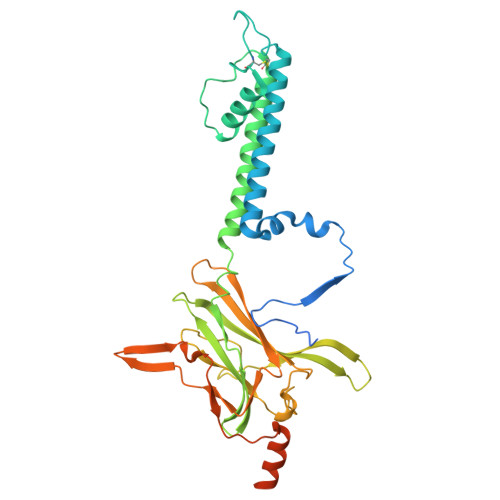
ATP-sensitive inward rectifier potassium channel 11
A, C, E, G
390Homo sapiensMutation(s): 2 
Gene Names: KCNJ11
UniProt & NIH Common Fund Data Resources
Find proteins for Q14654 (Homo sapiens)
Explore Q14654 
Go to UniProtKB:  Q14654
PHAROS:  Q14654
GTEx:  ENSG00000187486 
Entity Groups
Sequence Clusters30% Identity50% Identity70% Identity90% Identity95% Identity100% Identity
UniProt GroupQ14654
Sequence Annotations
Expand
Reference Sequence
Find similar proteins by:|  3D Structure
Entity ID: 2
MoleculeChains  Sequence LengthOrganismDetailsImage
ATP-binding cassette sub-family C member 8 isoform X2
B, D, F, H
1,582Mesocricetus auratusMutation(s): 0 
Gene Names: Abcc8
UniProt
Find proteins for A0A1U7R319 (Mesocricetus auratus)
Explore A0A1U7R319 
Go to UniProtKB:  A0A1U7R319
Entity Groups
Sequence Clusters30% Identity50% Identity70% Identity90% Identity95% Identity100% Identity
UniProt GroupA0A1U7R319
Sequence Annotations
Expand
Reference Sequence
Find similar proteins by:|  3D Structure
Entity ID: 3
MoleculeChains  Sequence LengthOrganismDetailsImage
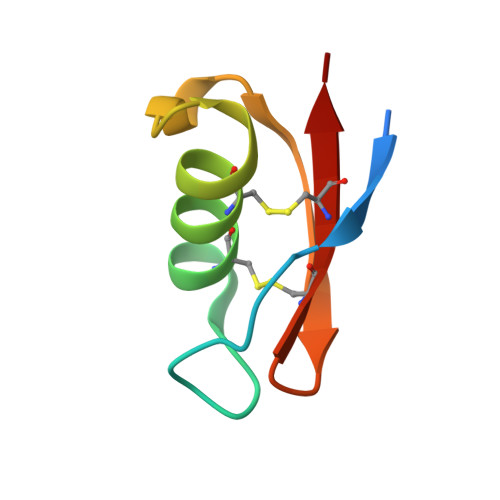
SpTx156Scolopendra polymorphaMutation(s): 0 
Entity Groups
Sequence Clusters30% Identity50% Identity70% Identity90% Identity95% Identity100% Identity
Sequence Annotations
Expand
Reference Sequence

Small Molecules

Ligands 2 Unique
IDChains Name / Formula / InChI Key2D Diagram3D Interactions
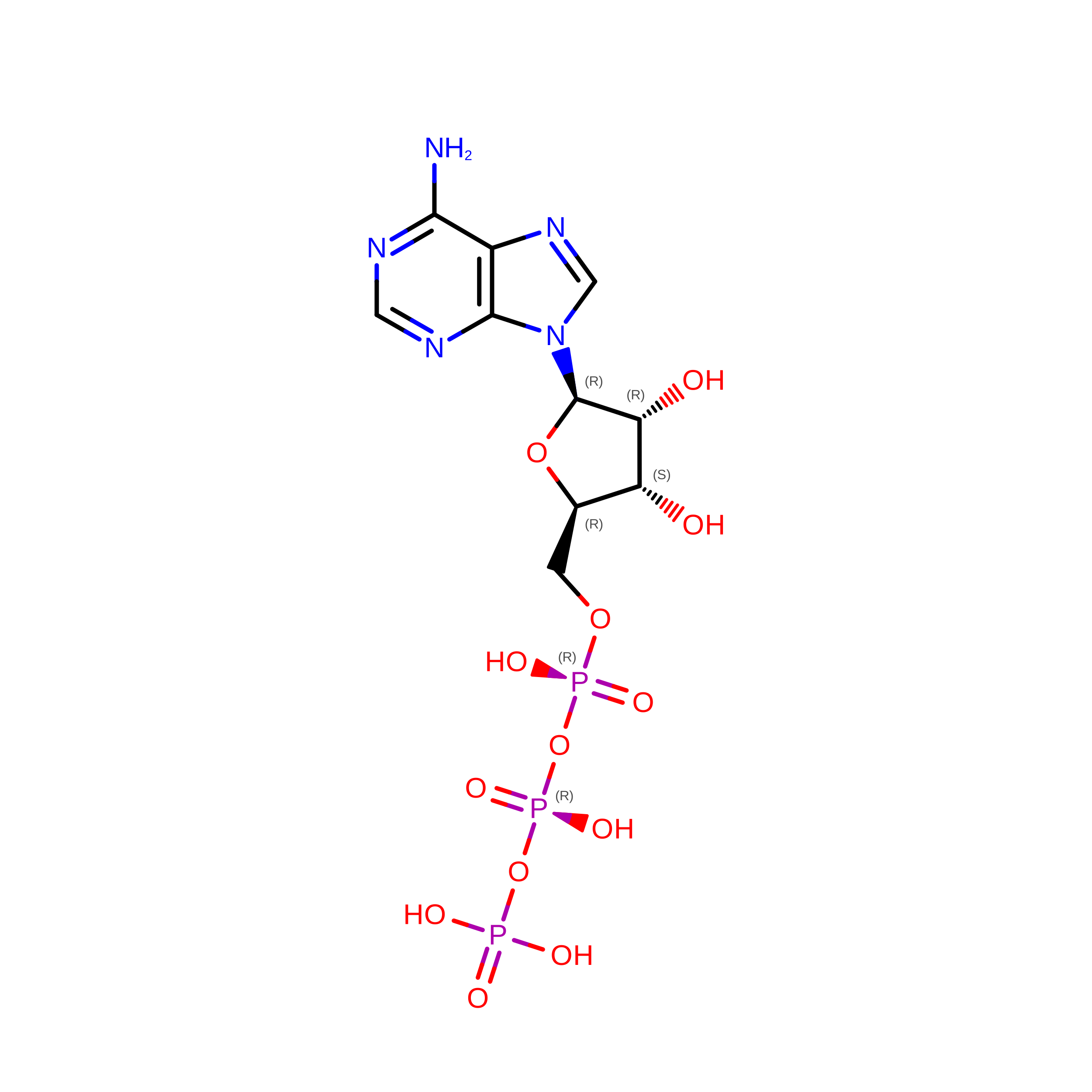
ATP

Query on ATP


Download:Ideal Coordinates CCD File
J [auth A]
L [auth B]
M [auth C]
O [auth D]
P [auth E]
J [auth A],
L [auth B],
M [auth C],
O [auth D],
P [auth E],
R [auth F],
S [auth G],
U [auth H]
ADENOSINE-5'-TRIPHOSPHATE
C10 H16 N5 O13 P3
ZKHQWZAMYRWXGA-KQYNXXCUSA-N
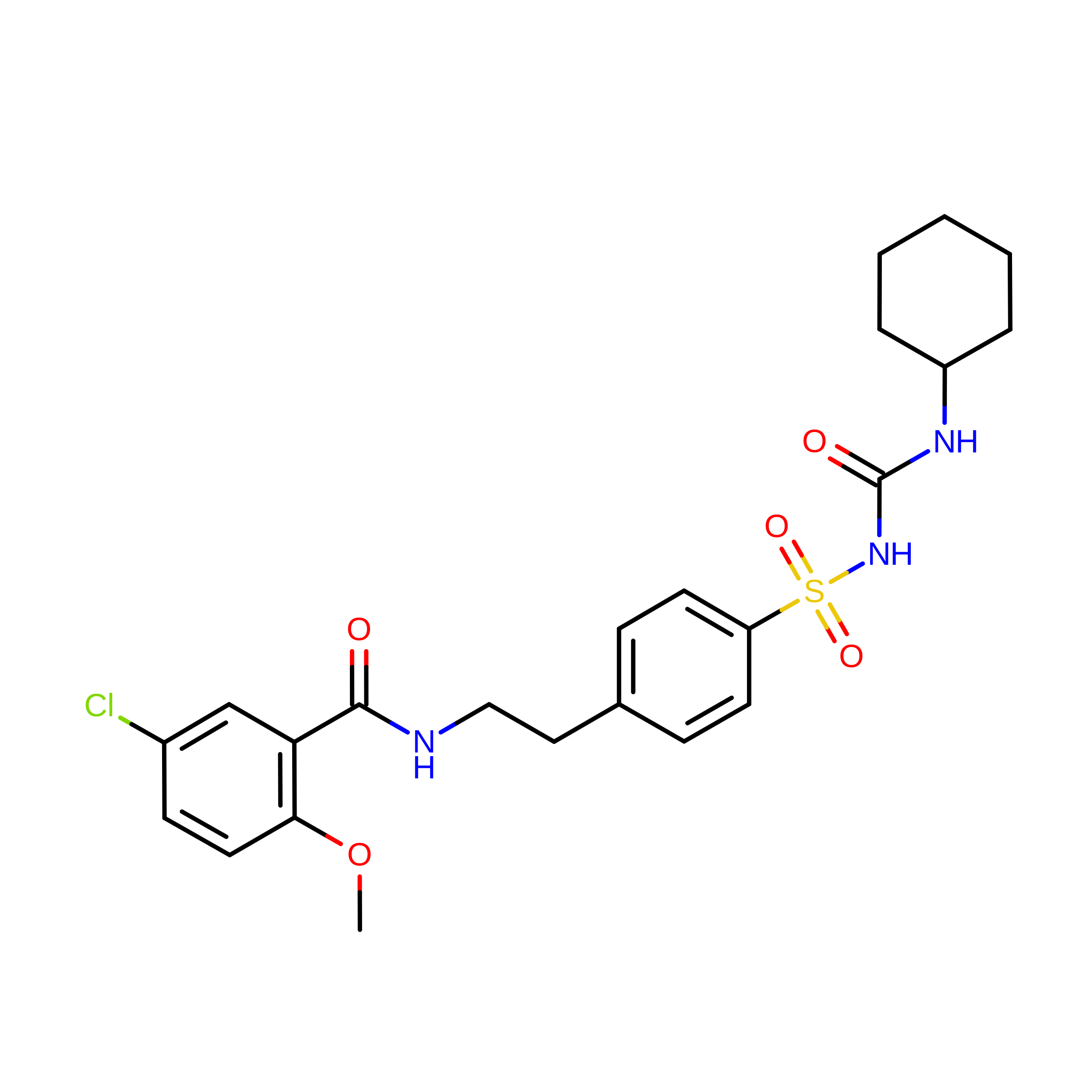
GBM

Query on GBM


Download:Ideal Coordinates CCD File
K [auth B],
N [auth D],
Q [auth F],
T [auth H]
5-chloro-N-(2-{4-[(cyclohexylcarbamoyl)sulfamoyl]phenyl}ethyl)-2-methoxybenzamide
C23 H28 Cl N3 O5 S
ZNNLBTZKUZBEKO-UHFFFAOYSA-N

Experimental Data & Validation

Experimental Data

  • Method: ELECTRON MICROSCOPY
  • Resolution: 2.88 Å
  • Aggregation State: PARTICLE 
  • Reconstruction Method: SINGLE PARTICLE 

Structure Validation

View Full Validation Report


Entry History 

& Funding Information

Deposition Data

  • Released Date: 2025-11-12 
  • Deposition Author(s): Chen, L.

Funding OrganizationLocationGrant Number
National Natural Science Foundation of China (NSFC)China91957201

Revision History  (Full details and data files)

  • Version 1.0: 2025-11-12
    Type: Initial release
  • Version 1.1: 2026-08-26
    Changes: Data collection, Database references
  • Version 1.2: 2026-09-02
    Changes: Data collection, Database references