Download Mendeley
Design and Structural Elucidation of Glycopeptide Fibrils: Emulating Glycosaminoglycan Functions for Biomedical Applications.
Xia, W., Xu, Z., Dong, H., Zhang, S., He, C., Li, D., Sun, B., Dai, B., Dong, S., Liu, C.(2025) J Am Chem Soc 147: 20132-20143
- PubMed: 40448703 Search on PubMed
- DOI: https://doi.org/10.1021/jacs.5c07039
- Primary Citation Related Structures:
9KAP - PubMed Abstract:
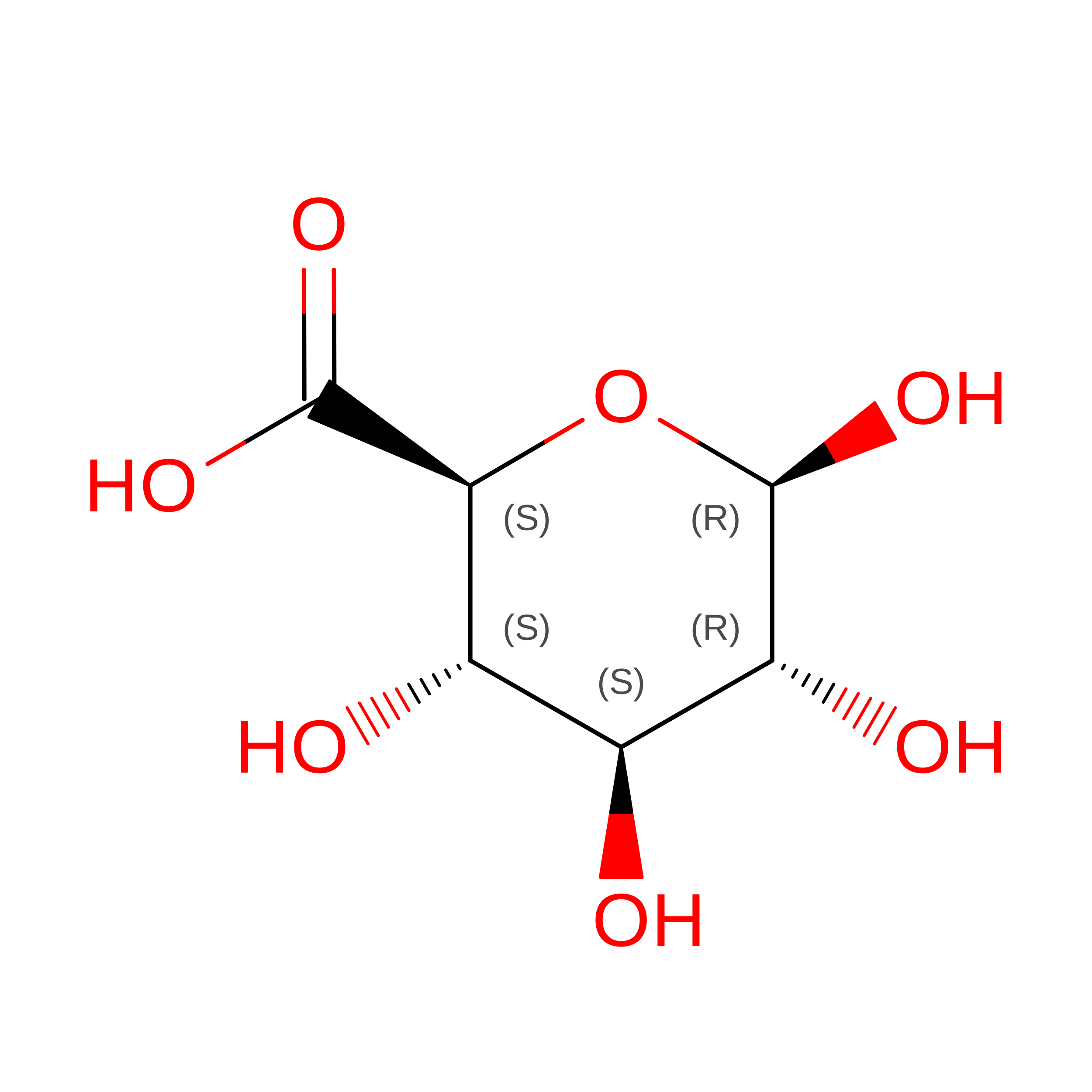
Glycosaminoglycans (GAGs) are essential polysaccharides crucial for various cellular functions, such as cell proliferation, migration, and differentiation. However, their complex structure and variability from natural sources pose challenges for functional studies and therapeutic applications. In this study, we engineered a glycopeptide that assembles into fibrils, emulating the functional attributes of GAGs. Utilizing cryo-EM, we elucidated the atomic structure of the designed glycopeptide fibril, which is composed of three identical protofilaments intertwined into a left-handed helix and held together by a variety of intermolecular interactions. Remarkably, the functional sugar units, glucuronic acids, are orderly positioned on the fibril surface, making them readily accessible to the solvent. This distinctive spatial configuration allows the designed glycopeptide fibril to effectively mimic key GAG functionalities, including the promotion of cell proliferation, cell migration, and osteogenic differentiation. Our findings offer a structural framework for designing glycan functionalities on glycopeptide fibrils and open avenues for developing glycopeptide-based materials with versatile biological activities. This work further enhances the potential of these materials for applications in therapeutic and regenerative medicine.
- Interdisciplinary Research Center on Biology and Chemistry, State Key Laboratory of Chemical Biology, Shanghai Institute of Organic Chemistry, Chinese Academy of Sciences, Shanghai 201210, China.
Organizational Affiliation: