9JTS | pdb_00009jts

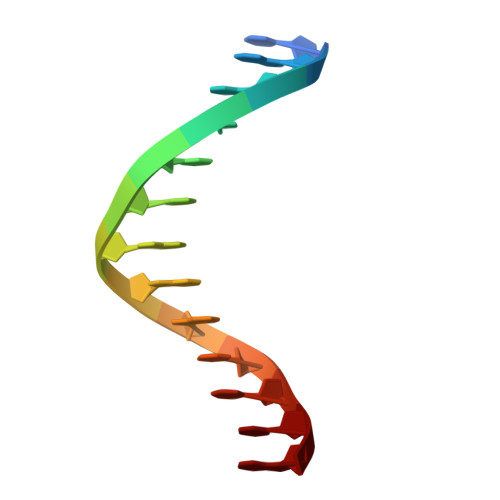
CryoEM structure of mouse RAG SEC-1DNA (12RSS side)


Experimental Data Snapshot

  • Method: ELECTRON MICROSCOPY
  • Resolution: 3.36 Å
  • Aggregation State: PARTICLE 
  • Reconstruction Method: SINGLE PARTICLE 

wwPDB Validation   3D Report Full Report


This is version 1.1 of the entry. See complete history


Literature

How RAG1/2 evolved from ancestral transposases to initiate V(D)J recombination without transposition.

Chen, X.Yao, L.Li, W.Ma, S.Yuan, X.Yang, Y.Yuan, Y.Liu, Y.Liu, L.Wang, H.Gellert, M.Yang, W.

(2025) Proc Natl Acad Sci U S A 122: e2512362122-e2512362122

  • DOI: https://doi.org/10.1073/pnas.2512362122
  • Primary Citation of Related Structures:  
    9JPU, 9JPX, 9JQN, 9JTS, 9JTU

  • PubMed Abstract: 

    The recombination activating genes 1 and 2 (RAG1/2) recombinase, which initiates V(D)J recombination in jawed vertebrates, evolved from RNaseH-like transposases such as Transib and ProtoRAG. However, its postcleavage transposase activity is strictly suppressed. Previous structural studies have focused only on the conserved core domains of RAG1/2, leaving the regulatory mechanisms of the noncore regions unclear. To investigate how RAG1/2 suppresses transposition and regulates DNA cleavage, we determined cryo-electron microscopy (cryo-EM) structures of nearly full-length RAG1/2 complexed with cleaved recombination signal sequences (RSS) in a signal-end complex (SEC) at resolutions up to 2.95 Å. Two key structures, SEC-0 and SEC-Plant Homeodomain (PHD), reveal distinct regulatory roles of RAG2, which is absent in Transib transposase. SEC-0 displays a closed conformation, revealing that the core RAG2 facilitates sequential DNA cleavage by stabilizing the RSS-cleaved states in a "spring-loaded" mechanism. SEC-PHD reveals how RAG2's noncore PHD and Acidic Hinge (AH), which are absent in ProtoRAG, inhibit target DNA binding in transposition. Histone H3K4me3, which recruits RAG1/2 to RSS sites, does not influence RAG1/2 binding to V, D, or J gene segments bordered by RSS. In contrast, the suppressed transposition can be activated by H3K4me3 peptides that dislodge the inhibitory PHD. To achieve this derepression in vivo, however, would require an unlikely close placement of two nucleosomes flanking a target DNA bent by nearly 180°. Our structural and biochemical results elucidate how RAG1 has acquired RAG2 and utilizes its core and noncore domains to enhance V(D)J recombination and suppress transposition.


  • Organizational Affiliation
    • School of Life Sciences, Anhui University, Hefei, Anhui 230601, China.

Macromolecules

Find similar proteins by:  (by identity cutoff)  |  3D Structure
Entity ID: 1
MoleculeChains Sequence LengthOrganismDetailsImage
V(D)J recombination-activating protein 1
A, C
1,040Mus musculusMutation(s): 0 
Gene Names: Rag1
EC: 3.1 (PDB Primary Data), 2.3.2.27 (PDB Primary Data)
UniProt
Find proteins for P15919 (Mus musculus)
Explore P15919 
Go to UniProtKB:  P15919
Entity Groups  
Sequence Clusters30% Identity50% Identity70% Identity90% Identity95% Identity100% Identity
UniProt GroupP15919
Sequence Annotations
Expand
  • Reference Sequence
Find similar proteins by:  (by identity cutoff)  |  3D Structure
Entity ID: 2
MoleculeChains Sequence LengthOrganismDetailsImage
V(D)J recombination-activating protein 2
B, D
527Mus musculusMutation(s): 0 
Gene Names: Rag2Rag-2
UniProt
Find proteins for P21784 (Mus musculus)
Explore P21784 
Go to UniProtKB:  P21784
Entity Groups  
Sequence Clusters30% Identity50% Identity70% Identity90% Identity95% Identity100% Identity
UniProt GroupP21784
Sequence Annotations
Expand
  • Reference Sequence

Find similar nucleic acids by:  Sequence   |   3D Structure  

Entity ID: 3
MoleculeChains LengthOrganismImage
DNA (5'-D(P*TP*GP*GP*AP*TP*CP*TP*GP*GP*CP*CP*TP*G)-3')E [auth I]13Escherichia coli
Sequence Annotations
Expand
  • Reference Sequence
Find similar nucleic acids by:  (by identity cutoff)  |  3D Structure
Entity ID: 4
MoleculeChains LengthOrganismImage
DNA (39-MER)F [auth G]39Escherichia coli
Sequence Annotations
Expand
  • Reference Sequence
Find similar nucleic acids by:  (by identity cutoff)  |  3D Structure
Entity ID: 5
MoleculeChains LengthOrganismImage
DNA (30-MER)G [auth L]30Escherichia coli
Sequence Annotations
Expand
  • Reference Sequence
Find similar nucleic acids by:  (by identity cutoff)  |  3D Structure
Entity ID: 6
MoleculeChains LengthOrganismImage
DNA (39-MER)H [auth M]39Escherichia coli
Sequence Annotations
Expand
  • Reference Sequence

Find similar nucleic acids by:  Sequence   |   3D Structure  

Entity ID: 7
MoleculeChains LengthOrganismImage
DNA (5'-D(*CP*AP*GP*GP*CP*CP*AP*GP*AP*TP*CP*CP*A)-3')I [auth H]13Escherichia coli
Sequence Annotations
Expand
  • Reference Sequence
Find similar nucleic acids by:  (by identity cutoff)  |  3D Structure
Entity ID: 8
MoleculeChains LengthOrganismImage
DNA (30-MER)J [auth F]30Escherichia coli
Sequence Annotations
Expand
  • Reference Sequence
Experimental Data & Validation

Experimental Data

  • Method: ELECTRON MICROSCOPY
  • Resolution: 3.36 Å
  • Aggregation State: PARTICLE 
  • Reconstruction Method: SINGLE PARTICLE 
EM Software:
TaskSoftware PackageVersion
MODEL REFINEMENTPHENIX

Structure Validation

View Full Validation Report


Entry History & Funding Information

Deposition Data


Funding OrganizationLocationGrant Number
National Institutes of Health/National Institute of Diabetes and Digestive and Kidney Disease (NIH/NIDDK)United States--
National Natural Science Foundation of China (NSFC)China--

Revision History  (Full details and data files)

  • Version 1.0: 2025-07-23
    Type: Initial release
  • Version 1.1: 2026-02-04
    Changes: Data collection, Database references