Find PDB structures and Computed Structure Models (CSM) by combining queries from tools in this suite: Attribute Search, Sequence Similarity, Sequence Motif, 3D Similarity, and 3D Motif with 'AND' logic.
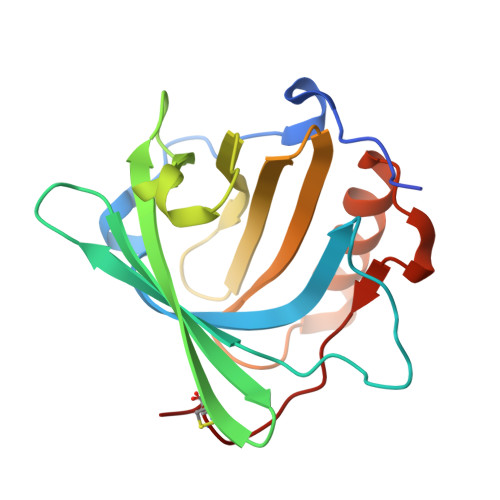
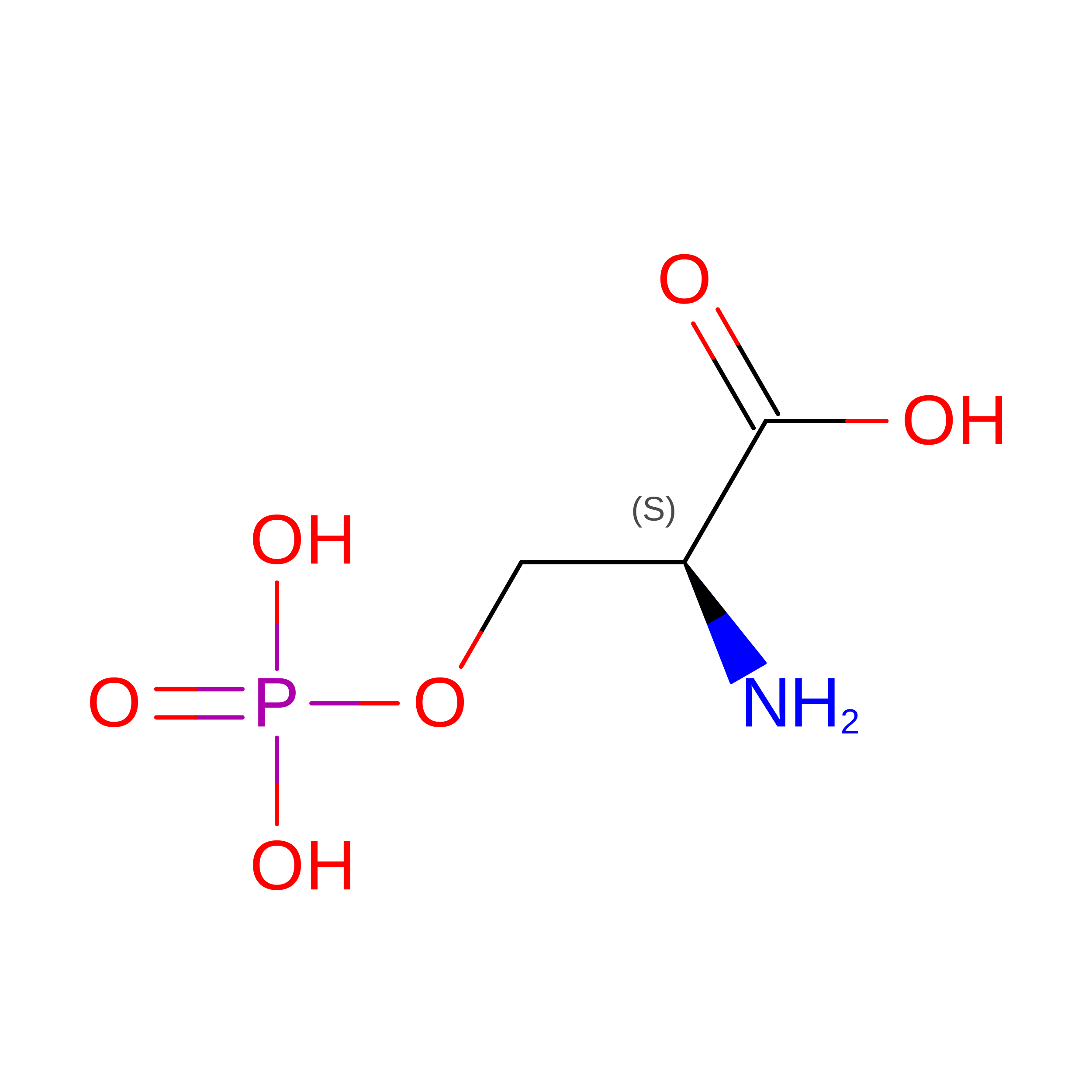
Lipid metabolic reprogramming can facilitate immune escape by promoting a suppressive phenotype in tumor-infiltrating immune cells, although this process remains poorly understood. Here, we identify the lipoprotein, Lipocalin-2 (LCN2), as an essential factor driving natural killer (NK) cell dysfunction and immunosuppressive phenotype. Spatial metabolomics with crystal structure analysis demonstrates that LCN2 binding to phosphatidylserine (PS) and PS enrichment is required for tumor-associated lipid reprogramming. Increased LCN2-PS binding limits IL-15-mediated JAK-STAT pathway activation in NK cells, while inhibiting tumor-infiltrating neutrophil maintenance of anti-tumor potential in NK cells via suppression of IFN-I response. Structure-based drug screening identifies semapimod as an LCN2 inhibitor that blocks interaction with PS, disrupting the LCN2-PS immunosuppressive axis and inducing tumor control. Overall, this study uncovers a lipid metabolic reprogramming mechanism that mediates innate immune evasion and proposes a tumor treatment strategy through enhanced innate immune surveillance.
Organizational Affiliation:
National Key Laboratory of Immune Response and Immunotherapy, School of Basic Medical Sciences, Division of Life Sciences and Medicine, University of Science and Technology of China, Hefei, China; Institute of Immunology, Biomedical Sciences and Health Laboratory of Anhui Province, University of Science and Technology of China, Hefei, China.
The First Affiliated Hospital of University of Science and Technology of China, Division of Life Science and Medicine, University of Science and Technology of China, Hefei, China; Ministry of Education Key Laboratory for Membrane-less Organelles & Cellular Dynamics, Hefei National Laboratory for Physical Sciences at the Microscale, Division of Life Sciences and Medicine, University of Science and Technology of China, Hefei, China.
The First Affiliated Hospital of University of Science and Technology of China, Division of Life Science and Medicine, University of Science and Technology of China, Hefei, China.
Institute of Immunology, Biomedical Sciences and Health Laboratory of Anhui Province, University of Science and Technology of China, Hefei, China.
National Key Laboratory of Immune Response and Immunotherapy, School of Basic Medical Sciences, Division of Life Sciences and Medicine, University of Science and Technology of China, Hefei, China.
National Key Laboratory of Immune Response and Immunotherapy, School of Basic Medical Sciences, Division of Life Sciences and Medicine, University of Science and Technology of China, Hefei, China; Institute of Immunology, Biomedical Sciences and Health Laboratory of Anhui Province, University of Science and Technology of China, Hefei, China; The First Affiliated Hospital of University of Science and Technology of China, Division of Life Science and Medicine, University of Science and Technology of China, Hefei, China.
National Key Laboratory of Immune Response and Immunotherapy, School of Basic Medical Sciences, Division of Life Sciences and Medicine, University of Science and Technology of China, Hefei, China; Institute of Immunology, Biomedical Sciences and Health Laboratory of Anhui Province, University of Science and Technology of China, Hefei, China; The First Affiliated Hospital of University of Science and Technology of China, Division of Life Science and Medicine, University of Science and Technology of China, Hefei, China. Electronic address: ygzhou@ustc.edu.cn.
National Key Laboratory of Immune Response and Immunotherapy, School of Basic Medical Sciences, Division of Life Sciences and Medicine, University of Science and Technology of China, Hefei, China; Institute of Immunology, Biomedical Sciences and Health Laboratory of Anhui Province, University of Science and Technology of China, Hefei, China; The First Affiliated Hospital of University of Science and Technology of China, Division of Life Science and Medicine, University of Science and Technology of China, Hefei, China; Center for Advanced Interdisciplinary Science and Biomedicine of IHM, Division of Life Sciences and Medicine, University of Science and Technology of China, Hefei 230027, China. Electronic address: ustcwhm@ustc.edu.cn.

 Download Mendeley