Download Mendeley
Phosphoglycerate dehydrogenase is required for kernel development and defines a predominant serine synthesis pathway in maize.
Zhang, Y., Li, R., Zheng, D., Zhao, J., Qing, K., He, R., Ma, Z., Chen, J., Xue, N., Tian, X., Wang, E., Xu, J., Li, Y., Tan, B.C., Zhou, Z., Wang, C., Dong, J.(2025) Plant Cell 37
- PubMed: 40403140 Search on PubMedSearch on PubMed Central
- DOI: https://doi.org/10.1093/plcell/koaf126
- Primary Citation Related Structures:
9JCM, 9JCN - PubMed Abstract:
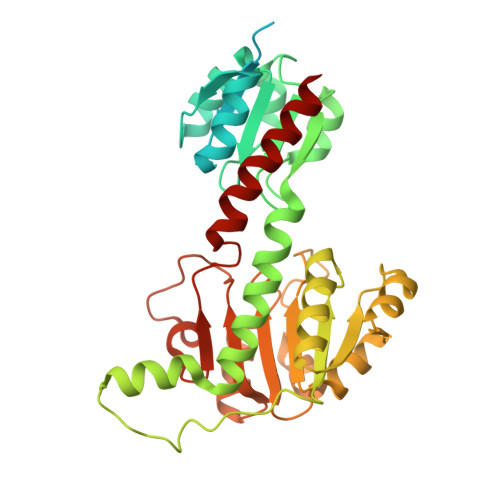
Serine functions as both a substrate for protein biosynthesis and a signaling molecule for growth and development. However, the mechanism remains poorly understood. Here, we cloned and functionally characterized the maize (Zea mays) gene Dek20, which encodes phosphoglycerate dehydrogenase1 (PGDH1), the rate-limiting enzyme in the phosphorylated pathway of serine biosynthesis (PPSB). The dek20(Ser282Leu) mutation disrupts the interaction between residues Ser282 and His284, leading to the release of His284, which subsequently binds NAD+/NADH to inhibit serine biosynthesis. Consequently, serine content decreases dramatically, and the cellular response to nutrient starvation is enriched in transcriptome analysis. Serine deficiency triggers tRNASer degradation and reduced translation elongation at serine codons. The stalled ribosomes activate General Control Nonderepressible 2 (GCN2) kinase, which affects the phosphorylation of eukaryotic initiation factor 2α (eIF2α) and ribosomal protein S6 kinase (S6 K), furtherly inhibiting translation initiation. Consistent with these findings, polysome profiling and Ribo-seq analysis revealed a marked decrease in translation efficiency in dek20. Notably, proteins essential for storage compound biosynthesis and cell cycle progression exhibit reduced translation in dek20. Collectively, our findings reveal the primary serine biosynthesis pathway and a mechanism for monitoring amino acid levels in maize, the model plant with C4 photosynthesis.
- The Key Laboratory of Plant Development and Environmental Adaptation Biology, Ministry of Education; Shandong Key Laboratory of Precision Molecular Crop Design and Breeding; State Key Laboratory of Microbial Technology; School of Life Sciences, Shandong University, Qingdao 266237, China.
Organizational Affiliation: