9J38 | pdb_00009j38

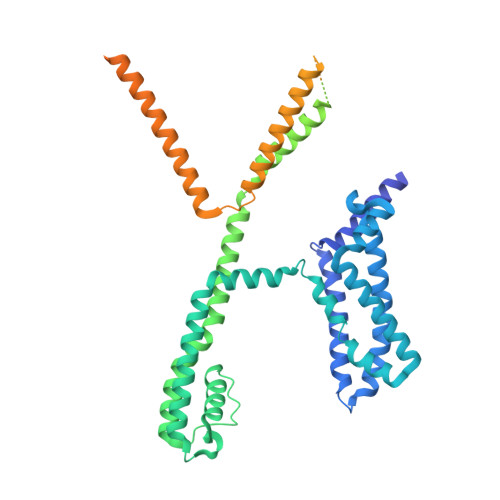
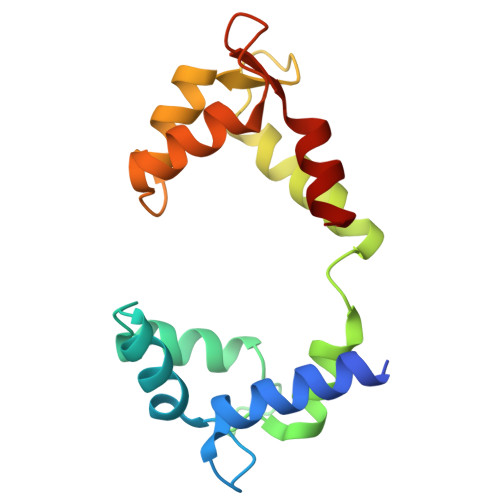
human KCNQ5-CaM in apo state


Experimental Data Snapshot

  • Method: ELECTRON MICROSCOPY
  • Resolution: 2.40 Å
  • Aggregation State: PARTICLE 
  • Reconstruction Method: SINGLE PARTICLE 

wwPDB Validation   3D Report Full Report


This is version 1.1 of the entry. See complete history


Literature

Phosphatidylinositol 4,5-bisphosphate activation mechanism of human KCNQ5.

Yang, Z.Zheng, Y.Ma, D.Wang, L.Zhang, J.Song, T.Wang, Y.Zhang, Y.Nan, F.Su, N.Gao, Z.Guo, J.

(2025) Proc Natl Acad Sci U S A 122: e2416738122-e2416738122

  • DOI: https://doi.org/10.1073/pnas.2416738122
  • Primary Citation of Related Structures:  
    9J38, 9LIZ, 9LJ1, 9LJ5

  • PubMed Abstract: 

    The human voltage-gated potassium channels KCNQ2, KCNQ3, and KCNQ5 can form homo- and heterotetrameric channels that are responsible for generating the neuronal M current and maintaining the membrane potential stable. Activation of KCNQ channels requires both the depolarization of membrane potential and phosphatidylinositol 4,5-bisphosphate (PIP 2 ). Here, we report cryoelectron microscopy structures of the human KCNQ5-calmodulin (CaM) complex in the apo, PIP 2 -bound, and both PIP 2 - and the activator HN37-bound states in either a closed or an open conformation. In the closed conformation, a PIP 2 molecule binds in the middle of the groove between two adjacent voltage-sensing domains (VSDs), whereas in the open conformation, one additional PIP 2 binds to the interface of VSD and the pore domain, accompanying structural rearrangement of the cytosolic domain of KCNQ and CaM. The structures, along with electrophysiology analyses, reveal the two different binding modes of PIP 2 and elucidate the PIP 2 activation mechanism of KCNQ5.


  • Organizational Affiliation
    • Department of Biophysics and Department of Neurology of the Fourth Affiliated Hospital, Zhejiang University School of Medicine, Hangzhou, Zhejiang 310058, China.

Macromolecules
Find similar proteins by:  (by identity cutoff)  |  3D Structure
Entity ID: 1
MoleculeChains Sequence LengthOrganismDetailsImage
Potassium voltage-gated channel subfamily KQT member 5
A, B, C, D
610Homo sapiensMutation(s): 0 
Gene Names: KCNQ5
UniProt & NIH Common Fund Data Resources
Find proteins for Q9NR82 (Homo sapiens)
Explore Q9NR82 
Go to UniProtKB:  Q9NR82
PHAROS:  Q9NR82
GTEx:  ENSG00000185760 
Entity Groups  
Sequence Clusters30% Identity50% Identity70% Identity90% Identity95% Identity100% Identity
UniProt GroupQ9NR82
Sequence Annotations
Expand
  • Reference Sequence
Find similar proteins by:  (by identity cutoff)  |  3D Structure
Entity ID: 2
MoleculeChains Sequence LengthOrganismDetailsImage
Calmodulin-1
E, F, G, H
149Homo sapiensMutation(s): 0 
Gene Names: CALM1CALMCAMCAM1
UniProt & NIH Common Fund Data Resources
Find proteins for P0DP23 (Homo sapiens)
Explore P0DP23 
Go to UniProtKB:  P0DP23
PHAROS:  P0DP23
GTEx:  ENSG00000198668 
Entity Groups  
Sequence Clusters30% Identity50% Identity70% Identity90% Identity95% Identity100% Identity
UniProt GroupP0DP23
Sequence Annotations
Expand
  • Reference Sequence
Experimental Data & Validation

Experimental Data

  • Method: ELECTRON MICROSCOPY
  • Resolution: 2.40 Å
  • Aggregation State: PARTICLE 
  • Reconstruction Method: SINGLE PARTICLE 

Structure Validation

View Full Validation Report


Entry History & Funding Information

Deposition Data


Funding OrganizationLocationGrant Number
National Natural Science Foundation of China (NSFC)China32371204

Revision History  (Full details and data files)

  • Version 1.0: 2025-04-16
    Type: Initial release
  • Version 1.1: 2025-05-14
    Changes: Data collection, Database references