Download Mendeley
Specifically blocking alpha v beta 8-mediated TGF-beta signaling to reverse immunosuppression by modulating macrophage polarization.
Guo, C., Sun, H., Du, Y., Dai, X., Pang, Y., Han, Z., Xiong, X., Li, S., Zhang, J., Zheng, Q., Gui, X.(2025) J Exp Clin Cancer Res 44: 1-1
- PubMed: 39743547 Search on PubMedSearch on PubMed Central
- DOI: https://doi.org/10.1186/s13046-024-03250-1
- Primary Citation Related Structures:
9IND - PubMed Abstract:
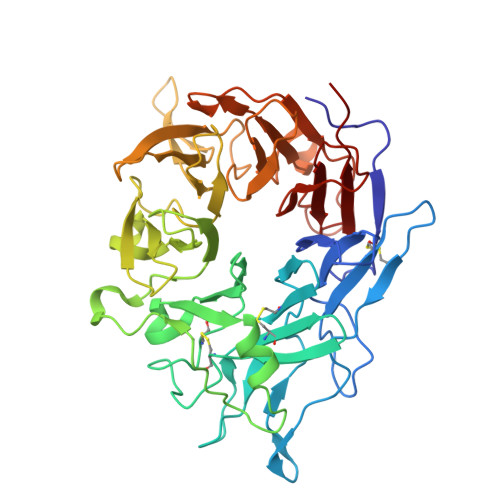
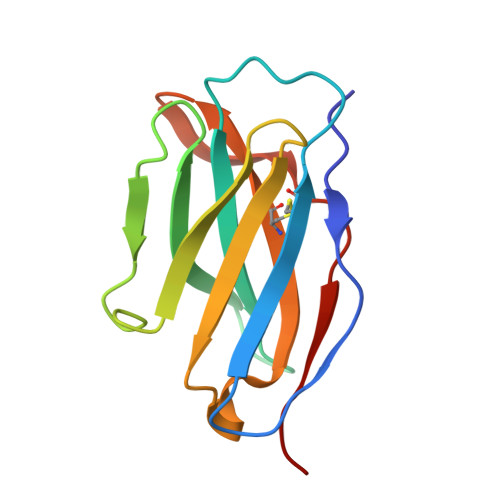
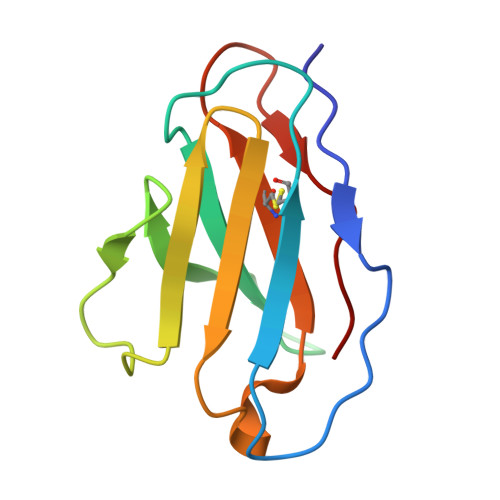
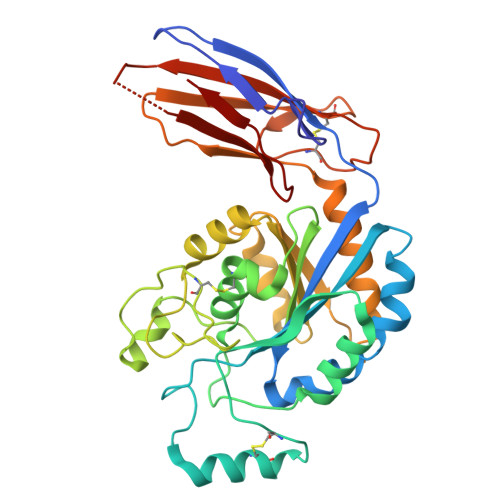
Targeting the TGF-β pathway in tumor therapy has proven challenging due to the highly context-dependent functions of TGF-β. Integrin αvβ8, a pivotal activator of TGF-β, has been implicated in TGF-β signaling within tumors, as demonstrated by the significant anti-tumor effects of anti-αvβ8 antibodies. Nevertheless, the expression profile of αvβ8 remains a subject of debate, and the precise mechanisms underlying the anti-tumor effects of anti-αvβ8 antibodies are not yet fully elucidated. We utilized single-cell RNA sequencing to assess αvβ8 expression across various human tumors. An anti-αvβ8 antibody was developed and characterized for its binding and blocking properties in vitro. Cryo-EM single-particle analysis was employed to study the detailed interaction between αvβ8 and the antibody Fab fragment. The anti-tumor efficacy of the antibody was evaluated in syngeneic mouse models with varying levels of αvβ8 expression, both as a monotherapy and in combination with PD-1 antibodies. Human PBMCs were isolated to investigate αvβ8 expression in myeloid cells, and macrophages were exposed to the antibody to study its impact on macrophage polarization. Pharmacokinetic studies of the αvβ8 antibody were conducted in cynomolgus monkeys. Integrin αvβ8 is notably expressed in certain tumor types and tumor-infiltrating macrophages. The specific αvβ8 antibody 130H2 demonstrated high affinity, specificity, and blocking potency in vitro. Cryo-EM analysis further revealed that 130H2 interacts exclusively with the β8 subunit, without binding to the αv subunit. In vivo studies showed that this antibody significantly inhibited tumor growth and alleviated immunosuppression by promoting immune cell infiltration. Furthermore, combining the antibody with PD-1 inhibition produced a synergistic anti-tumor effect. In human PBMCs, monocytes exhibited high αvβ8 expression, and the antibody directly modulated macrophage polarization. Tumors with elevated αvβ8 expression were particularly responsive to 130H2 treatment. Additionally, favorable pharmacokinetic properties were observed in cynomolgus monkeys. In summary, integrin αvβ8 is highly expressed in certain tumors and tumor-infiltrating macrophages. Targeting αvβ8 with a blocking antibody significantly inhibits tumor growth by modulating macrophage polarization and enhancing immune cell infiltration. Combining αvβ8 targeting with PD-1 treatment markedly increases the sensitivity of immune-excluded tumors. These results support further clinical evaluation of αvβ8 antibodies.
- Mabwell (Shanghai) Bioscience Co., Ltd, Shanghai, 201210, China.
Organizational Affiliation: