Download Mendeley
N-Degron-Based PROTAC Targeting PLK1: A Potential Therapeutic Strategy for Cervical Cancer.
Gunasekaran, P., Shin, S.C., Hwang, Y.S., Lee, J., La, Y.K., Yim, M.S., Kim, H.N., Kim, T.W., Yang, E., Lee, S.J., Yoon, J.M., Kim, E.E., Jeon, S., Ryu, E.K., Bang, J.K.(2025) Pharmaceutics 17
- PubMed: 40871048 Search on PubMedSearch on PubMed Central
- DOI: https://doi.org/10.3390/pharmaceutics17081027
- Primary Citation Related Structures:
9IM7 - PubMed Abstract:
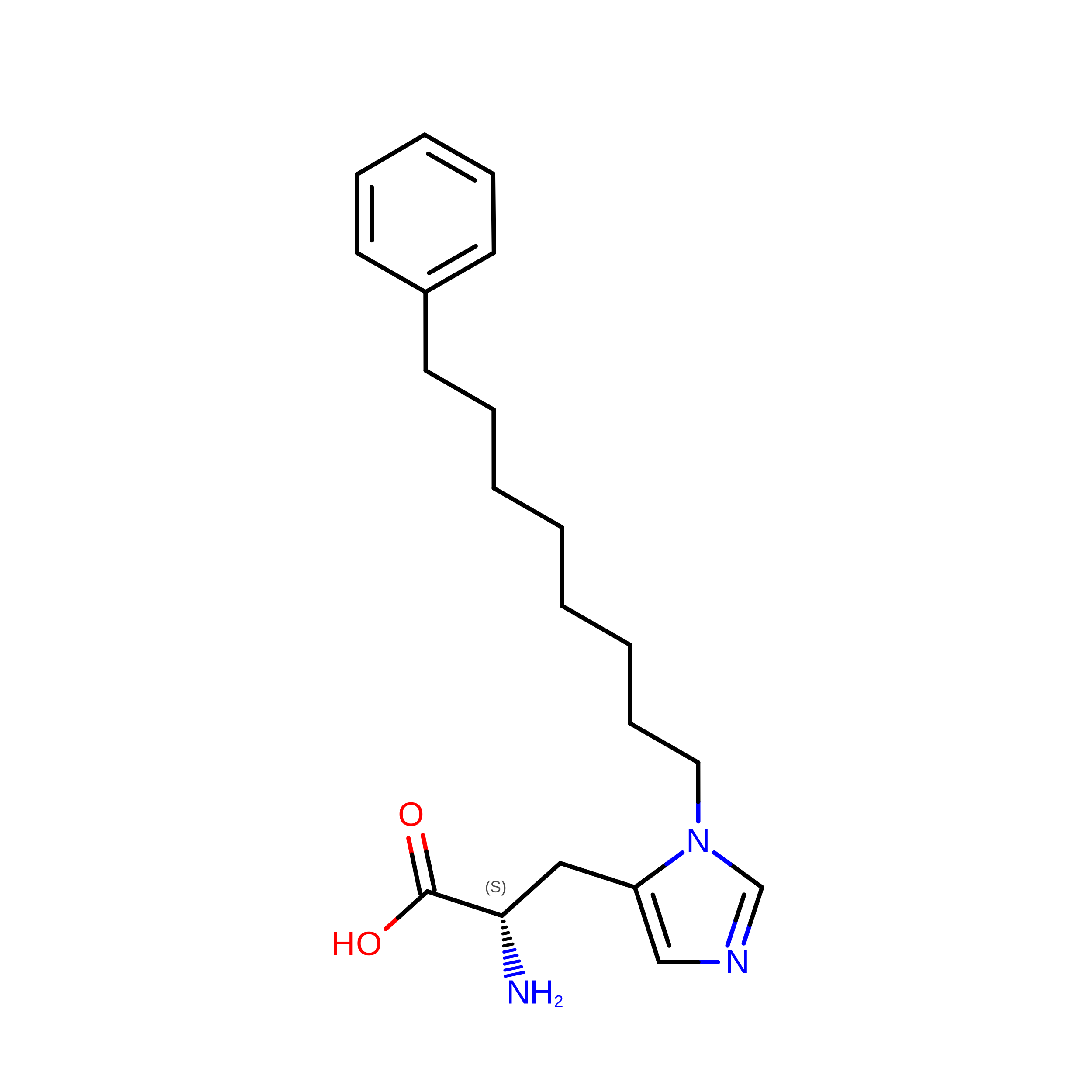
Background : Cervical cancer remains a major global health concern, with existing chemotherapy facing limited effectiveness owing to resistance. Polo-like kinase 1 (PLK1) overexpression in cervical cancer cells is a promising target for developing novel therapies to overcome chemoresistance and improve treatment efficacy. Methods : In this study, we developed a novel PROTAC, NC1, targeting PLK1 PBD via the N-end rule pathway. Results : This PROTAC effectively depleted the PLK1 protein in HeLa cells by inducing protein degradation. The crystal structure of the PBD-NC1 complex identified key PLK1 PBD binding interactions and isothermal titration calorimetry (ITC) confirmed a binding affinity of 6.06 µM between NC1 and PLK1 PBD. NC1 significantly decreased cell viability with an IC 50 of 5.23 µM, induced G2/M phase arrest, and triggered apoptosis in HeLa cells. In vivo, NC1 suppressed tumor growth in a HeLa xenograft mouse model. Conclusions : This research highlights the potential of N-degron-based PROTACs targeting the PLK1 protein in cancer therapies, highlighting their potential in future cervical anticancer treatment strategies.
- Division of Magnetic Resonance, Korea Basic Science Institute (KBSI), Ochang, Cheongju 28119, Republic of Korea.
Organizational Affiliation: