Download Mendeley
The role of Npt1 in regulating antifungal protein activity in filamentous fungi.
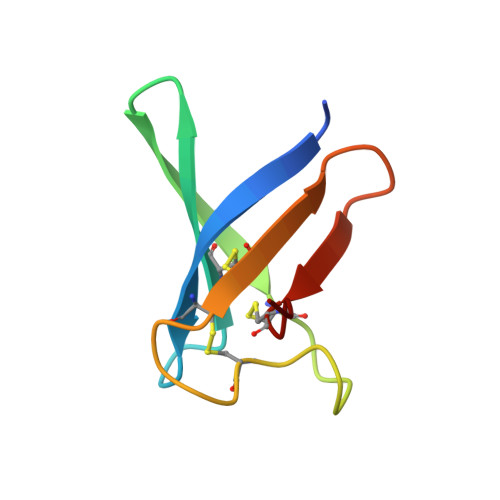
Wang, Y., Wang, S., Chen, Y., Xie, C., Xu, H., Lin, Y., Lin, R., Zeng, W., Chen, X., Nie, X., Wang, S.(2025) Nat Commun 16: 2850-2850
- PubMed: 40122888 Search on PubMedSearch on PubMed Central
- DOI: https://doi.org/10.1038/s41467-025-58230-6
- Primary Citation Related Structures:
9IID - PubMed Abstract:
Pathogenic filamentous fungi pose a significant threat to global food security and human health. The limitations of available antifungal agents, including resistance and toxicity, highlight the need for developing innovative antifungal strategies. Antifungal proteins (AFPs) are a class of secreted small proteins that exhibit potent antifungal activity against filamentous fungi, yet the underlying mechanism remains partially understood. In this study, we investigate the molecular and cellular effects of two AFPs, PgAFP and AfAFP, on Aspergillus flavus, a representative filamentous fungus. These AFPs affect various fungal phenotypes and exert an intracellular effect by interacting with Ntp1, a fungi exclusive protein modulating diverse fungal traits. We find that Ntp1 amino acids 417-588 are critical for AFP binding and play a role in regulating growth, development, sporulation, sclerotia formation, toxin synthesis, and pathogenicity. Results generated from this study will help to control pathogenic fungi.
- The State Key Laboratory of Ecological Pest Control for Fujian and Taiwan Crops, Key Laboratory of Pathogenic Fungi and Mycotoxins of Fujian Province, and School of Life Sciences, Fujian Agriculture and Forestry University, Fuzhou, Fujian, China.
Organizational Affiliation: