Download Mendeley
Allosteric targeting of RIPK1: discovery of novel inhibitors via parallel virtual screening and structure-guided optimization.
Vijayan, R.S.K., Hamilton, M.M., Pfaffinger, D.E., Alvarez, F.G., Reyna, N.J., Bardenhagen, J.P., Shepard, H., Rodriguez, C., Goodwani, S., Lightfoot, Y., Maskos, K., Johannsson, S., Kempf, G., Xu, Q.A., Neumann, L., Jiang, Y., Do, M.G., Jones, P., Lewis, R.T., Ray, W.J., Cross, J.B.(2025) RSC Med Chem 16: 5341-5358
- PubMed: 40969564 Search on PubMedSearch on PubMed Central
- DOI: https://doi.org/10.1039/d5md00317b
- Primary Citation Related Structures:
9HY8, 9HY9 - PubMed Abstract:
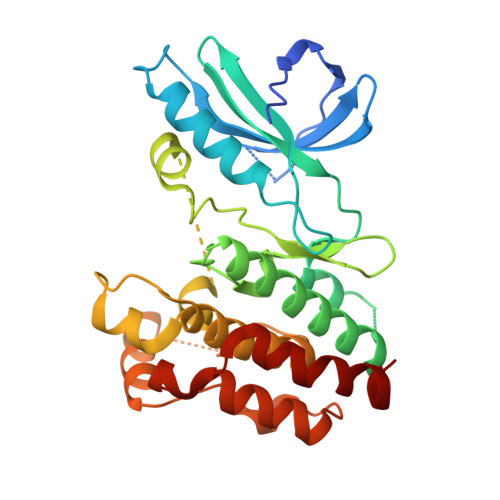
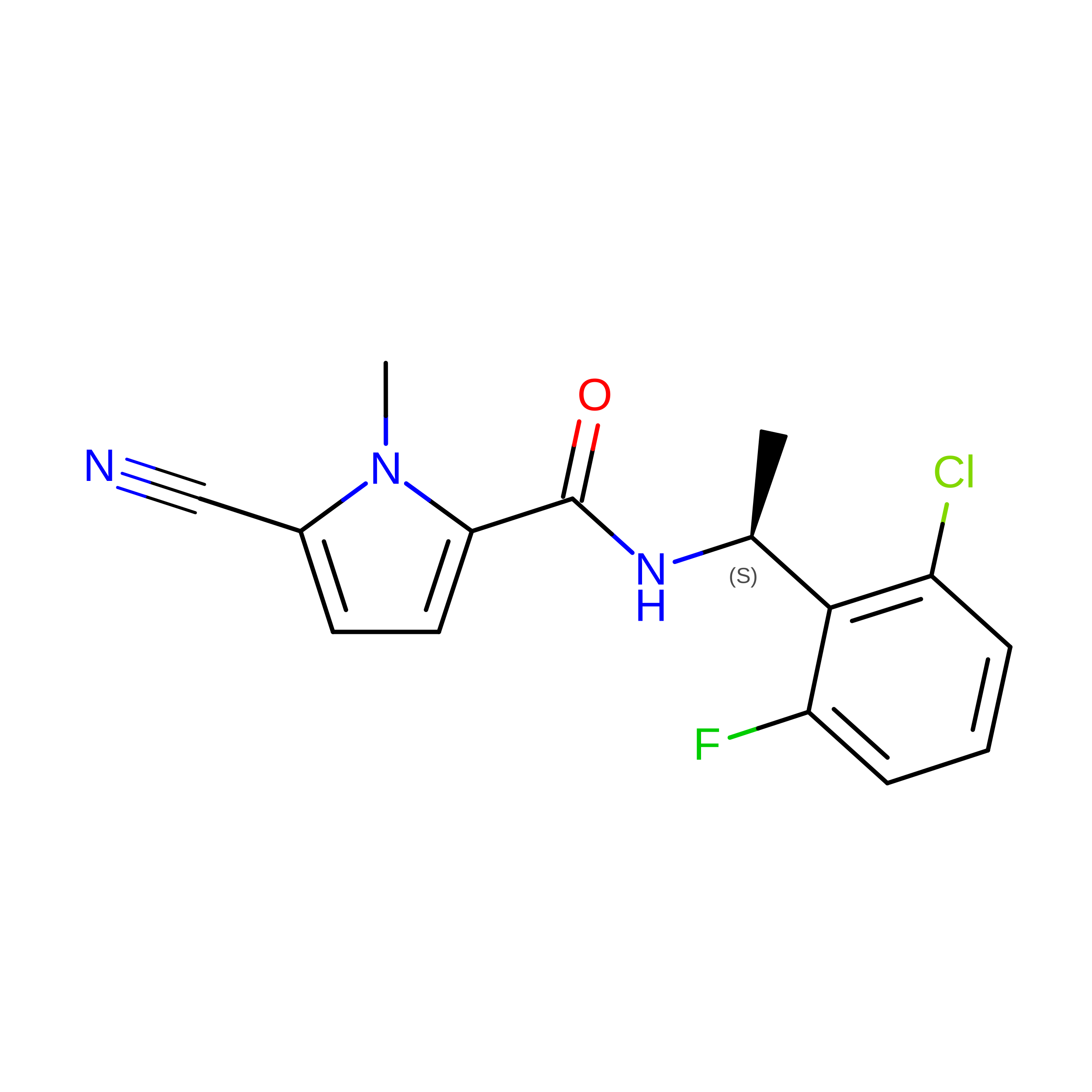
Receptor-interacting serine/threonine protein-kinase 1 (RIPK1) is a critical signalling protein that regulates inflammation and cell death in response to TNF signalling. Inhibiting RIPK1 kinase activity prevents neuronal cell death in various animal models, making it a promising therapeutic target for neurodegenerative, inflammatory, and autoimmune disorders. To identify novel allosteric RIPK1 inhibitors, we used a parallel virtual screening strategy that employed structure-based pharmacophore, shape-based, and fuzzy pharmacophore similarity approaches. Structure-guided optimization enabled by X-ray crystallography led to the discovery of a potent and selective piperidinecarboxamide inhibitor with an acceptable pharmacokinetic (PK) profile and limited brain exposure. This work highlights the effectiveness of virtual screening, followed by structure-guided optimization, in identifying progressible allosteric kinase inhibitors.
- Institute for Applied Cancer Science, The University of Texas MD Anderson Cancer Center 1881 East Road Houston Texas 77054 USA jbcross@mdanderson.org.
Organizational Affiliation: