Download Mendeley
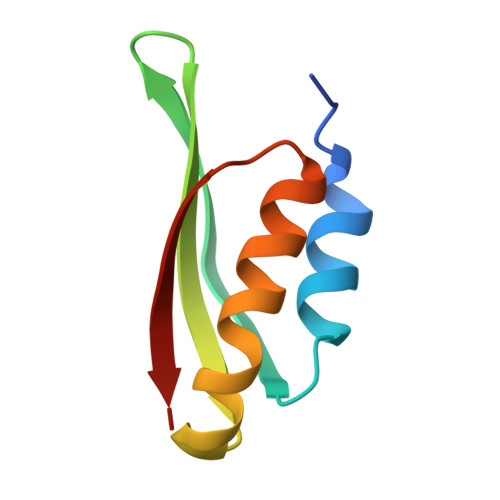
Structural and functional insights of ZnT1 C-terminal domain as a regulator of zinc transport.
Ben Yosef, T.E., Kass, I., Shahar, A., Eremenko, E., Monsonego, A., Gitler, D., Moran, A., Zarivach, R.(2025) Sci Rep 15: 26920-26920
- PubMed: 40707521 Search on PubMedSearch on PubMed Central
- DOI: https://doi.org/10.1038/s41598-025-07351-5
- Primary Citation Related Structures:
9HRS, 9IF2 - PubMed Abstract:
Zinc is an essential trace element vital for cellular function, and its homeostasis is tightly regulated. ZnT1, a cation diffusion facilitator (CDF) family member, extrudes excess zinc across the mammalian plasma membrane, making it a major part of the zinc homeostasis system. While ZnT1 shares structural similarities with other CDF proteins, the role of its C-terminal domain (CTD) in zinc transport remains unclear. We used structural determination and comparative analysis, site-directed mutagenesis, and functional zinc transport assays to demonstrate that the ZnT1 CTD is a regulatory element. The regulation involves a distinct CTD conformational change upon structural, non-transported zinc binding. The observed conformational changes in the mammalian CTD are different from those observed in prokaryotic CDFs. The effects of mutating the CTD zinc-binding site on zinc transport are consistent with a hierarchical trend in the CTD regulatory role, possibly due to the importance of the CTD zinc-binding residues. This is in contrast to mutations designed to induce different prokaryotic CTD conformations that do not affect transport. Finally, we show that the unstructured extension of the CTD is dispensable, and its deletion does not affect zinc transport. Our findings establish the CTD as a key modulator of ZnT1 activity, revealing both conserved and divergent regulatory strategies across species. By elucidating ZnT1's transport regulation, this study advances our understanding of how structurally related transporters fine-tune zinc homeostasis across biological systems.
- Department of Life Sciences, Ben-Gurion University of the Negev, Beer Sheva, Israel.
Organizational Affiliation: