Download Mendeley
Two redox-responsive LysR-type transcription factors control the oxidative stress response of Agrobacterium tumefaciens.
Schmidt, J.J., Brandenburg, V.B., Elders, H., Shahzad, S., Schakermann, S., Fiedler, R., Knoke, L.R., Pfander, Y., Dietze, P., Bille, H., Gartner, B., Albin, L.J., Leichert, L.I., Bandow, J.E., Hofmann, E., Narberhaus, F.(2025) Nucleic Acids Res 53
- PubMed: 40193708 Search on PubMedSearch on PubMed Central
- DOI: https://doi.org/10.1093/nar/gkaf267
- Primary Citation Related Structures:
9HH1 - PubMed Abstract:
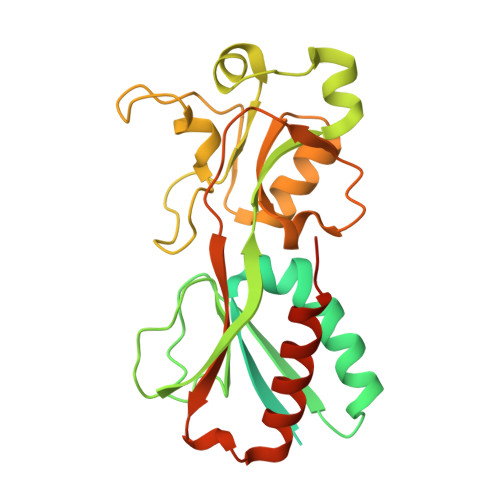
Pathogenic bacteria often encounter fluctuating reactive oxygen species (ROS) levels, particularly during host infection, necessitating robust redox-sensing mechanisms for survival. The LysR-type transcriptional regulator (LTTR) OxyR is a widely conserved bacterial thiol-based redox sensor. However, members of the Rhizobiales also encode LsrB, a second LTTR with potential redox-sensing function. This study explores the roles of OxyR and LsrB in the plant-pathogen Agrobacterium tumefaciens. Through single and combined deletions, we observed increased H2O2 sensitivity, underscoring their function in oxidative defense. Genome-wide transcriptome profiling under H2O2 exposure revealed that OxyR and LsrB co-regulate key antioxidant genes, including katG, encoding a bifunctional catalase/peroxidase. Agrobacterium tumefaciens LsrB possesses four cysteine residues potentially involved in redox sensing. To elucidate the structural basis for redox-sensing, we applied single-particle cryo-EM (cryogenic electron microscopy) to experimentally confirm an AlphaFold model of LsrB, identifying two proximal cysteine pairs. In vitro thiol-trapping coupled with mass spectrometry confirmed reversible thiol modifications of all four residues, suggesting a functional role in redox regulation. Collectively, these findings reveal that A. tumefaciens employs two cysteine-based redox sensing transcription factors, OxyR and LsrB, to withstand oxidative stress encountered in host and soil environments.
- Microbial Biology, Ruhr University Bochum, 44801 Bochum, Germany.
Organizational Affiliation: