9GS9 | pdb_00009gs9

Tn7016 PseCAST QCascade


Experimental Data Snapshot

  • Method: ELECTRON MICROSCOPY
  • Resolution: 2.60 Å
  • Aggregation State: PARTICLE 
  • Reconstruction Method: SINGLE PARTICLE 

wwPDB Validation 3D Report Full Report

Validation slider image for 9GS9

This is version 1.1 of the entry. See complete history

Literature

Structure-guided engineering of type I-F CASTs for targeted gene insertion in human cells.

Lampe, G.D.Liang, A.R.Zhang, D.J.Fernandez, I.S.Sternberg, S.H.

(2024) bioRxiv 

  • DOI: https://doi.org/10.1101/2024.09.19.613948
  • Primary Citation Related Structures: 
    9GS9

  • PubMed Abstract: 

    Conventional genome editing tools rely on DNA double-strand breaks (DSBs) and host recombination proteins to achieve large insertions, resulting in a heterogeneous mixture of undesirable editing outcomes. We recently leveraged a type I-F CRISPR-associated transposase (CAST) from the Pseudoalteromonas Tn 7016 transposon ( Pse CAST) for DSB-free, RNA-guided DNA integration in human cells, taking advantage of its programmability and large payload capacity. Pse CAST is the only characterized CAST system that has achieved human genomic DNA insertions, but multiple lines of evidence suggest that DNA binding may be a critical bottleneck that limits high-efficiency activity. Here we report structural determinants of target DNA recognition by the Pse CAST QCascade complex using single-particle cryogenic electron microscopy (cryoEM), which revealed novel subtype-specific interactions and RNA-DNA heteroduplex features. By combining our structural data with target DNA library screens and rationally engineered protein mutations, we uncovered CAST variants that exhibit increased integration efficiency and modified PAM stringency. Structure predictions of key interfaces in the transpososome holoenzyme also revealed opportunities for the design of hybrid CASTs, which we leveraged to build chimeric systems that combine high-activity DNA binding and DNA integration modules. Collectively, our work provides unique structural insights into type I-F CAST systems while showcasing multiple diverse strategies to investigate and engineer new RNA-guided transposase architectures for human genome editing applications.


  • Organizational Affiliation
    • Department of Biochemistry and Molecular Biophysics, Columbia University, New York, NY, USA.

Macromolecule Content 

  • Total Structure Weight: 486.97 kDa 
  • Atom Count: 31,710 
  • Modeled Residue Count: 3,833 
  • Deposited Residue Count: 4,007 
  • Unique protein chains: 4
  • Unique nucleic acid chains: 3

Macromolecules


Find similar proteins by:|  3D Structure
Entity ID: 4
MoleculeChains  Sequence LengthOrganismDetailsImage
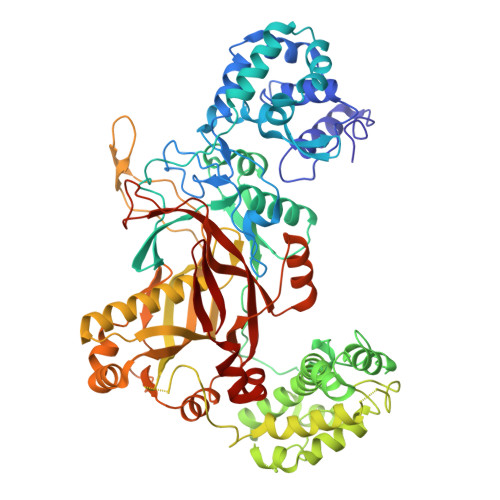
Cas8D [auth A]695PseudoalteromonasMutation(s): 0 
Find similar proteins by:|  3D Structure
Entity ID: 5
MoleculeChains  Sequence LengthOrganismDetailsImage
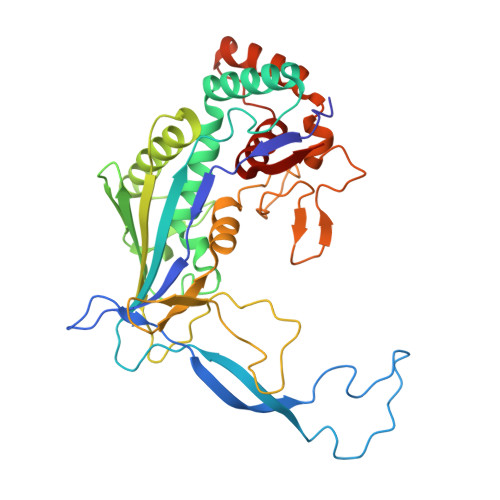
Cas7.1350PseudoalteromonasMutation(s): 0 
Find similar proteins by:|  3D Structure
Entity ID: 6
MoleculeChains  Sequence LengthOrganismDetailsImage
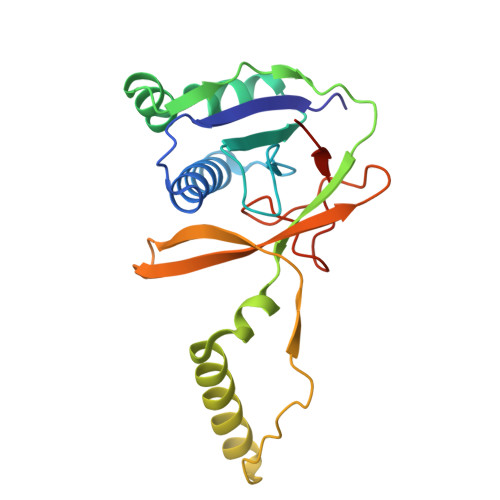
Cas6K [auth H]203PseudoalteromonasMutation(s): 0 
Find similar proteins by:|  3D Structure
Entity ID: 7
MoleculeChains  Sequence LengthOrganismDetailsImage
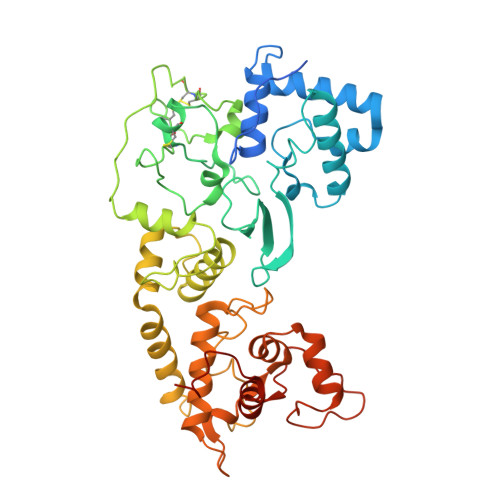
TniQ.1L [auth I],
M [auth J]
432Pseudoalteromonas agarivorans S816Mutation(s): 0 
Find similar nucleic acids by:  (by identity cutoff) 
Entity ID: 1
MoleculeChains LengthOrganismImage
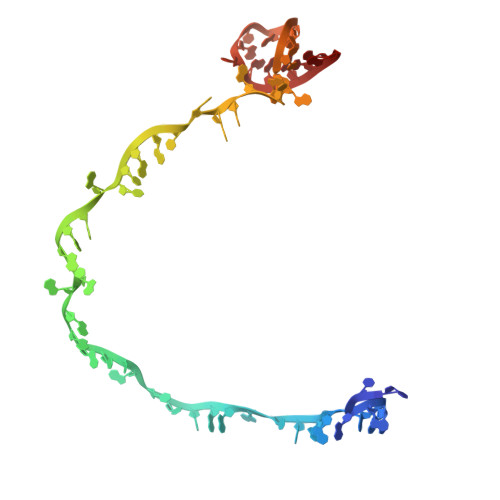
crRNAA [auth 1]60RNA satellites
Sequence Annotations
Expand
Reference Sequence
Find similar nucleic acids by:  (by identity cutoff) 
Entity ID: 2
MoleculeChains LengthOrganismImage
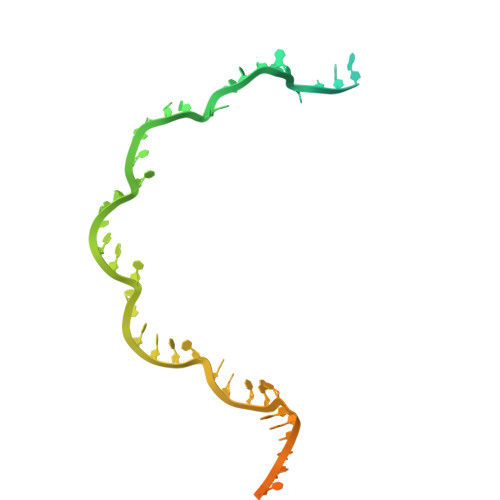
T-DNAB [auth 2]74DNA molecule
Sequence Annotations
Expand
Reference Sequence
Find similar nucleic acids by:  Sequence
Entity ID: 3
MoleculeChains LengthOrganismImage
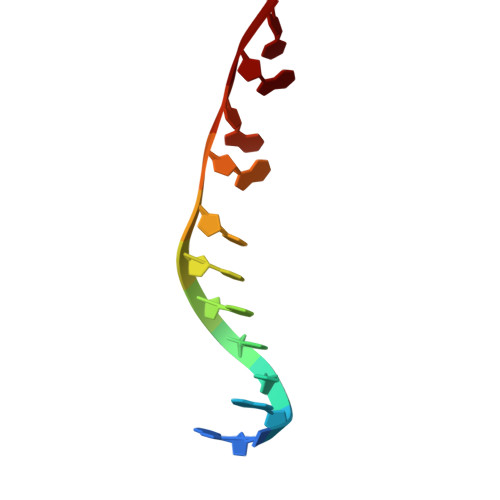
NT-DNAC [auth 3]11DNA molecule
Sequence Annotations
Expand
Reference Sequence

Experimental Data & Validation

Experimental Data

  • Method: ELECTRON MICROSCOPY
  • Resolution: 2.60 Å
  • Aggregation State: PARTICLE 
  • Reconstruction Method: SINGLE PARTICLE 

Structure Validation

View Full Validation Report


Entry History 

& Funding Information

Deposition Data


Funding OrganizationLocationGrant Number
National Institutes of Health/National Cancer Institute (NIH/NCI)United States--

Revision History  (Full details and data files)

  • Version 1.0: 2024-10-16
    Type: Initial release
  • Version 1.1: 2024-11-20
    Changes: Data collection