Download Mendeley
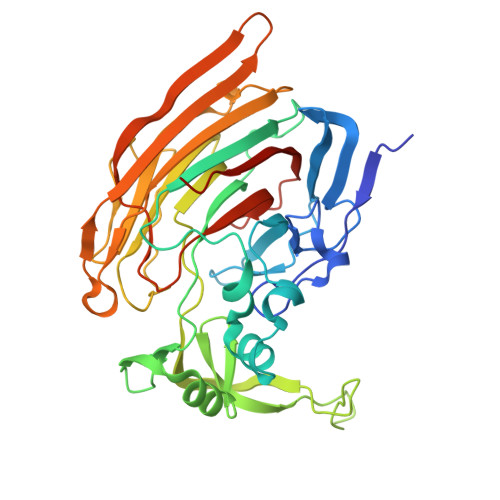
Functional characterization of a 3-O-sulfate tolerant heparin lyase from Bacteroides eggerthii.
Kandola, T.K., Mycroft-West, C.J., Lima, M.A., Turner, A., Gardini, C., Urso, E., Torode, T.A., Miller, G.J., Bisio, A., Yates, E.A., Guerrini, M., Skidmore, M.A., Wu, L.(2026) Glycobiology
- PubMed: 42867289 Search on PubMed
- DOI: https://doi.org/10.1093/glycob/cwag097
- Primary Citation Related Structures:
9GRW, 9GV9 - PubMed Abstract:
Heparin is a sulfated glycosaminoglycan, and the most used pharmaceutical anticoagulant worldwide. Heparin is isolated primarily from porcine sources, and possesses a complex variable structure, wherein anticoagulant activity is principally derived from the pentasaccharide GlcNS6S-GlcA-GlcNS3S6S-IdoA2S-GlcNS6S (AGA*IA) motif, containing an infrequent 3-O-sulfated glucosamine that enhances antithrombin stabilization. Pedobacter heparinus heparin lyases are currently widely employed for characterization of heparin and its derivatives, but have limited activity near regions of 3-O-sulfation, hindering analyses of anticoagulation relevant sequences. Here, using a panel of biophysical and structural techniques, we show that Bacteroides eggerthii lyase I liberates ΔUA-GlcNS3S6S disaccharides from the defined pentasaccharide, fondaparinux. This activity provides improved access to 3-O-sulfated heparin standards, with potential to aid heparin quality control.
- CEMACS, Universiti Sains Malaysia, 11800 USM, Penang, Malaysia.
Organizational Affiliation: