Download Mendeley
Purifying recombinant proteins from Nicotiana benthamiana for structural studies.
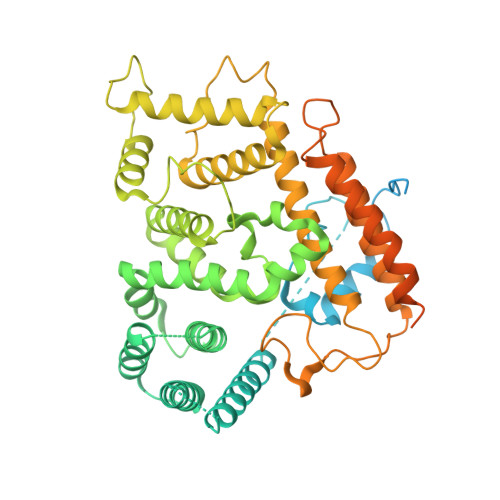
Lawson, A.W., Macha, A., Neumann, U., Gunkel, M., Chai, J., Behrmann, E., Schulze-Lefert, P.(2026) Nat Protoc 21: 1662-1681
- PubMed: 40926020 Search on PubMedSearch on PubMed Central
- DOI: https://doi.org/10.1038/s41596-025-01249-2
- Primary Citation Related Structures:
9GQN - PubMed Abstract:
Structural biology is fundamental to understanding the molecular basis of biological processes. While machine learning-based protein structure prediction has advanced considerably, experimentally determined structures remain indispensable for guiding structure-function analyses and for improving predictive modeling. However, experimental studies of protein complexes continue to pose challenges, particularly due to the necessity of high protein concentrations and purity for downstream analyses such as cryogenic electron microscopy. Transient transformation of Nicotiana benthamiana has emerged as a promising expression system for recombinant protein production, offering advantages such as low operating costs, rapid cultivation, short experimental turnaround and scalability compared with other established platforms such as insect or human cell culture systems. Here we present a versatile protocol leveraging N. benthamiana for the purification and structural analysis of protein complexes of diverse origin and composition, exemplified by six oligomeric complexes ranging from ~140 to ~660 kDa, originating from plant, vertebrate, fungal and bacterial species. In most cases, purification only requires a single epitope tag, simplifying workflows and reducing complications that come with multitag and sequential affinity purifications. The protocol enables rapid application, allowing protein sample production in fewer than 7 days. Critical parameters influencing expression and purification efficiency include codon alteration, epitope tag selection and detergent supplementation.
- Department of Plant-Microbe Interactions, Max Planck Institute for Plant Breeding Research, Cologne, Germany.
Organizational Affiliation: