Download Mendeley
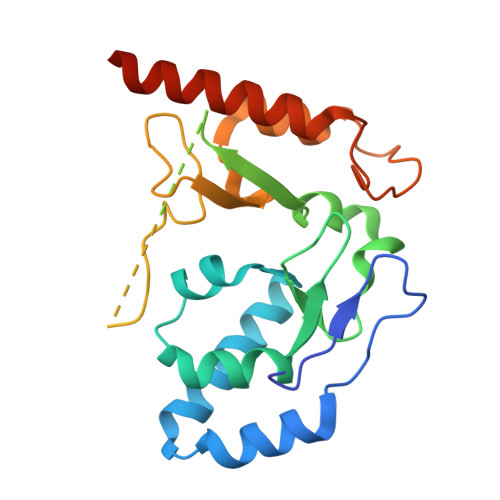
Mechanism of interaction between the transactivation domain of N-myc and the DNA-binding surface of TFIIIC5.
Leen, E., Yeoh, S., Sahak, E., Mitchell, E., Wildsmith, G., Batchelor, M., Calabrese, A.N., Buchel, G., Bayliss, R.(2026) Nucleic Acids Res 54
- PubMed: 41755638 Search on PubMedSearch on PubMed Central
- DOI: https://doi.org/10.1093/nar/gkag181
- Primary Citation Related Structures:
9GI4 - PubMed Abstract:
N-myc is a transcription factor, a powerful driver of cellular growth and an important oncoprotein. N-myc interacts with many factors, including the RNA Polymerase III assembly factor, TFIIIC, a six-subunit complex that is essential for the transcription of small, structured RNA. TFIIIC and N-myc mutually restrict each other's chromatin association, and their complex contributes to quality control in mRNA transcription. We previously demonstrated that the intrinsically disordered transactivation domain of N-myc interacts directly with a sub-complex of TFIIIC, τA. Structural studies by others show that DNA binding of τA is largely mediated by TFIIIC3, leaving open the role of the DNA-binding domain of TFIIIC5. Here, we demonstrate that this domain is a binding site for two regions in the transactivation domain of N-myc, through an integrated approach combining NMR spectroscopy, hydrogen-deuterium exchange mass spectrometry, and interaction assays (pull-downs, ITC, fluorescence polarization, and co-immunoprecipitation). AlphaFold modelling predicts with high-confidence a binding mode for the higher affinity N-myc motif that overlaps with the predicted intramolecular binding site of the C-terminal acidic plug of TFIIIC5, removal of which enhances the binding of N-myc. This model elucidates how the N-myc:TFIIIC5 interaction competes with DNA and other interactions, providing a basis for their mutual regulation.
- School of Molecular and Cellular Biology, Faculty of Biological Sciences, University of Leeds, Leeds LS2 9JT, United Kingdom.
Organizational Affiliation: